

As a pet owner, you may worry about whether spinosad is safe for your dogs. Understanding how spinosad affects your pets is crucial. This natural insecticide can help manage pests, but you must use it correctly to ensure spinosad is safe for your furry friends. Always monitor your dogs for any reactions. Proper usage ensures that you keep your pets safe and healthy.
Key Takeaways
Spinosad is FDA-approved for dogs, making it a safe option for treating flea infestations.
Common side effects include vomiting, lethargy, and loss of appetite, but these are usually mild and temporary.
Always monitor your dog after administering spinosad for any unusual symptoms or reactions.
Consult your veterinarian before using spinosad, especially if your dog has a history of seizures or other health concerns.
Administer spinosad once a month for effective flea control, following the recommended dosage based on your dog’s weight.
Is Spinosad Safe?
Spinosad Safe for Dogs
You may wonder if spinosad is safe for your dogs. The good news is that spinosad has received approval from the FDA for use in dogs. This approval indicates that it meets safety standards for treating flea infestations. A field trial showed that spinosad is safe and effective for treating and preventing flea infestations in shepherd dogs. During this study, researchers recorded no adverse reactions.
Additionally, a study involving Collies, which are known to have the MDR1 gene mutation, found that oral administration of spinosad did not cause any signs of toxicosis. This finding suggests that spinosad is safe for sensitive breeds as well.
Safe and Effective Use
When using spinosad, you can feel confident about its low toxicity. Here are some key points regarding its safety:
Spinosad has very low toxicity to mammals.
Chronic toxicology tests show that spinosad is not carcinogenic, teratogenic, mutagenic, or neurotoxic.
It exhibits wide margins of safety for many beneficial insects and related organisms.
The following table summarizes the FDA’s official position on spinosad:
Indications | Adverse Reactions |
|---|---|
Comfortis is indicated for the prevention and treatment of flea infestations in dogs and puppies 14 weeks of age and older and 5.0 pounds of body weight or greater. | Vomiting, depression/lethargy, pruritus, anorexia, diarrhea, seizures, ataxia, trembling, behavioral changes, and hypersalivation. |
Spinosad Side Effects
When you use spinosad for your dog, it’s essential to be aware of potential side effects. While many dogs tolerate spinosad well, some may experience adverse reactions. Here are some common side effects you might notice:
Vomiting: This is the most frequently reported side effect.
Lethargy: You may observe your dog being less active than usual.
Anorexia: A decrease in appetite can occur.
Weight Loss: Some dogs may lose weight after starting treatment.
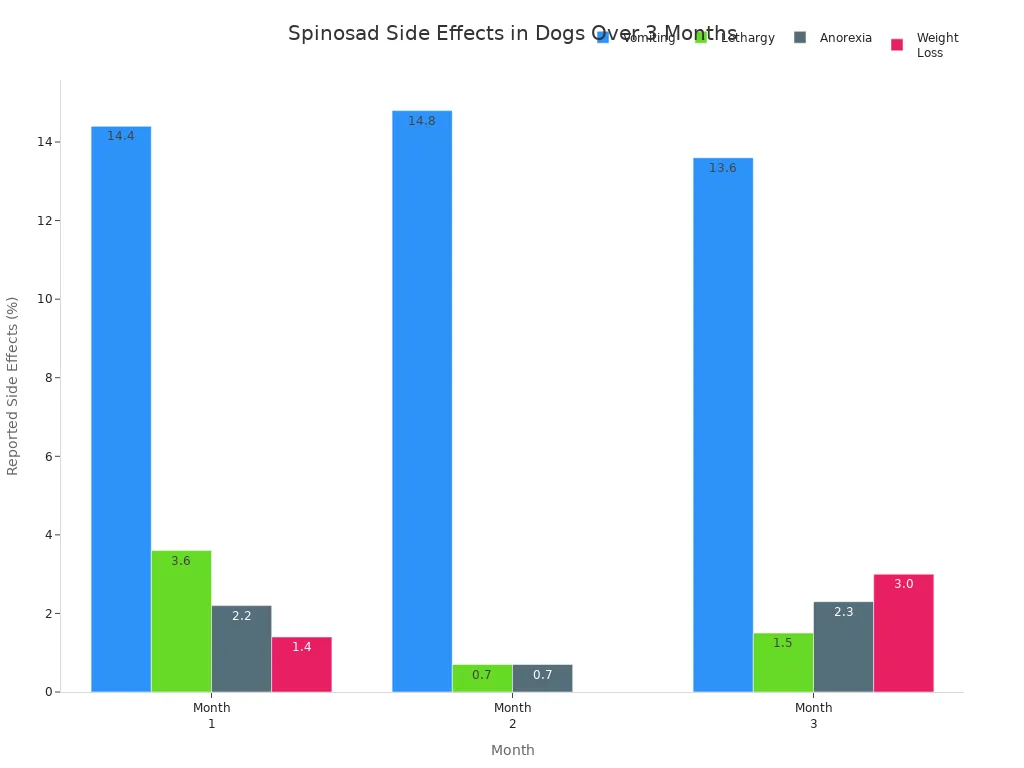
The following table summarizes the frequency of these side effects over three months based on veterinary data:
Side Effect | Month 1 (%) | Month 2 (%) | Month 3 (%) |
|---|---|---|---|
Vomiting | 14.4 | 14.8 | 13.6 |
Lethargy | 3.6 | 0.7 | 1.5 |
Anorexia | 2.2 | 0.7 | 2.3 |
Weight Loss | 1.4 | 0.0 | 3.0 |
While these side effects are generally mild, you should be cautious of severe reactions. Some dogs may experience more serious issues, especially if they have a history of seizures. If your dog has a known seizure disorder, consult your veterinarian before using spinosad.
In rare cases, dogs may show signs of severe reactions, such as:
Seizures: If your dog has a history of seizures, monitor them closely after administering spinosad.
Behavioral Changes: Sudden changes in behavior can indicate a reaction.
Trembling or Ataxia: These symptoms may suggest neurological effects.
Always keep an eye on your pet after giving them spinosad. If you notice any concerning symptoms, contact your veterinarian immediately.
Proper Administration of Spinosad
When you decide to use spinosad for your dog, proper administration is key to ensuring its effectiveness. Here are some important guidelines to follow.
Recommended Dosage Guidelines
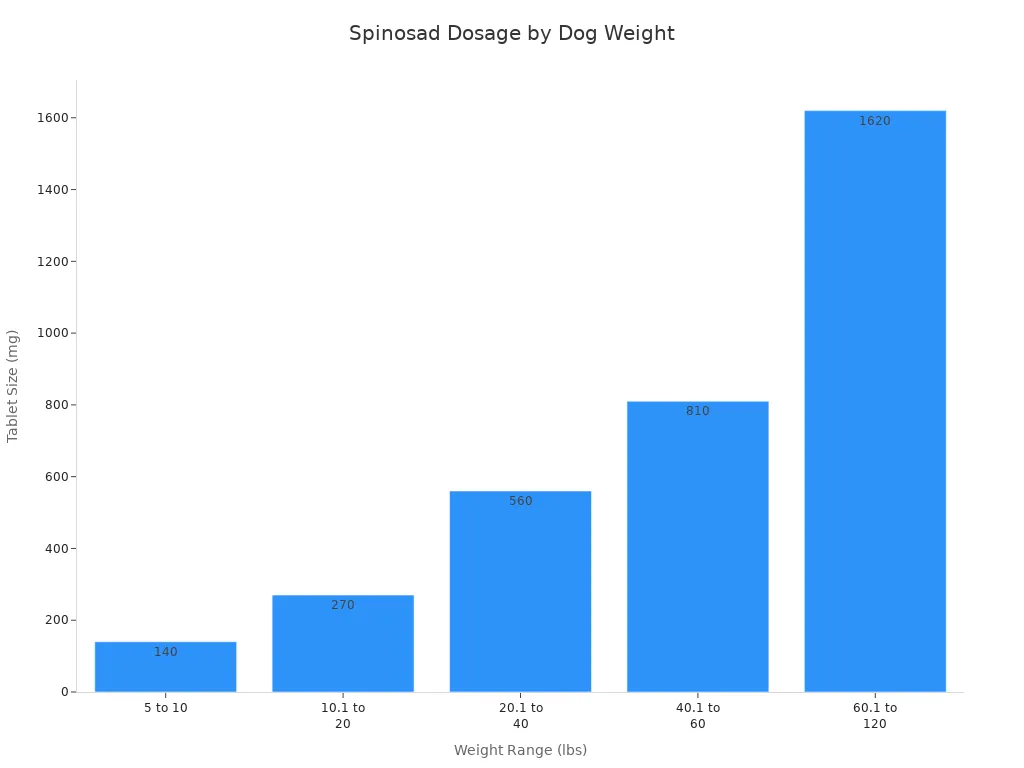
The dosage of spinosad depends on your dog’s weight. Below is a table that outlines the recommended tablet sizes based on weight ranges:
Weight Range (lbs) | Tablet Size (mg) |
|---|---|
5 to 10 | 140 |
10.1 to 20 | 270 |
20.1 to 40 | 560 |
40.1 to 60 | 810 |
60.1 to 120 | 1620 |
Over 120 | Appropriate combination of tablets |
Administration Methods
You can administer spinosad effectively in several ways. Here are some methods to consider:
Administration Method | Dose (mg/kg) | Effectiveness (%) | Notes |
|---|---|---|---|
Spinosad with canned food | 30 | 98-100 | Highly effective at all post-treatment counts |
Spinosad with dry food | 30 | 98-100 | Highly effective at all post-treatment counts |
Spinosad (various doses) | 15, 20, 30, 40 | 99.8-100 | Sustained control for 30 days |
Imidacloprid | 10 | Highly effective | Significant difference only from 15mg/kg spinosad group |
To maintain effective flea control, you should administer spinosad once a month. The recommended dosage is 13.5 mg/lb (30 mg/kg) for Comfortis, a popular spinosad product.
Tip: Always consult your veterinarian before starting any new treatment. They can help you determine the best dosage and method for your specific dog.
By following these guidelines, you can ensure that your pets receive the right amount of spinosad for effective flea control.
What to Do in Case of Adverse Reactions
If you notice any signs of adverse reactions in your dog after administering spinosad, it is crucial to act quickly. Recognizing the symptoms early can make a significant difference in your dog’s health. Common symptoms of adverse reactions include:
Vomiting and Diarrhea: Gastrointestinal issues may occur, including vomiting and diarrhea.
Lethargy: Your dog may show decreased activity levels.
Loss of Appetite: Some dogs may experience a temporary loss of appetite.
Neurological Symptoms: Rarely, symptoms like tremors, seizures, or an unsteady gait may appear.
If your dog exhibits any of these symptoms, follow these emergency steps:
Seek immediate veterinary care if this is an emergency.
Monitor your dog for any unusual behavior or symptoms.
Consult a vet for personalized advice if you observe symptoms.
In cases where you suspect spinosad toxicity, take these actions:
Contact your veterinarian if severe side effects are observed or if your dog’s condition worsens.
Call an animal poison control center for further guidance.
Be aware of common side effects of spinosad ingestion, which include vomiting, diarrhea, lethargy, and upset stomach.
Understanding the difference between mild and severe side effects is essential. Mild side effects, such as vomiting and lethargy, usually resolve on their own. However, severe side effects, like allergic reactions or seizures, require immediate veterinary attention.
By staying vigilant and knowing what to do, you can help ensure your dog’s safety when using spinosad.
In summary, spinosad is generally safe and effective for dogs when used correctly. Here are the key points to remember:
Spinosad effectively prevents fleas and shows rapid action within hours.
Common side effects include vomiting, diarrhea, and lethargy, which typically appear within a few hours of administration.
Always monitor your dog for any unusual behavior or symptoms after treatment.
Consult your veterinarian if your dog has a history of seizures or shows severe allergic reactions.
By following these guidelines, you can help ensure your dog’s safety while using spinosad.
FAQ
What is spinosad used for in dogs?
Spinosad is primarily used to treat and prevent flea infestations in dogs. It works quickly, killing fleas within hours of administration.
How often should I give my dog spinosad?
You should administer spinosad once a month for effective flea control. Always follow your veterinarian’s recommendations for dosage.
Can spinosad be used in puppies?
Yes, spinosad is safe for puppies over 14 weeks of age and weighing at least 5 pounds. Consult your vet for proper dosing.
What should I do if my dog vomits after taking spinosad?
If your dog vomits after taking spinosad, monitor them closely. If vomiting persists or other symptoms appear, contact your veterinarian immediately.
Is spinosad safe for all dog breeds?
Spinosad is generally safe for most dog breeds, including sensitive ones like Collies. However, consult your veterinarian if your dog has a history of seizures or other health issues.