

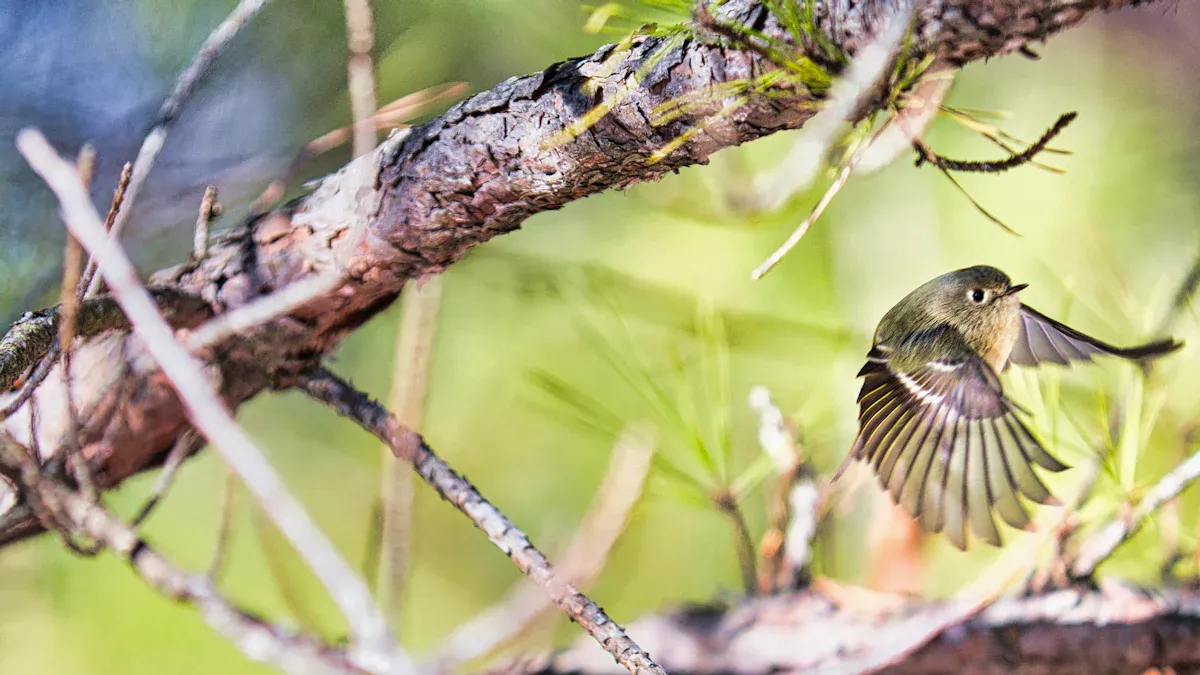
The Ruby Crowned Kinglet is a small migratory bird known for its vibrant personality and striking appearance. With an estimated population of around 100 million, the Ruby Crowned Kinglet captivates birdwatchers. Key features include olive-green plumage, a delicate white eye-ring, and a hidden red crown patch on males. Its restless behavior adds to its charm as you observe the Ruby Crowned Kinglet flitting through the foliage.
Key Takeaways
The Ruby-crowned Kinglet is a small migratory bird, measuring about 4.25 inches long, with olive-green plumage and a hidden red crown on males.
This bird thrives in coniferous forests during breeding season and adapts to various habitats, including gardens and shrublands, during winter.
To identify the Ruby-crowned Kinglet, look for its bold white eye ring, distinctive wing bars, and its active behavior as it flits through trees.
Ruby-crowned Kinglet Appearance
Size and Coloration
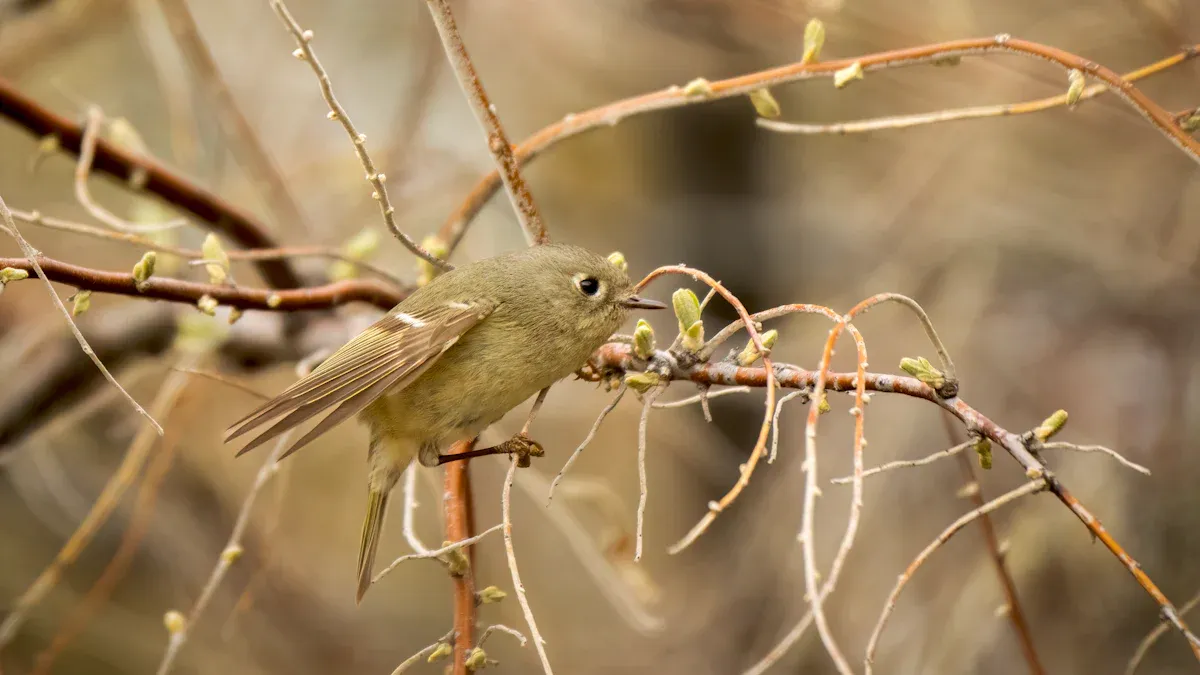
The Ruby-crowned Kinglet is a small bird, measuring about 4.25 inches in length with a wingspan of approximately 7.5 inches. This petite size makes it one of the smallest kinglets in North America. You will find that both male and female Ruby-crowned Kinglets share similar coloration patterns, but there are distinct differences between them.
Measurement | Value |
|---|---|
Length | 4.25″ |
Wingspan | 7.5″ |
When observing these birds, you will notice their olive-green plumage. Males display a grayish olive-green color on their upper parts, while females have a slightly duller appearance. The underparts of both sexes are pale whitish olive with a hint of yellow.
Sex | Coloration Patterns |
|---|---|
Male | Grayish olive-green to olive above, concealed red patch to crown, conspicuous white orbital ring, brighter olive-green lower back, dusky brownish black rectrices edged yellow-olive, distinct white wing bars, pale whitish olive underparts with yellow tinge. |
Female | Similar to male but lacks red, orange, or yellow feathers on the crown. |
Distinctive Features
One of the most captivating features of the Ruby-crowned Kinglet is the hidden ruby crown on males. This bright red crown spot usually remains concealed but becomes visible when the bird is excited or agitated. You might see this vibrant display during courtship or when the male feels threatened.
When identifying the Ruby-crowned Kinglet, pay attention to its distinctive field marks. Here are some key features to look for:
A plain head and face with pale arcs around the eye.
A bold white eye ring that stands out against its olive-green body.
One strong white wing bar with a black bar behind it.
The overall greenish or yellowish-green cast of its body.
These characteristics help differentiate the Ruby-crowned Kinglet from other similar species, such as the Golden-crowned Kinglet. The Ruby-crowned Kinglet’s small size and unique markings make it a delightful sight for birdwatchers.
Habitat of the Ruby-crowned Kinglet
Preferred Environments
The Ruby-crowned Kinglet thrives in various habitats, especially during its breeding season. You will often find this small bird in:
Coniferous forests
Spruce-fir forests
Mixed woods
Boreal forests
Higher elevation coniferous forests
These environments provide the ideal nesting sites for the Ruby-crowned Kinglet. During winter, its habitat preferences shift. The kinglet occupies a variety of areas, including:
Mixed and deciduous forests
Second growth and shrublands
Human settlements, such as farms and gardens
Geographic Distribution
The Ruby-crowned Kinglet breeds primarily in the northern and mountainous regions of the United States and Canada. Its breeding habitat includes coniferous forests across:
Alaska
Northern New England
The western United States
During migration periods, you can observe the Ruby-crowned Kinglet in isolated patches of trees, orchards, and lowland areas. This occurs from September to October and mid-April to early May. Understanding these habitats helps you appreciate the adaptability of this migratory bird and enhances your identification skills when spotting it in the wild.
Behavior and Diet of the Ruby-crowned Kinglet
Feeding Habits
The Ruby-crowned Kinglet has a diverse diet that changes with the seasons. During the breeding season, you will find this bird primarily consuming insects and arthropods. Its diet includes:
Spiders
Ants
Flies
Wasps
Moths
Beetles
In fact, the Ruby-crowned Kinglet often forages for food in the lower branches of trees and shrubs. You might observe it moving quickly through the foliage, displaying frantic motions as it searches for its next meal. This small bird can even hover above the leaves, catching insects mid-air.
During winter, the Ruby-crowned Kinglet’s diet shifts. It starts to include seeds, sap, and berries. You will notice that it actively forages, examining various plant structures for food. This adaptability helps the kinglet survive in different environments throughout the year.
Here’s a table summarizing the insects and arthropods that form the bulk of the Ruby-crowned Kinglet’s diet during the breeding season:
Insects and Arthropods |
|---|
Scale insects |
Mealy bugs |
Beetles |
Flies |
Wasps |
Ants |
Moths |
Springtails |
Grasshoppers |
Crickets |
True bugs |
Caterpillars |
Songs and Calls
The vocalizations of the Ruby-crowned Kinglet are another fascinating aspect of its behavior. Males produce more complex songs, especially during the breeding season. These songs serve two main purposes: defending territory and attracting mates. In contrast, females have a shorter song repertoire. Their calls are less elaborate than those of males.
You can expect to hear the following vocalizations:
Males: Jumbled sequences that build to a loud ending.
Females: Shorter and simpler calls.
The Ruby-crowned Kinglet’s calls differ from those of the Golden-crowned Kinglet. While the Ruby-crowned Kinglet’s calls are harsh and fast, the Golden-crowned Kinglet produces thin, threadlike notes.
Here’s a comparison of their vocalizations:
Feature | Ruby-crowned Kinglet | Golden-crowned Kinglet |
|---|---|---|
Song | Jumbled sequence with a loud ending | High-pitched notes ending in a musical warble |
Calls | Harsh and fast, two-parted scold | Thin and threadlike tsee notes |
Understanding the feeding habits and vocalizations of the Ruby-crowned Kinglet enhances your appreciation for this small migratory bird. Observing its foraging behavior and listening to its songs can make your birdwatching experience even more rewarding.
The Ruby-crowned Kinglet is a remarkable bird that captivates with its vibrant colors and lively behavior. Remember these key points when identifying it in the field:
Ruby-crowned Kinglets are very active and rarely sit still.
Look for the distinctive black mark trailing the second wing-bar.
Their tiny, sharp bill sets them apart from similar species.
Monitoring the Ruby-crowned Kinglet’s population is crucial. This helps you understand trends and threats to their survival. The current conservation status indicates a decline in their numbers due to habitat loss and predation. You can contribute to their protection by supporting habitat restoration and community conservation efforts. Observing this small migratory bird in its natural habitat can be a rewarding experience.
FAQ
What is the Ruby-crowned Kinglet’s primary habitat?
You will find the Ruby-crowned Kinglet in coniferous forests, mixed woods, and shrublands, especially during breeding and winter seasons.
How can I identify the Ruby-crowned Kinglet?
Look for its olive-green plumage, white eye ring, and the hidden red crown on males. Its small size sets it apart from other birds.
When do Ruby-crowned Kinglets migrate?
Ruby-crowned Kinglets migrate from September to October and mid-April to early May, traveling between breeding and wintering grounds.