

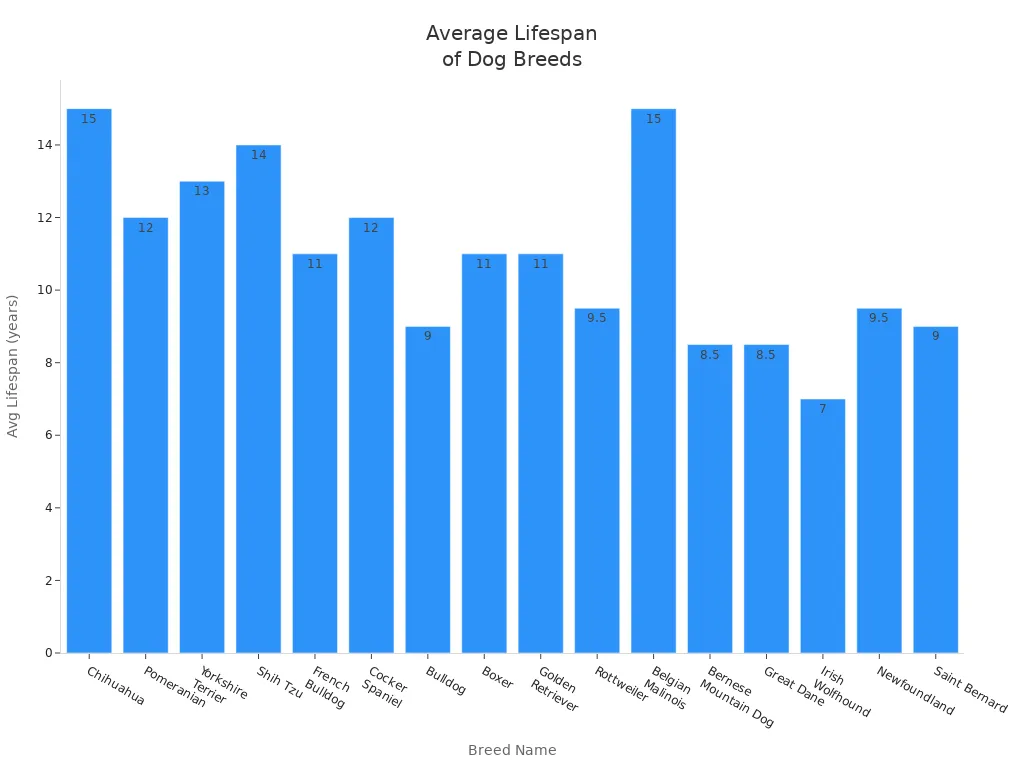
Understanding the lifespan of dogs is crucial for every pet owner, and referring to a Dog Lifespan Chart can be incredibly helpful. Different breeds exhibit varying lifespans, with smaller breeds often living longer than larger ones. For example, small breeds like the Chihuahua can live 14 to 16 years, while giant breeds like the Great Dane average only 7 to 10 years. This variation highlights the importance of breed in determining longevity. By being proactive in your dog’s care, as indicated in the Dog Lifespan Chart, you can help ensure your long-lived companion enjoys a healthy and fulfilling life.
Key Takeaways
Different dog breeds have varying lifespans. Smaller breeds often live longer than larger breeds, with Chihuahuas living up to 20 years.
Regular veterinary check-ups are essential. They help catch health issues early and improve your dog’s quality of life.
A balanced diet significantly impacts longevity. High-quality food tailored to your dog’s needs can prevent health problems.
Regular exercise is crucial for maintaining a healthy weight. Active dogs tend to live longer and enjoy better overall health.
Mental stimulation is important too. Engaging your dog’s mind can delay cognitive decline and keep them happy.
Lifespan by Breed

Understanding the average lifespan of dogs by breed helps you make informed decisions about your pet’s care. Different breeds have unique lifespans, influenced by their size and genetics. Below, you will find a breakdown of lifespans categorized by small, medium, large, and giant breeds.
Small Breeds
Small dog breeds often enjoy longer lifespans compared to their larger counterparts. Here are some average lifespans for popular small breeds:
Dog Breed | Average Lifespan |
|---|---|
Chihuahua | 15 – 17 years |
Dachshund | 12 – 16 years |
Toy Poodle | 13 – 18 years |
Notably, Chihuahuas can live up to 20 years, making them one of the longest-living breeds. On the other hand, breeds like the Pomeranian tend to have shorter lifespans.
Tip: When considering a small breed, look for those known for longevity, such as the Irish Soft Coated Wheaten Terrier or the Miniature Schnauzer.
Medium Breeds
Medium dog breeds typically have a lifespan ranging from 10 to 15 years. Here are some examples:
Dog Breed | Average Lifespan |
|---|---|
Beagle | 13.3 years |
Cocker Spaniel | 12 – 15 years |
Bulldog | 9.8 years |
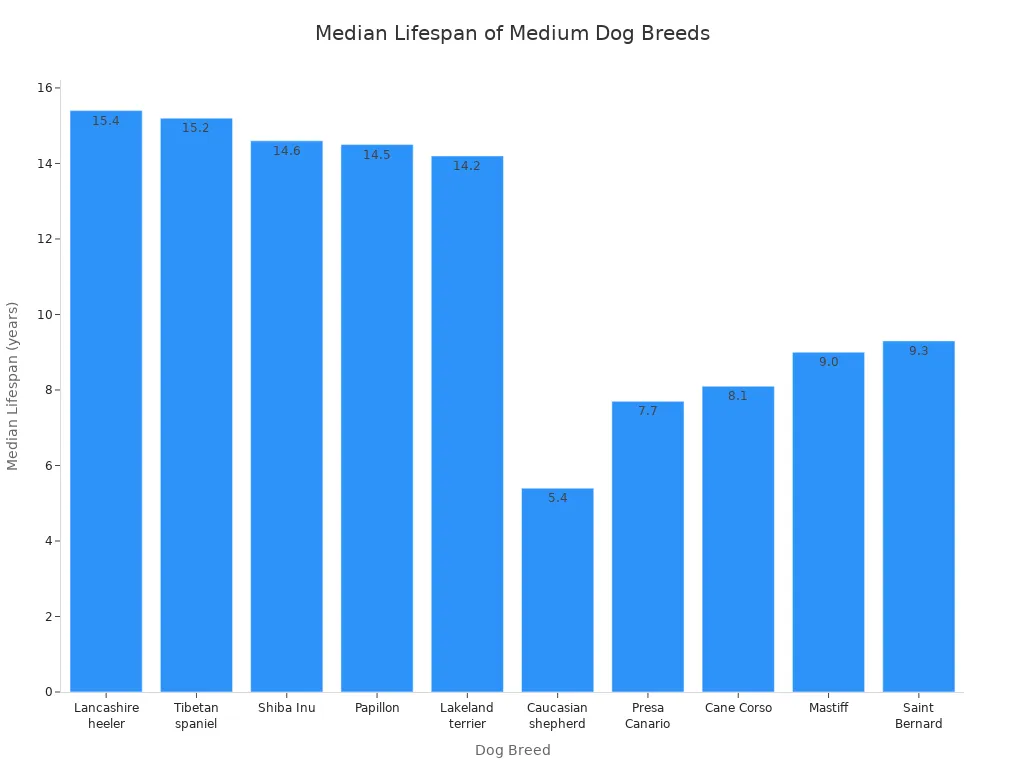
Among medium breeds, the Lancashire Heeler stands out with a median lifespan of 15.4 years, while the Cane Corso has a shorter lifespan of around 8.1 years.
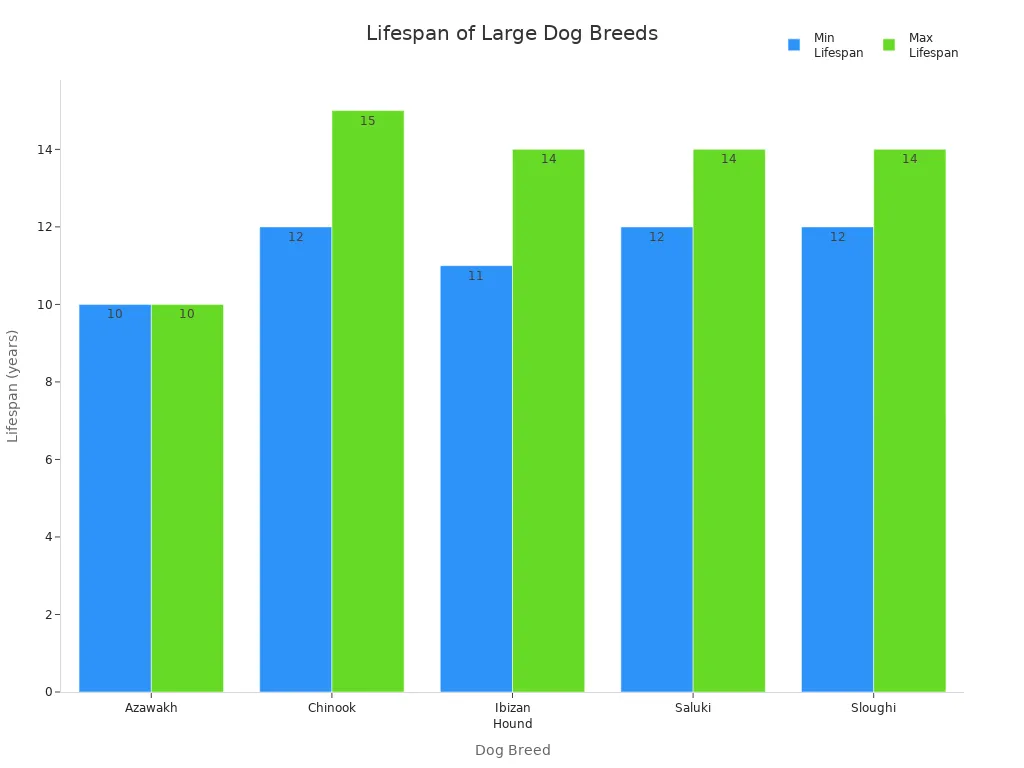
Large Breeds
Large dog breeds generally have shorter lifespans, averaging between 9 to 13 years. Here are some common large breeds:
Dog Breed | Average Lifespan (years) |
|---|---|
Golden Retriever | 10 – 12 |
Labrador Retriever | 10 – 12 |
German Shepherd | 9 – 13 |
Some large breeds, like the Azawakh and Chinook, can live over 10 years, while others, such as the Great Dane, have a shorter lifespan of 6 to 8 years.
Giant Breeds
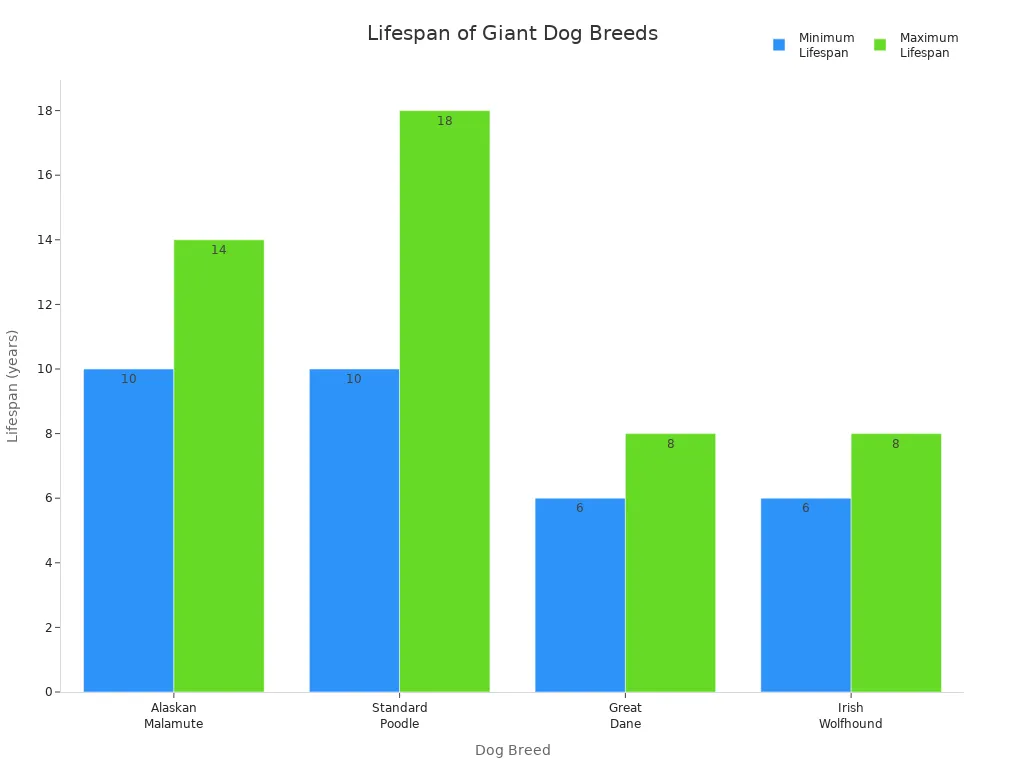
Giant dog breeds often face the greatest challenges regarding longevity. Their average lifespan typically ranges from 6 to 10 years. Here are some examples:
Breed | Lifespan (years) | Notes on Longevity |
|---|---|---|
Great Dane | 6 – 8 | Recognized for having one of the shortest lifespans among giant breeds. |
Irish Wolfhound | 6 – 8 | Similar to Great Danes, they also have a shorter lifespan. |
Alaskan Malamute | 10 – 14 | Notable for robust health and genetic diversity. |
Despite their size, some giant breeds can live longer, such as the Standard Poodle, which can reach up to 18 years.
Understanding these averages helps you appreciate the unique characteristics of each breed. By knowing the average dog lifespan, you can better prepare for your pet’s needs throughout their life.
Factors Influencing Dog Lifespan

Understanding the factors that influence dog lifespan is essential for every dog owner. Several elements play a significant role in determining how long your furry friend will live. These include genetics, size and breed characteristics, health care, diet and nutrition, and exercise and lifestyle.
Genetics
Genetics significantly impacts a dog’s lifespan. Research shows that mixed-breed dogs tend to live longer than purebred dogs. This is due to their higher genetic diversity, which reduces the risk of inherited diseases. In fact, each percent increase in median heterozygosity can add one month to a dog’s predicted lifespan.
Evidence Type | Description |
|---|---|
Genetic Diversity | More genetically diverse breeds tend to have longer lifespans compared to inbred breeds. |
Body Size | Smaller dogs generally live longer than larger dogs, with an average lifespan difference of about 5 to 8 years. |
Inbreeding Effects | Breeds with lower inbreeding coefficients enjoy longer lifespans. |
Certain hereditary conditions can also affect longevity. For example, breeds like the Doberman Pinscher and Great Dane are prone to dilated cardiomyopathy, which can shorten their lifespan. Understanding these genetic factors can help you make informed decisions about your dog’s health care.
Size and Breed Characteristics
The size of your dog plays a crucial role in its lifespan. Generally, smaller breeds live longer than larger breeds. The average lifespan decreases in the order of small > toy > medium > large > giant breeds. For instance, Chihuahuas can live over 15 years, while giant breeds like the Great Dane average only 6 to 8 years.
Larger dog breeds, such as English Mastiffs and Great Danes, have an average lifespan of only 7-8 years.
Smaller breeds, like Chihuahuas and Miniature Poodles, often live longer than 12 years, sometimes reaching their teens.
These differences in lifespan are linked to various breed-specific characteristics. Larger dogs age faster, with one dog year equating to about 20 human years. Additionally, larger breeds may experience higher oxidative stress, leading to increased disease prevalence.
Health Care
Regular health care is vital for maximizing your dog’s lifespan. Access to veterinary care can significantly impact your dog’s health and longevity. Early detection of health issues through regular check-ups can lead to better outcomes.
Evidence Type | Findings |
|---|---|
Wellness Testing | Early detection of health issues can significantly increase lifespan. |
Regular Health Screenings | Biannual screenings for senior dogs help catch age-related issues early, promoting longevity. |
Preventive Care | Customized vaccinations and parasite control reduce disease risk, contributing to better health. |
By ensuring your dog receives regular veterinary visits, you can help prevent many health issues that could shorten their lifespan.
Diet and Nutrition
Diet and nutrition are critical factors in determining your dog’s longevity. Research indicates that dogs on a raw food diet can live longer than those on kibble. Raw-fed dogs average 13.1 years, while kibble-fed dogs average only 10.4 years.
Caloric restriction can lead to a median lifespan of 13 years, which is 1.8 years longer than those not on a restricted diet.
Proper nutrition tailored to your dog’s age, breed, and activity level is essential for promoting longevity.
Certain nutrients also play a role in extending lifespan. For example, maintaining insulin sensitivity is crucial for both healthspan and lifespan in dogs.
Exercise and Lifestyle
Regular exercise is another key factor influencing your dog’s lifespan. Increased physical activity can lead to a longer life, especially in larger breeds that typically age faster. Studies show that activity patterns significantly correlate with fractional lifespan in dogs.
Obesity is linked to a shorter lifespan, with estimates suggesting a reduction of about 2.5 years.
Maintaining a lean body mass is associated with a longer lifespan across all breeds and life stages.
Creating a supportive environment for your dog is also essential. Factors such as social companionship and outdoor time can positively affect your dog’s health and aging.
How to Maximize Dog Lifespan
To help your dog live a long and healthy life, you can take several proactive steps. Here are some essential tips for longer-lived dogs.
Regular Vet Check-ups
Regular veterinary check-ups are crucial for your dog’s health. These visits allow your vet to assess your dog’s overall condition and catch any potential issues early. Here are some key components of a vet visit:
Physical examination to assess overall health.
Bloodwork and urinalysis to identify internal issues.
Dental assessment to prevent oral health problems.
Routine check-ups help manage chronic conditions like kidney disease and diabetes. Early detection through these visits can lead to timely interventions that improve your dog’s quality of life.
Balanced Nutrition
A balanced diet plays a significant role in your dog’s longevity. Focus on providing high-quality food tailored to your dog’s specific needs. Here are some nutritional guidelines:
Include macronutrients: proteins, fats, and carbohydrates for energy.
Ensure micronutrients, such as vitamins and minerals, support overall health.
Prioritize meat as the primary protein source, especially organ meats for their rich nutrients.
Proper nutrition can improve health conditions associated with aging in dogs.
Physical Activity
Regular physical activity is vital for maintaining a healthy weight and overall well-being. Different breeds have varying exercise needs. Here’s a quick guide:
Activity Type | Daily Duration | Examples |
|---|---|---|
Physical | 30–60 minutes | Brisk walk, fetch, light swimming |
Mental | 10–20 minutes | Puzzle feeders, nose work |
Training | 10–15 minutes | Simple obedience, tricks |
Engaging in daily exercise helps control weight and supports cardiovascular health.
Mental Stimulation
Mental stimulation is just as important as physical activity. Keeping your dog’s mind active can delay cognitive decline. Consider these activities:
Interactive toys that require problem-solving.
Continuous training throughout your dog’s life.
Engaging in dog-computer interaction for cognitive training.
These activities enhance cognitive function and keep your dog engaged.
Preventive Care
Preventive care measures are essential for extending your dog’s lifespan. Here are some key practices:
Vaccinations: Protect against life-threatening diseases.
Parasite Control: Prevent infestations from fleas, ticks, and worms.
Regular Veterinary Check-ups: Monitor overall health and catch issues early.
By following these preventive measures, you can help ensure your dog remains healthy and protected against preventable diseases.
Understanding the lifespan of your dog is essential for providing the best care possible. Different breeds have unique lifespans, with larger breeds generally living shorter lives than smaller ones. Inbreeding can lead to health issues, reducing life expectancy. To promote longevity, focus on ethical breeding practices that enhance genetic diversity.
You can take proactive steps to ensure your dog’s health. Here are some recommendations:
Choose high-quality dog food with balanced ingredients.
Schedule regular veterinary visits for checkups and vaccinations.
Maintain a proper nutrition plan, including plant-based foods.
By following these guidelines, you can help your dog live a long and healthy life.
FAQ
How can I tell my dog’s age in human years?
You can estimate your dog’s age by multiplying their age by seven. However, this method varies by breed. Smaller dogs tend to age slower than larger breeds.
What are the signs of aging in dogs?
Common signs of aging include decreased energy, changes in appetite, and difficulty moving. You may also notice behavioral changes, such as increased anxiety or confusion.
How often should I take my dog to the vet?
You should take your dog for a check-up at least once a year. Older dogs may need more frequent visits, such as every six months, to monitor their health.
Can diet really affect my dog’s lifespan?
Yes, a balanced diet significantly impacts your dog’s health and longevity. High-quality food tailored to your dog’s needs can help prevent health issues and promote a longer life.
What role does exercise play in my dog’s lifespan?
Regular exercise is crucial for maintaining a healthy weight and overall well-being. Active dogs tend to live longer, as exercise helps prevent obesity and related health problems.