
You see ducks everywhere, from city parks to vast wetlands. Did you know the global population of ducks is around 1.1 billion? These beautiful ducks offer endless joy for anyone watching them. This guide helps you identify many common duck species. You will learn key features and habitats for each type of duck. This duck identification chart makes spotting North American ducks simple. Get ready to start your journey identifying these fascinating species!
Key Takeaways
You can identify ducks by looking at their feather patterns, body shape, and how they fly. Male ducks often have bright colors, while females have duller colors.
Ducks are grouped into puddle ducks and diving ducks. Puddle ducks feed on the water’s surface. Diving ducks go completely underwater to find food.
Mallards are common ducks with green heads on males. American Wigeons have a white cap. Northern Shovelers have a large, spoon-shaped bill.
Canvasbacks have a sloped head. Redheads have a big head and thick neck. Wood Ducks nest in tree hollows and have colorful feathers.
Duck Identification Basics
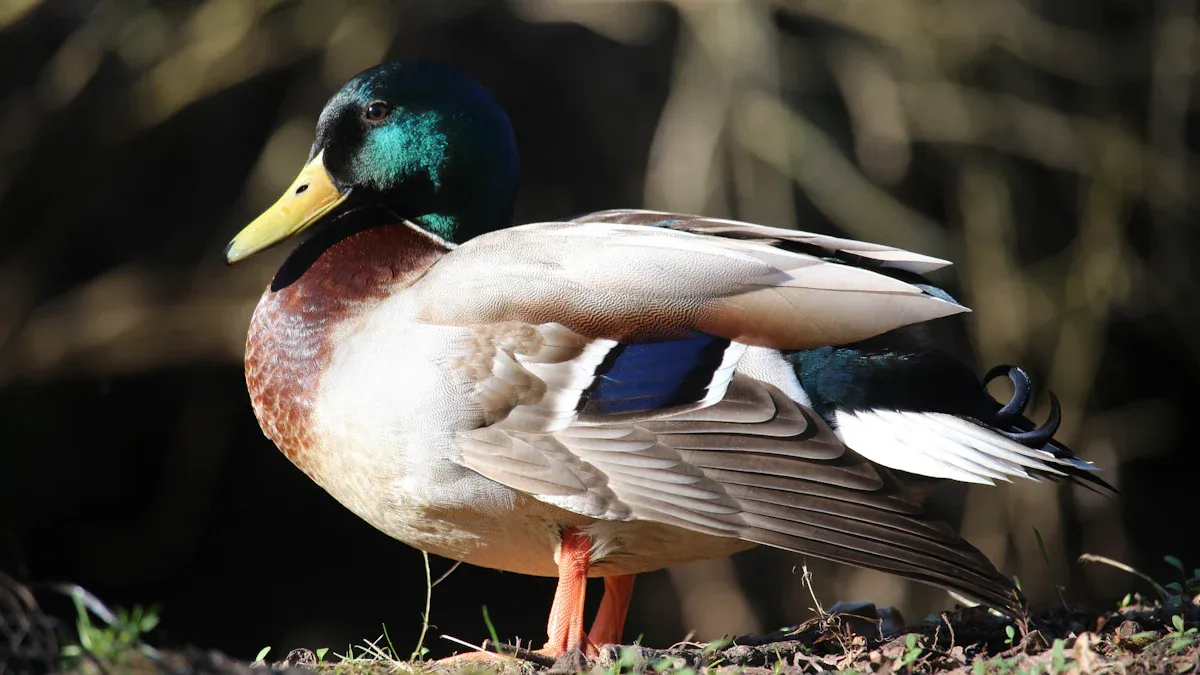
Key Identification Features
You can identify many duck species by looking at specific features. Feather patterns are a key visual cue. Body shape and wingbeat also help you tell different duck species apart. Look at colors and contrast. Colors are useful in sunny weather. Patterns of contrast help in overcast conditions. Silhouettes provide clues, especially for female ducks.
Ducks generally have potato-shaped bodies, egg-shaped heads, and long necks. Most ducks, except mergansers, have rounded bills. Their wingbeat is strong and direct. When ducks land, their webbed feet hang down.
Consider specific features for north american ducks. For example, the American Wigeon has a large white patch on its wing. The Northern Shoveler has a large, spoon-shaped bill. The Northern Pintail has a long, pointy tail feather.
You can also observe how ducks fly. Diving ducks fly low and fast. Puddle ducks often fly in smaller groups and can jump straight up from the water. Teal ducks are known for their fast, acrobatic flight. Size also gives you initial insights into duck species. Teal are small, while mallards are large. Coloration helps in good light. A bright blue wing patch can indicate a Blue-winged Teal. Feeding behavior is another clue. Puddle ducks tip up to feed. Diving ducks go completely underwater.
Male and Female Differences
Many duck species show clear differences between males and females. This is called sexual dimorphism. Male ducks, called drakes, often have bright, colorful feathers. Female ducks, called hens, usually have more muted colors in their plumage. For example, male Mandarin ducks have bright-red beaks and colorful feathers. Female Mandarin ducks have much duller colors. This difference helps you identify duck species easily.
Habitat and Behavior
Where you find ducks and what they do helps with identification. Different duck species prefer different habitats. Mergansers like clear water with many fish. Wood ducks prefer forested wetlands and flooded areas. Buffleheads and Goldeneyes live in cold, open water. Northern Pintails like shallow, open habitats. American Wigeons prefer open, shallow wetlands.
Teal ducks often live in shallow water with dense plants. Northern Shovelers like shallow wetlands rich in tiny organisms. Mallards are very adaptable. You can find these ducks in many types of wetlands, from city parks to large marshes. Observing their behavior, like how they feed or fly, gives you more clues for your duck identification chart.
Your Duck Identification Chart: How to Use This Guide
This duck identification chart helps you understand different types of ducks. You will learn about their unique characteristics. This guide divides ducks into categories based on their feeding habits. This makes identification easier.
Puddle Ducks: Dabblers
Puddle ducks are also known as dabblers. You often see these ducks feeding on the water’s surface. They do not dive deep. They tip their bodies forward, dipping their heads underwater for food. These ducks cannot feed in water much deeper than 75% of their total length. Their feet are smaller than diving ducks’ feet. This is because they do not need extra propulsion for diving. You will notice they take flight by springing straight up from the water.
Diving ducks need a running start. Puddle ducks have large wings relative to their body size. This allows vertical takeoff from land or water. Many species have colored wing patches, called speculum feathers. Their calls are often coarse and gravelly. Their legs are centrally positioned on their body. This lets them walk and feed well on land.
Diving Ducks: Submergers
Diving ducks are submergers. These ducks completely submerge themselves to find food. They are built for underwater movement. You will see them exhale air and compress their feathers before a dive. This makes them ride low in the water. Their dense bone structure helps them stay submerged. When they take off, they need a long, running start across the water.
This is often noisy. Their flight is fast, with rapid, buzzing wingbeats. They fly in straight lines, often at higher altitudes. You might see them in dense groups, called rafts, on large bodies of water. Their bills are narrower and stiffer. This helps them pull up mollusks or scrape vegetation from the bottom. Their legs are far back on their bodies. This makes them excellent underwater propellers. However, it causes them to waddle clumsily on land.
Other Common Types of Ducks
Some ducks do not fit neatly into the dabbler or diver categories. These types of ducks have unique features and behaviors. You will learn about these other species in later sections of this duck identification chart. This will expand your knowledge of various ducks.
Common Types of Ducks: Puddle Dabblers
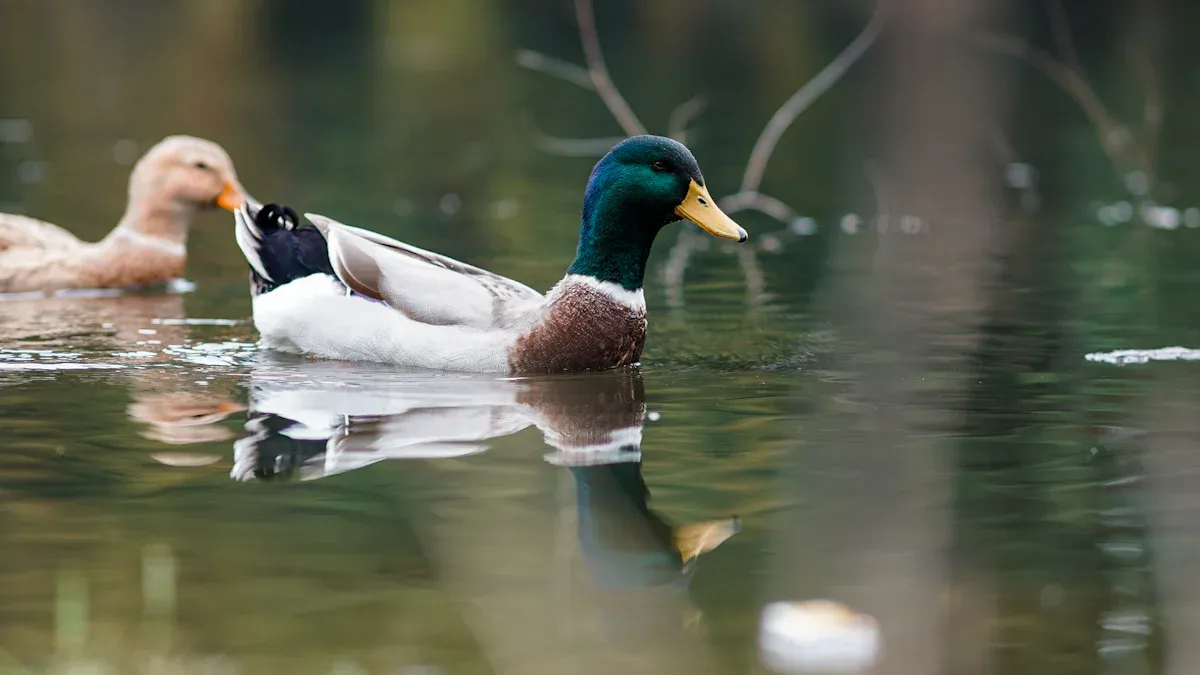
You will find many fascinating types of ducks among the puddle dabblers. These ducks offer unique features for you to discover.
Mallard Duck
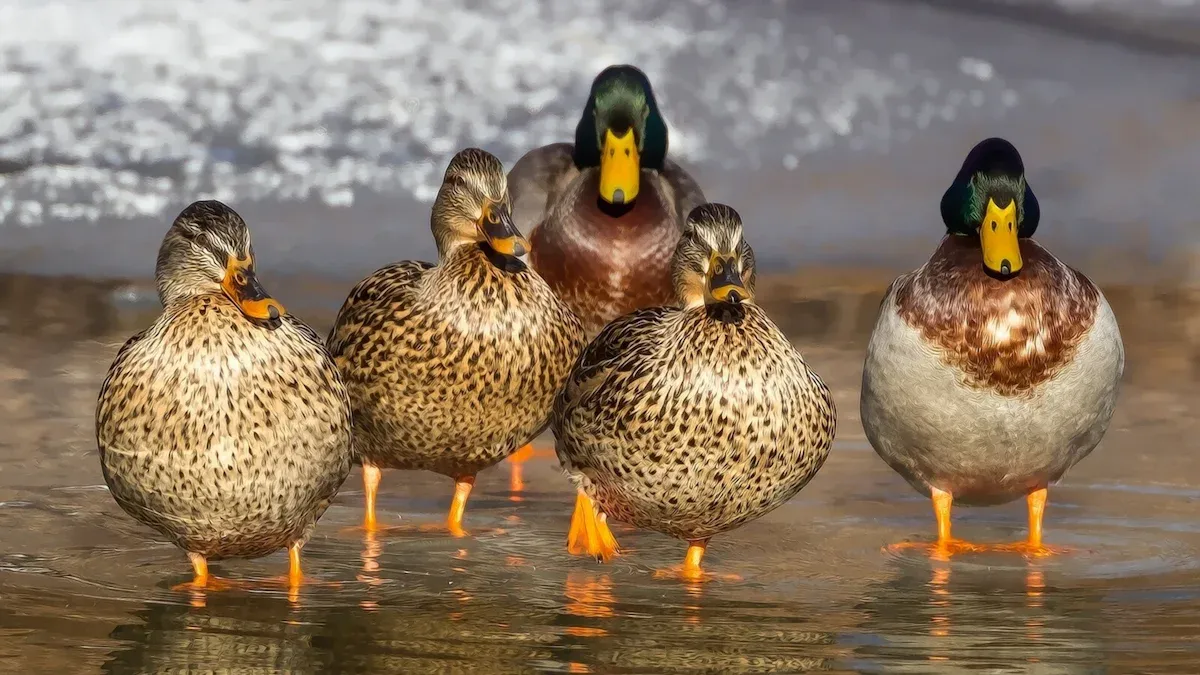
You often see Mallard ducks in almost any wetland. They are very common. Male Mallards are easy to spot. They have a gleaming, iridescent-green head and a narrow white ring around their neck. You will notice their chestnut-brown breast and a brownish-gray back.
Their belly is grayish, and they have a black rump. Look for white outer tail feathers and a recurved black central tail feather. Their bill is yellow to olive, and their legs and feet are orange. When they fly, you see a grayish wing with an iridescent blue speculum. This speculum has white margins. Male Mallards make a reedy “reab” sound.
Female Mallards look different. They are mottled or streaky brown all over. Their head has broken patterns of buff, white, gray, and brown. You will see a notable dark-brown eyestripe. Their bill is orange with black markings, and their legs and feet are orange. In flight, female Mallards show a brownish-gray wing with an iridescent blue speculum, similar to males. The leading white edge of their speculum extends further out. Female Mallards make a loud “quack” or a short series of “quacks.”
Mallards are generalist foragers. They eat many different foods. They dabble to feed, tipping forward to eat seeds and aquatic vegetation. They also forage on shore for plants and small prey. During the breeding season, they mainly eat animal matter. This includes aquatic insect larvae, earthworms, snails, and freshwater shrimp. During migration, they largely eat agricultural seeds and grain. You can find these ducks in marshes, ponds, rivers, lakes, and even city parks. This duck species is very adaptable.
American Wigeon
American Wigeons are distinctive ducks. Male American Wigeons have a prominent green eye patch. This stripe extends from behind their eye.
They also have a white cap on their head, which people sometimes call a “baldpate.” You will see a conspicuous white patch on their upper wing with green secondaries. Their underwing is white during flight. Non-breeding males have reddish-brown bodies and brownish-gray heads. They show a dark smudge around their eye. Males also have green streaks behind their eyes, rust-colored sides, a black rear, and a light blue bill. They have cream-colored feathers on the crown and front of their head. Males make a distinctive high-pitched whistle, often sounding like a “whee-ooo.”
Female American Wigeons have more subdued, warm brown bodies. Their heads are gray-brown with subtle black smudges around their eyes. They lack the green stripes you see on males. Both sexes have short, round, bluish-gray bills with black tips. They also display a conspicuous white patch on the upper wing surface. A thin, iridescent green stripe borders this patch. This makes them easy to identify when they fly. Females emit hoarse grunts and quacks.
Northern Shoveler
Northern Shovelers are unique ducks because of their large, spoon-shaped bill. This bill helps them strain aquatic vegetation, plankton, and tiny invertebrates. They use comb-like structures on their bill for this. You will see them use two main foraging techniques. They upend, and they filter the open water surface as they swim.
These ducks also show a unique group feeding behavior. They gather in a tight mass, often ten or more birds. They swim in a circular formation, usually counter-clockwise. As they swim, they dip their heads and beaks into the water to feed. This creates a “wheel-like” formation. Birds on the outer rim swim faster than those in the center. This behavior helps bring small organisms to the surface for them to eat. Most species of ducks do not feed this way.
Green-winged Teal
Green-winged Teal are small, compact ducks. Male Green-winged Teal in breeding plumage have a cinnamon head. A wide green swoop extends from their eye to the back of their neck. The American subspecies has a vertical white stripe on its side. Their breast is buff tan with small black spots. Their back and flanks are gray and black. Their belly is white. You will also see a black-bordered cream-yellow triangle on each side of their rump. Their bill is dark gray, and their feet are gray.
Female Green-winged Teal are brown with a yellowish streak along their tail. Both sexes possess green wing patches, called a speculum. You can see this speculum in flight, but it often hides when they rest. In flight, both sexes show an iridescent black-green speculum. Males have a rusty-orange anterior border on the secondary coverts. Females have a white anterior border. This helps you tell the species apart.
Blue-winged Teal
Blue-winged Teal are another small species of dabbling duck. You can often find these ducks in shallow wetlands. Male Blue-winged Teal have a striking white crescent shape on their face, right in front of their eye. Their head is dark, and their body is mottled brown. Both males and females have a distinctive sky-blue patch on their forewing. This blue patch is very noticeable when they fly. It helps you identify them quickly. Female Blue-winged Teal are generally mottled brown, similar to other female dabblers. They lack the male’s facial crescent. These ducks are known for their fast, agile flight.
Gadwall
Gadwall ducks are often overlooked, but they have distinct features. Male Gadwall have intricate black, gray, and white patterns on their body. Their body is patterned gray with a black end. They have bright white tail feathers. Their wing shows a light tan color. In flight, you will see a small white patch in the secondaries of their wing. At close range, you can note white, black, and chestnut markings on their inner wing. Their underwings are white. Males are mostly gray with a contrasting black stern.
Female Gadwall have light brown plumage. They resemble other female dabblers. You can distinguish them from a female Mallard by the orange lining on their dark bill. Their bill is gray and orange. They often look square-headed with a steep forehead. Both sexes show a square white patch on the trailing edge of the wing. This patch is obvious in flight. You can sometimes see it while they swim. This white patch is a key identifier for this species.
Common Types of Ducks: Diving Species
You will find diving ducks in deeper waters. These ducks submerge completely to find their food. They have special bodies for swimming underwater.
Canvasback
You can easily spot a Canvasback. This duck species has a distinct, sloping head and rich chestnut colors. It is a striking waterfowl species. Look for its sloped bill and wedge-shaped head. Males have bright red eyes. Females have black, shiny eyes. You will see a white belly and back. Fine, wavy lines on its back give it the name ‘canvasback’. Its chest and tail are black. Its head is brown. Canvasbacks are fairly large. They measure 18.9 to 22.1 inches long. Their wingspan is 31 to 35 inches. They weigh 30 to 50 ounces. Canvasbacks are expert divers. They can dive to depths of more than 9 meters. You will see them dive straight down to depths of around 7 feet.
Redhead
Redheads are fairly large diving ducks. They have a big-headed look. You will notice their steep forehead and thick neck. Their body sits high in the water. This distinctive shape and overall paleness are striking when they fly. Male Redheads are easy to identify. They have a chestnut-red head and neck. Their breast, lower neck, and upper back are black.
Their back and sides are gray with fine silvery lines. They have a white belly. Their bill is bluish-gray with a whitish band near the tip. In flight, they show a gray back and upper wings. Female Redheads are medium brown all over. Their face is pale. They are much paler brown than Ring-necked ducks. Scaup species lack a pale line behind the eye and are darker. Female Redheads have brownish-gray bodies and buffy-brown heads. Their belly feathers are white. In flight, they appear drab brown. Both sexes have steep foreheads and deep wing strokes. They fly in loose flocks.
Lesser Scaup
Lesser Scaup are medium-sized diving ducks. You will notice a small peak at the back of their head. This makes the back of their head and neck look flat. This is different from the rounded head of a Greater Scaup. Breeding male Lesser Scaup look black and white from a distance. Closer views show an iridescent purple to green sheen on their head.
Their back is finely barred black and white. They have a blue bill and a yellow eye. Their breast, neck, tail, and vent are purplish-black. Their sides and belly are white. Their back is white with gray flecking. Female Lesser Scaup are generally brown. They have a darker brown head. You will see a white patch at the base of their dark gray bill. Not all females have this patch.
All Lesser Scaup have white secondary feathers. This creates a white wing stripe on the trailing edge of the upper wing. This white stripe extends halfway along the wing. It typically does not reach the primary feathers.
Ring-necked Duck
Ring-necked ducks are sharply marked. Male Ring-necked ducks have gleaming black, gray, and white plumage. Their head and back are black. A white bar separates their gray sides from their black chest. You will see a distinctive white crescent. This forms a sharp triangle on their side between the breast and back. Their head is purplish-black and peaked. It may show iridescence. Their bill is bluish-gray with a white band near the tip. It has a dark gray or black tip. You will notice obvious rings on their bill. They have a cinnamon-colored neck ring.
This ring is very hard to see. You can only see it in optimal light. Female Ring-necked ducks are rich brown. They have a delicate face pattern. They are mostly gray-brown. They show a wide pale area near the base of their bill. Their head is more peaked than similar species like the female Redhead. In flight, males show bold black and white contrasts. Their wings are gray-black with a gray speculum. Females appear uniformly brown with gray speculums and a lighter head.
Other Common Duck Species to Spot
You will find many other fascinating ducks beyond the dabblers and divers. These species have unique traits that make them stand out.
Wood Duck
You will easily recognize the Wood Duck. This duck species is truly stunning. The adult male Wood Duck is colorful and unmistakable for most of the year. You will see iridescent chestnut and green coloration. Ornate patterns appear on nearly every feather. This makes them one of North America’s most beautiful waterfowl.
Wood ducks have very unique nesting habits. They do not build traditional waterside nests. Instead, they favor hollows in tree trunks several feet off the ground. You might also find them in artificial nest boxes. They do not dig their own nests. They use naturally occurring holes. These holes form from broken branches and decaying trunks. They also use abandoned woodpecker excavations. Females line the nest cavity with their own feathers and soft grasses. Both females and males select a nest site together. However, only the female actively examines cavities. She is solely responsible for lining the nest. Wood ducks are known for ‘egg dumping.’ Females lay extra eggs in nests already in use. This sometimes forms clutches of up to 40 eggs. This is a species survival adaptation. Males do not help incubate eggs. Their involvement declines after the female lays her clutch. They remain vigilant near the nest site. Nest cavities are typically at significant heights. They range from 0.6 to 17.3 meters, averaging 7.6 meters. This requires ducklings to take a ‘death-defying plunge’ to the ground or water within 24 hours of hatching. They are unusual among North American duck breeds. They frequently raise two broods in a season.
Northern Pintail
You can easily identify the Northern Pintail. This species gets its name from its most prominent feature. The tail is long and pointed. It is much longer and more prominent on breeding males. Females and nonbreeding males have shorter tails. Breeding males possess a very long tail. Male Northern Pintails are named for their two notably long black central rectrices, which are tail feathers. Long, pointed tail feathers are a defining feature. The Northern Pintail’s name, including its scientific name (Anas acuta), directly refers to its elongated and pointed tail feathers. This highlights the tail as a key characteristic.
Male Northern Pintails have a sleek appearance. They have a chocolate-brown head and a white stripe running up the side of their neck. Their body is mostly gray and white. Females are mottled brown. They also have a somewhat pointed tail, but it is much shorter than the male’s. You will often see these ducks in shallow wetlands.
Common Merganser
Common Mergansers are large, fish-eating ducks. Males have a striking appearance. They have a dark green head, a white body, and a black back. Their bill is long, thin, and red. It has a hooked tip for catching fish. Females have a rusty-brown head with a shaggy crest. Their body is gray.
Common Mergansers primarily feed on fish. They also eat snails, clams, and other invertebrates found underwater. This diet influences the taste of their meat. It gives it a ‘fishy’ or ‘gamey’ flavor. You will often see them diving in clear rivers and large lakes. They are powerful swimmers underwater.
Hooded Merganser
The Hooded Merganser is the smallest North American merganser species. This duck species exhibits distinct differences between sexes.
Adult Male (Breeding Plumage): You will see a striking black head with a large white crest. This crest is conspicuous when raised during courtship. Their dorsal areas, neck, and breast are mainly black with white markings. Their lower flanks are a rich reddish-brown or chestnut. The breast and undersides are mostly white. This white extends into white stripes across the crop and breast. They have pale eyes during their first winter.
Adult Female: You will notice a grayish-brown body. They have a narrow white patch over their lower breast and belly. A light reddish-brown crest extends from the back of their head. They have brown eyes.
Both Sexes: You will see narrow white stripes along their tertial wing feathers. These appear as longitudinal white stripes on the lower back when visible.
First-winter Birds: They have a grey-brown neck and upper parts. Adult females have much darker, nearly black upper parts. First-winter birds also have narrower white edges to their tertial feathers compared to adults.
In flight, males are mainly black and brown with a white belly. They have a rounded tail and white patterning on their head and inner upper wing parts. They have fast wingbeats. Females in flight are similar to males but lack the white patch on the head. They are overall brown rather than mainly black and brown.
You gain great satisfaction from identifying ducks. This duck identification chart helps you learn about different duck species. Always maintain distance. Do not feed human food to ducks. Respect their wetland habitats. Explore local parks and wetlands. Share your duck sightings with others. Continue learning about these amazing species. Resources like 50 Ducks offer real-time tracking for ducks, helping conservation efforts. Ducks Unlimited provides guides for mastering identification skills.