

A great ferret cage needs to be tall, sturdy, and truly escape‑proof.
Your little noodle needs tight bar spacing, multiple tiers to climb, and trays that don’t turn cleaning into a chore.
For 2026, standout cages include the Prevue Feisty Ferret Home, PawHut 4‑Tier Rolling Cage, X‑Large Deluxe 4‑Tier Mcage, YITAHOME Indoor Cat Cage Playpen, and PawHut 2‑Tier Small Animal Cage.
Next, we’ll sort through bar spacing, footprint, and budget so you can match the right cage to your space and your ferret’s zoomies.
| Prevue Pet Products 485 Feisty Ferret Home with Stand Black Hammertone |
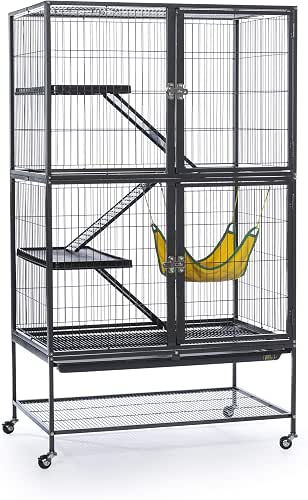
| Best Overall | Overall Dimensions (L × W × H): 31 × 20 × 54 in (with stand) | Tiers/Levels: Multi-level (ramps, shelves, hammock; can split into 2 spaces) | Primary Material: Steel metal cage with black hammertone finish | VIEW LATEST PRICE | Read Our Analysis |
| PawHut 4-Tier Rolling Metal Small Animal Cage |

| Compact Space-Saver | Overall Dimensions (L × W × H): 20.5 × 20.5 × 44.75 in | Tiers/Levels: 4 tiers | Primary Material: Alloy steel wire with nylon/polypropylene components | VIEW LATEST PRICE | Read Our Analysis |
| X-Large Deluxe 4-Tier Small Animal Rolling Cage |

| Most Secure Habitat | Overall Dimensions (L × W × H): 31 × 18.5 × 53.5 in (on stand) | Tiers/Levels: 4 tiers, 2-story double unit with full middle floor | Primary Material: Wrought iron/metal construction | VIEW LATEST PRICE | Read Our Analysis |
| YITAHOME Indoor Cat Cage Playpen with Hammock |

| Most Customizable | Overall Dimensions (L × W × H): 28 × 28 × 41 in | Tiers/Levels: Multi-level DIY panels with platforms and stairs | Primary Material: Black iron frame panels | VIEW LATEST PRICE | Read Our Analysis |
| PawHut 2-Tier Small Animal Cage 28″ Black |

| Starter Cage Pick | Overall Dimensions (L × W × H): 28.28 × 17.25 × 26.5 in | Tiers/Levels: 2 tiers | Primary Material: Metal cage with polypropylene/plastic trays | VIEW LATEST PRICE | Read Our Analysis |
More Details on Our Top Picks
Prevue Pet Products 485 Feisty Ferret Home with Stand Black Hammertone
Assuming you want a roomy, sturdy habitat that can grow with your ferrets, the Prevue Pet Products 485 Feisty Ferret Home with Stand is one of the most practical choices for 2026. You get a tall 31″ × 20″ × 41.5″ steel cage (54″ on the stand) with 7/8″ bar spacing, sized for adult ferrets, not kits. Inside, ramps, shelves, and a hammock let your ferrets run, jump, and lounge. Two huge escape-proof doors make access simple, while the divider lets you split the cage or keep it open. Caster wheels, storage shelf, and a removable bottom tray streamline cleaning and rearranging.
- Overall Dimensions (L × W × H):31 × 20 × 54 in (with stand)
- Tiers/Levels:Multi-level (ramps, shelves, hammock; can split into 2 spaces)
- Primary Material:Steel metal cage with black hammertone finish
- Mobility (Wheels/Casters):Stand with easy-rolling caster wheels
- Access Doors:Two large hinged doors; escape‑proof latches
- Included Accessories:Ramps, shelves, hammock, storage shelf, removable bottom tray
- Additional Feature:Converts to two cages
- Additional Feature:7/8-inch bar spacing
- Additional Feature:Space-saver storage shelf
PawHut 4-Tier Rolling Metal Small Animal Cage
PawHut’s 4-Tier Rolling Metal Small Animal Cage suits you provided that you want a compact footprint with lots of vertical space for an active ferret to climb and investigate. At just 20.5″ x 20.5″, it doesn’t eat floor space, but the 44.75″ height gives your ferret four levels to examine plus a hammock.
You’ll appreciate the strong alloy-steel bars, good visibility, and two doors for quick access. The pull-out tray makes daily cleaning faster, and the four rolling casters let you move the cage easily for vacuuming or room changes. It’s best for smaller ferrets or as an indoor secondary enclosure.
- Overall Dimensions (L × W × H):20.5 × 20.5 × 44.75 in
- Tiers/Levels:4 tiers
- Primary Material:Alloy steel wire with nylon/polypropylene components
- Mobility (Wheels/Casters):Four rolling casters
- Access Doors:Two front doors for feeding and access
- Included Accessories:Hammock, removable pull‑out tray, 4 wheels
- Additional Feature:Four-level vertical layout
- Additional Feature:Indoor-use specific design
- Additional Feature:One-year defect warranty
X-Large Deluxe 4-Tier Small Animal Rolling Cage
In case you want a tall, climbable habitat that still feels secure for small, wiggly escape artists, the X-Large Deluxe Double Unit 4-Tiers Rolling Cage (Model 201 from Mcage) stands out for its tight 1/2-inch bar spacing and full two-story layout. At 31″ x 18.5″ x 53.5″, it gives your ferrets vertical room without dominating your floor.
You get four tiers with solid, washable platforms and anti-slip ramps that protect paws. Two large front doors and a top hook door make cleaning and handling easy. The wrought iron frame, locking casters, storage shelf, hammock, bottle, and bowl add real everyday convenience.
- Overall Dimensions (L × W × H):31 × 18.5 × 53.5 in (on stand)
- Tiers/Levels:4 tiers, 2-story double unit with full middle floor
- Primary Material:Wrought iron/metal construction
- Mobility (Wheels/Casters):Rolling stand with 4 casters (2 lockable)
- Access Doors:Two large front hinged doors + one top hook door
- Included Accessories:Hammock, 2 platforms, 2 ramps, water bottle, food bowl, removable tray, storage shelf
- Additional Feature:Tight 1/2-inch spacing
- Additional Feature:Full middle separating floor
- Additional Feature:Top hook access door
YITAHOME Indoor Cat Cage Playpen with Hammock
Compact but surprisingly customizable, the YITAHOME Indoor Cat Cage Playpen with Hammock is ideal should you’ve got one or two ferrets and want a budget-friendly, modular setup you can easily reconfigure. Measuring 28 x 28 x 41 inches, it’s a compact “ferret apartment” that still gives them vertical space to investigate.
You’ll get sturdy black iron frames, smooth platforms, and hook-top stairs that latch firmly to the grid. Use the included cable ties to lock panels and prevent wobble or gaps. Three front doors plus a skylight make cleaning and handling simple. The plush hammock and detachable floor mats enhance comfort and hygiene.
- Overall Dimensions (L × W × H):28 × 28 × 41 in
- Tiers/Levels:Multi-level DIY panels with platforms and stairs
- Primary Material:Black iron frame panels
- Mobility (Wheels/Casters):Portable but no dedicated wheels mentioned
- Access Doors:Three front doors + top skylight door
- Included Accessories:Extra‑large plush hammock, smooth platforms, hook‑top stairs, floor mats
- Additional Feature:DIY configurable layout
- Additional Feature:Cable-tie reinforced stability
- Additional Feature:Three doors plus skylight
PawHut 2-Tier Small Animal Cage 28″ Black
Offering a practical 2-tier layout in a modest footprint, the PawHut 2-Tier Small Animal Cage, 28″ Black is best for ferret owners who need real vertical space without overwhelming a small room. You get 28.28″ x 17.25″ of floor space and 26.5″ of height, enough for supervised ferrets or as a secondary daytime enclosure.
Two deep plastic trays catch mess and slide out for fast cleaning, while dual doors improve access. The included ramp, food dish, and water bottle simplify setup. At just 13.2 pounds, it’s easy to move, and the 1-year warranty adds peace of mind, though heavy chewers might test the plastic.
- Overall Dimensions (L × W × H):28.28 × 17.25 × 26.5 in
- Tiers/Levels:2 tiers
- Primary Material:Metal cage with polypropylene/plastic trays
- Mobility (Wheels/Casters):Portable indoor cage; no wheels mentioned
- Access Doors:Two doors for access
- Included Accessories:Ramp, two deep trays, food dish, water bottle
- Additional Feature:Dual deep plastic trays
- Additional Feature:Included dish and bottle
- Additional Feature:Compact low-height footprint
Factors to Consider When Choosing Ferret Cages
At the time you’re comparing ferret cages for 2026, you’ll want to balance size and interior space with safe bar spacing, solid levels, and secure ramps that prevent slips and escapes. Pay close attention to door placement and accessibility so you can reach your ferret easily, clean thoroughly, and rearrange enrichment like hammocks, tunnels, and toys. You should also evaluate materials and general durability to make certain the cage stands up to chewing, scratching, and frequent cleaning.
Cage Size And Space
Aim for a cage at least 3–4 feet tall with 2–3 connected tiers. Secure ramps or ladders let your ferret run, climb, and investigate without feeling cramped. Prioritize designs that integrate hammocks and platforms to expand activity zones.
Check that trays, grates, and shelves are removable and washable so you can keep every level clean and odor-free. Good layout and easy cleaning make even compact cages feel more spacious and livable.
Bar Spacing Safety
Bar spacing directly affects whether your ferret stays safe inside the cage or ends up stuck or escaping. Aim for bars spaced at or below 1/2 inch (about 12 mm) for adults. This size stops heads, bodies, and especially tiny kits from squeezing through. Avoid cages with bars wider than about 3/4 inch, and steer clear of anything approaching 7/8 inch, which greatly increases escape and entrapment risks.
Look at both horizontal and vertical spacing. You want the tightest spacing on lower sections, where ferrets climb, dig, and push. Check joints around ramps, between tiers, and near shelves or hammocks for uneven gaps. Any opening should be smaller than a ferret’s paw—under 1/2 inch—to prevent feet or legs from getting wedged.
Doors And Accessibility
Although bar spacing keeps your ferret safely contained, door design determines how safely and easily you can interact with the cage every day. Look for at least one large front door, about 12–18 inches wide, so you can lift ferrets in and out, deep-clean, and move bulky items like litter pans and bedding without a struggle.
Multiple access points—such as a top skylight and extra side doors—let you spot-clean, refresh food and water, or supervise play without waking a sleeping ferret. Prioritize secure, ferret-proof latches: quarter-turn or spring‑loaded mechanisms resist pushing, sliding, and pawing. Check door placement too; large openings on lower tiers and full‑height access on tall cages help you reach every corner and remove trays for thorough cleaning.
Levels, Ramps, Enrichment
Whenever you compare cages, look beyond floor size and focus on how the levels and ramps actually function for your ferret. Multiple tiers enhance usable space without enlarging the footprint, letting your ferret climb, investigate, and burn energy vertically, which helps prevent boredom.
Look for a cage that combines a good horizontal run with connected upper levels, using ramps or tubes. Your ferret should be able to sprint on one level, then climb to others for varied exercise.
Choose solid, non‑slip platforms and ramps with no wide gaps and enough strength for hard landings. Avoid steep, narrow, or wire‑grid ramps. Gentle inclines with solid surfaces and 1–2 inch edge guards improve traction. Add washable shelves, hammocks, and hideaways to create distinct play and rest zones.
Materials And Durability
Prioritize materials and build quality from the start, because a ferret cage takes constant chewing, climbing, and hard landings. Choose a steel wire frame with a powder‑coated or hammertone finish; it resists rust and chewing far better than plastic or bare metal. Tight bar spacing—ideally 7/8″ or less for adults—helps prevent escapes and stuck heads.
Opt for thick, chew‑resistant polypropylene pans and trays that can handle repeated disinfecting without cracking. Check that all seams are welded or reinforced and that door latches feel solid, not wobbly, so the frame won’t deform under rough play.
Pick sturdy, anti‑slip solid ramps and platforms instead of thin wire, and look for corrosion‑resistant, lockable casters with a wide, stable base to prevent tipping.
Cleaning And Maintenance
Cleaning and maintenance shape your daily life with a ferret cage just as much as size or materials do, so you should treat them as core buying criteria. Look for cages with removable, pull-out trays and grates so you can dump waste and bedding fast without tearing the setup apart.
Plan on spot-cleaning daily and doing a weekly wipe-down of solid platforms, ramps, and hammocks using a pet-safe disinfectant to stay ahead of odors and bacteria. For bars and corner joints, use wire-safe brushes or non-abrasive pads, then rinse and dry thoroughly to prevent rust.
Once a month, deep-clean everything: disassemble, wash with warm soapy water, rinse, and dry fully. Keep spare liners, hammocks, and trays ready to swap in instantly.
Mobility And Placement
From where you park the cage to how easily you can roll it out of the way, mobility and placement affect your daily routine as much as the cage’s size. Should you move the cage often, choose one on lockable caster wheels or a lightweight stand so you can shift rooms without lifting.
Measure doorways, hallways, and the intended spot, including stand height and any roof access, to make certain the cage actually fits. Place it on a flat, hard surface or use a mat under casters to protect floors and prevent wobbling.
In case you’ll use it outdoors seasonally, keep it elevated, shielded from wind, and away from damp ground. Indoors, avoid direct sun, drafts, fumes, and leave space for cleaning and door swing.