
Nature’s palette displays unparalleled beauty in tropical bird species. Many possess vibrant colors, captivating observers. Their rarity adds intrigue. Tropical forests are home to 72% of global bird species. These exotic birds showcase nature’s most spectacular colors. We embark on a journey to explore some of the most visually stunning and uncommon tropical birds. This informative read highlights these unique creatures and emphasizes their conservation.
Key Takeaways
Tropical birds show amazing colors and unique features.
The Resplendent Quetzal lives in cloud forests. It is rare because its home is disappearing.
The Blue-and-Yellow Macaw is a popular bird. It faces threats from losing its home and illegal pet trade.
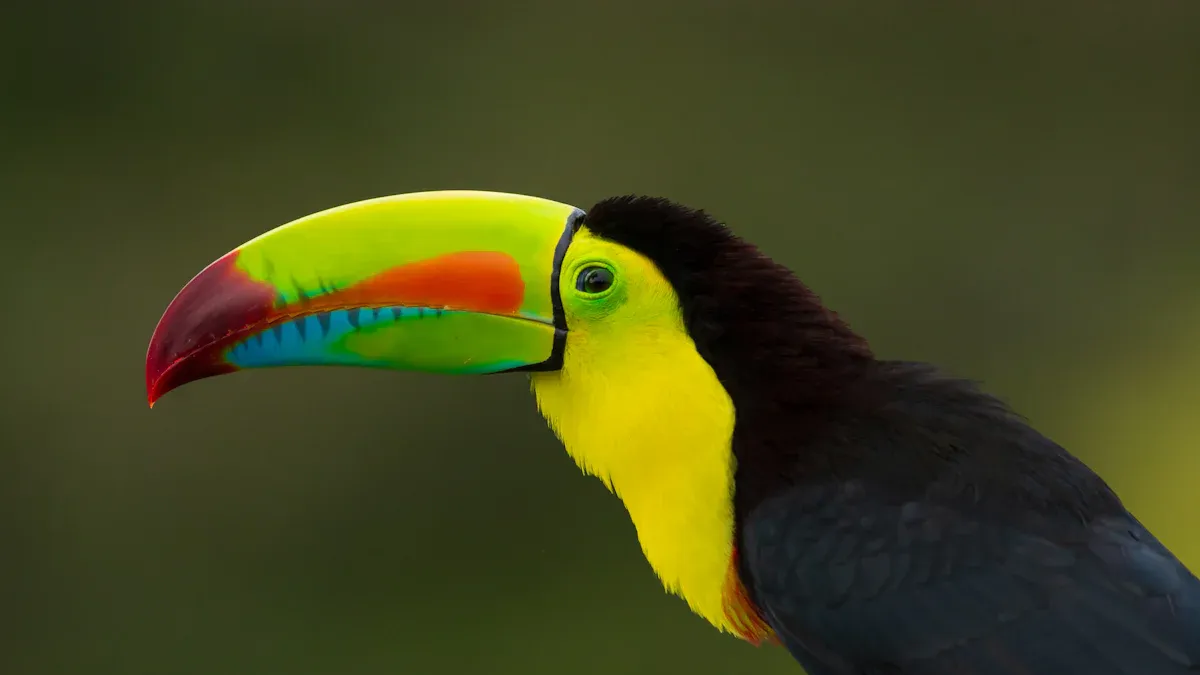
The Rainbow Toucan has a big, colorful bill. It lives in rainforests and is very social.
The Kakapo is a rare parrot from New Zealand. It cannot fly and is active at night. It needs special help to survive.
Resplendent Quetzal: Cloud Forest Jewel
While birds like the mandarin duck, lilac-breasted roller, golden pheasant, and gouldian finch also display incredible beauty, the resplendent quetzal stands out. This magnificent creature is a true jewel of the cloud forest.
Dazzling Plumage
The male resplendent quetzal shows off truly dazzling plumage. Its body shines with an iridescent green. This green can appear golden or even bluish in darker light. Other parts of its body show brilliant green and golden green hues. The colors shift from green-gold to blue-violet, green, cobalt, lime, yellow, and ultramarine. A bright red breast contrasts with its green body. White undertail coverts complete its striking look. The male also has exceptionally long tail feathers. These feathers can grow up to three feet long. This long plumage makes the resplendent quetzal one of the most colorful tropical bird species.
Elusive Habitat
The resplendent quetzal lives in the cloud forests of Central America. These forests stretch from Southern Mexico to Panama. They prefer montane cloud forests. These areas are often mist-soaked and support many different life forms. Cloud forests act like giant sponges. They soak up water and slowly release it into streams. This helps regulate water flow. These habitats are at tropical latitudes. However, they experience cool, temperate climates due to their high elevation. Drizzly mists, chilly nights, and occasional bright days define these areas. Torrential rains also occur in certain months.
Resplendent quetzals live at specific elevations. In the Talamanca Mountain Range, they live from 2,000 meters (6,562 feet) to 3,300 meters (10,827 feet). Providencia de Dota, another cloud forest, has quetzals from 1,700 meters (5,577 feet) to 2,950 meters (9,678 feet). Los Quetzales National Park also hosts these birds. It sits at 6,500-9,800 feet (2,000-3,000 meters) above sea level. The quetzal’s diet includes fruits from aguacatillo trees. These trees belong to the Lauraceae family. Their fruits provide important fats. These fats help the birds thrive in the cool, damp forest conditions. The resplendent quetzal is a shy and solitary bird. It often hides among the dense foliage.
Rarity Factors
The resplendent quetzal is a rare bird. Several factors contribute to its rarity. One major reason is habitat loss. Humans clear cloud forests for agriculture and development. This destroys the quetzal’s home. The birds also have specific breeding requirements. They need old, decaying trees to nest. These trees must be soft enough for them to excavate a nest cavity. Such trees are becoming harder to find. Unlike the more widely distributed golden pheasant, the resplendent quetzal relies on very specific environmental conditions. These conditions are shrinking. Conservation efforts are vital to protect this magnificent species.
Blue-and-Yellow Macaw: Vibrant Tropical Icon
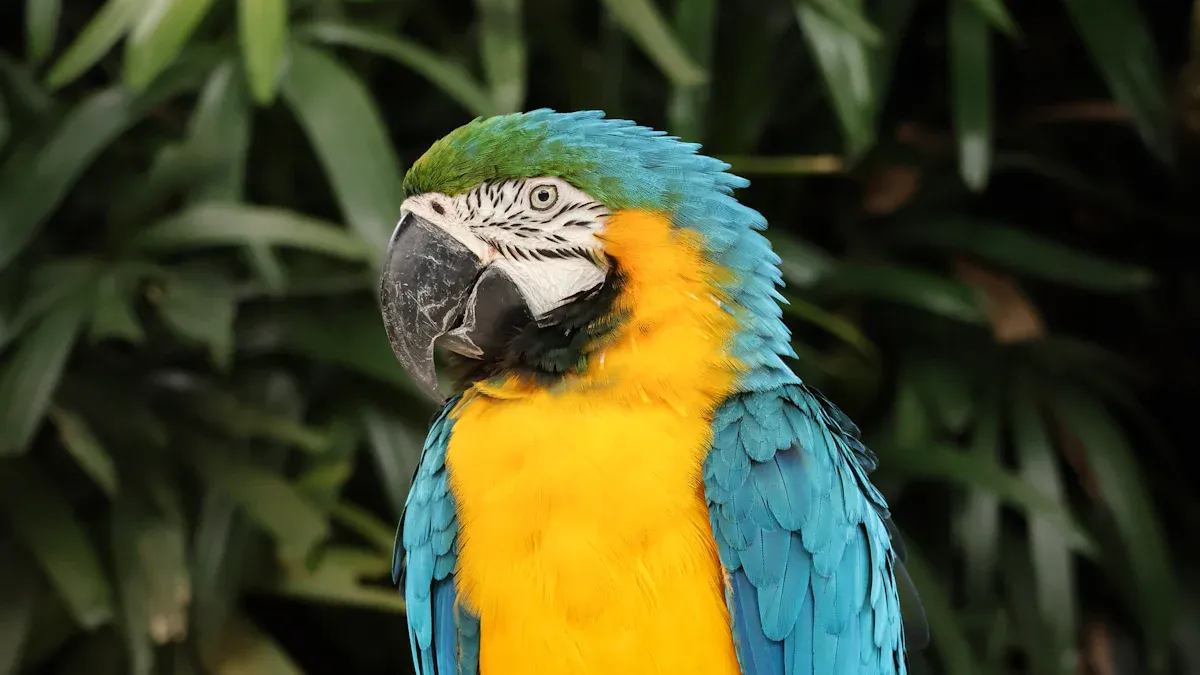
The blue-and-yellow macaw is a truly vibrant tropical icon. This large parrot captures attention with its striking appearance. It stands as one of the most colorful exotic birds.
Striking Blue and Yellow Colors
The blue-and-yellow macaw displays brilliant plumage. Its upperparts feature a vivid blue, often described as bright aqua blue. This contrasts sharply with its underparts. These underparts range from a light yellow to a deep yellow. Some birds even show light orange colors. This combination of bright colors makes the blue-and-yellow macaw instantly recognizable. An adult blue-and-yellow macaw typically has a wingspan of about 1.1 meters (42 inches). This impressive size adds to its majestic presence.
Amazonian Home
This magnificent tropical bird species calls the Amazon rainforest home. It also lives in other tropical regions of South America. Blue-and-yellow macaws thrive in various biomes. They inhabit rainforests, swampy areas, and riparian zones. They particularly favor palm swamps, including Mauritia flexuosa palm swamps. These areas provide abundant food and nesting sites for the birds. Their wide distribution across South America makes them a familiar sight in these lush environments.
Popularity and Status
The blue-and-yellow macaw is a popular pet bird. Its intelligence and beauty attract many enthusiasts. However, this popularity creates significant conservation challenges. Parrots, including the blue-and-yellow macaw, face threats in the wild. Habitat loss is a major concern. Humans clear forests for agriculture and development. The illegal pet trade also severely impacts wild populations. Poachers capture many birds for sale. These factors make parrots among the most endangered birds globally. The scarlet macaw, another beautiful species, faces similar pressures. Protecting these colorful birds requires dedicated conservation efforts.
Rainbow Toucan: Bill of Many Hues
Iconic Colorful Bill
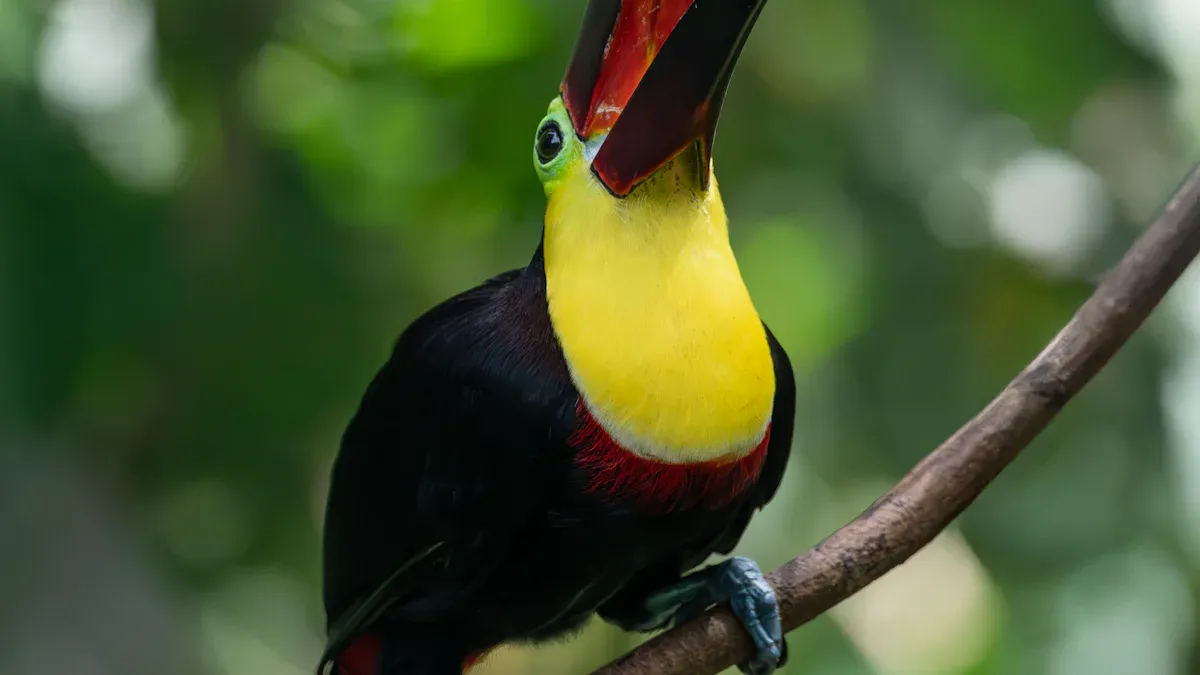
The Rainbow Toucan, also known as the Keel-billed Toucan, features an iconic bill. This bill displays many hues. It shows bright green, blue, orange, and yellow colors. The bill is very large. It can be one-third of the bird’s entire length. For a bird around 20 inches long, its bill makes up a significant portion. Toucans’ bills can even be four times the size of their head. This colorful bill helps identify this tropical bird species. It makes the toucan stand out among other colorful birds like the mandarin duck or the lilac-breasted roller. The bill is light. It helps the toucan reach fruit on thin branches.
Rainforest Dweller
The Rainbow Toucan lives in tropical rainforests. It prefers lowland rainforests. These forests are found along both the Caribbean and Pacific coasts of Costa Rica. The toucan travels in small groups. They move through the rainforest canopy. This habitat provides abundant food and shelter. They find fruits, insects, and small reptiles here. Like the golden pheasant, it thrives in lush, dense environments. These birds are an important part of their ecosystem. They help spread seeds.
Unique Social Behavior
Rainbow Toucans are very social birds. They often live in small, vocal groups. These groups typically have 6 to 12 individuals. They use loud calls to communicate. These calls help them maintain social bonds within their groups. Toucans also show playful behavior. They perform aerial acrobatics. They interact with each other in the treetops. Pair bonding is common. Birds engage in mutual preening. They also perform bill fencing. Non-vocal signals are also part of their interactions. They clap and tap their bills. This behavior differs from the more solitary golden pheasant. The rainbow lorikeet also shows strong social traits. They often gather in large flocks. This makes both the toucan and the rainbow lorikeet fascinating to observe.
Kakapo: The World’s Rarest Parrot
Unique Green Plumage
The Kakapo is a unique parrot from New Zealand. It has moss-green and yellow-green feathers. These colors help it blend into the forest. Dark brown and black bars and flecks cover its plumage. This pattern provides excellent camouflage. It hides the Kakapo among the native plants. This parrot is the heaviest in the world. It can weigh up to 4 kilograms. Its soft feathers feel like powder.
Flightless and Nocturnal
The Kakapo is the only flightless parrot. It also lives at night. This makes it very unusual among birds. It has strong legs for walking and climbing. Its wings are short. They cannot lift its heavy body. The Kakapo has special senses for its nighttime life. It possesses a well-developed sense of smell. This helps it locate food in the dark. It also has acute hearing. This allows the Kakapo to perceive sounds effectively in its nocturnal environment. Its vision adapts to low light. Retinal features optimize for twilight activity. This results in poor visual acuity in daylight. Its eyes are shaped like those of other nocturnal birds. This indicates adaptation for low light.
Critical Conservation
The Kakapo is critically endangered. It is one of the world’s rarest parrots. The most recent estimated population count for the Kakapo species is 252 birds, as reported in 2022. This figure represents a 25% increase in the population over the previous year. The Kakapo Recovery Programme started in 1995. This program greatly improved conservation efforts. Earlier attempts were less successful. Conservation strategies focus on increasing the population. They also aim to improve genetic diversity. To maximize opportunities for sperm competition, strategies include increasing population densities, optimizing sex ratios, and employing artificial insemination. Other key methods include:
Limiting hand-rearing for male Kakapo chicks.
Maximizing population densities ensures sufficient mate choice for females. It also maintains optimal female-to-male sex ratios.
Continuing artificial insemination promotes sperm competition. It also increases founder representation.
Implementing habitat restoration.
Utilizing predator control methods.
These efforts help protect this unique and colorful parrot.
We explored incredible tropical bird species. Their breathtaking beauty and unique traits captivated us. These colorful birds, including some of the most colorful exotic birds, need our protection. Their rainforest habitats are vital. Support conservation efforts. Learn about avian biodiversity. The natural world holds immense wonder. We must safeguard its fragility.
FAQ
What makes tropical birds so colorful?
Tropical birds get their vibrant colors from pigments in their diet or from the structure of their feathers. Carotenoid pigments, often from fruits and plants, create reds, yellows, and oranges. Structural colors, caused by how light reflects off feather cells, produce iridescent blues and greens.
What is a cloud forest habitat?
A cloud forest is a type of tropical or subtropical forest. It often has persistent low-level cloud cover. These forests are usually found in mountainous regions. They are very humid and support many unique plant and animal species. Cloud forests are crucial for biodiversity.
What does “flightless” mean for a parrot like the Kakapo?
A flightless bird cannot fly. The Kakapo is the only parrot that cannot fly. It has strong legs for walking and climbing trees. Its wings are too small and weak to lift its heavy body into the air. This makes it unique among parrots.
What are common threats to rare tropical birds?
Habitat loss is a major threat. Humans clear forests for farming and development. The illegal pet trade also harms many species. Poachers capture birds for sale. Climate change further impacts their specific environments. These factors reduce bird populations.