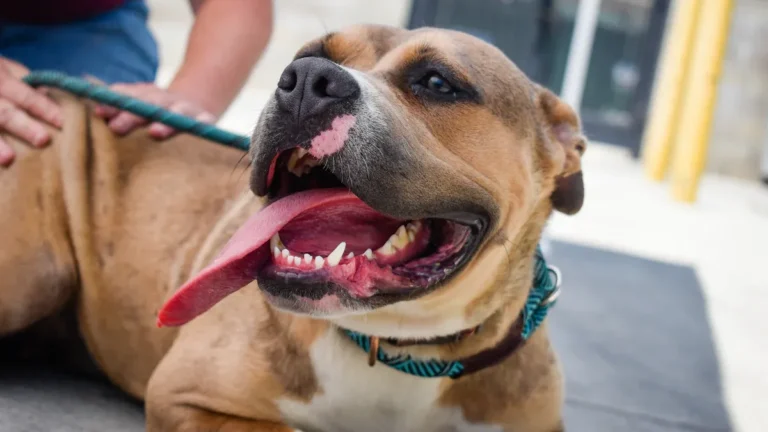

When your dog pants hard or rasps, has bright red then pale or blue gums, a fast weak pulse, or a rectal temp over 104°F, act fast. Move them to shade, offer small sips of cool water, wet belly and paws, and cool gently while staying calm. Watch for disorientation, stumbling, vomiting, bloody diarrhea, bleeding, or collapse and call your vet immediately for ambulance care, fluids, oxygen, and clotting tests — keep going to learn critical next steps.
Recognizing Excessive Panting and Respiratory Distress
Often you might observe panting before anything else, and it can tell you a lot about how your dog is handling heat.
You’ll notice early-on panting that’s faster or harder than usual.
You’ll feel a closeness as you watch and you’ll want to help.
Listen for respiratory noise or rasping that means breathing is strained.
Watch exercise pacing and see whether play turns into slow steps or stumbling.
Offer shade and move toward heat avoidance through guiding your dog to cool spots and water.
Stay calm and talk softly while you check breathing and behavior.
In case panting won’t ease with rest and cool, call your vet right away and get support from friends or clinic staff.
Abnormal Gum and Tongue Color Changes
In case your dog’s gums or tongue change color, it’s one of the clearest signs that something serious is happening inside their body, and you should act quickly. You’ll notice bright red, pale, or blue tones that tell you about oral perfusion and overall blood flow. Check mucosal pallor for anemia or poor circulation, and a cyanotic tongue suggests low oxygen. Use a gentle pressure test to see capillary refill and watch how quickly color returns. You’re not alone in this worry. Family and friends can help transport your dog while you cool them and contact your vet. Below is a quick visual guide to common changes and likely meaning.
| Color | What you see | What it could indicate |
|---|---|---|
| Bright red | Deep red gums | Initial heat stress |
| Pale | Mucosal pallor | Poor perfusion |
| Blue | Cyanotic tongue | Low oxygen |
| Muddy/gray | Sluggish color | Shock or toxins |
| Normal | Pink | Okay but monitor |
Rapid Heart Rate and Weak Pulse
You might notice your dog’s heart racing and the beats feeling fast but shallow, and that can be scary.
That rapid, shallow heartbeat often comes with a weak, thready pulse that feels soft and hard to find at the inner thigh or wrist, which means their circulation is failing.
Should you feel this, move your dog to a cool place and get veterinary help right away because these signs can quickly lead to shock and organ damage.
Rapid, Shallow Heartbeat
Notice how a rapid, shallow heartbeat feels frantic and weak at the same time; it’s a worrying sign that your dog’s heart is racing but not pumping well.
You may notice fast chest movements and a faint pulse upon touching the thigh. This can come from autonomic dysfunction during heatstroke, while the body fails to regulate blood flow.
You want to stay with your dog and call for help. At the vet they’ll use cardiac monitoring to track rhythm and strength while giving oxygen and fluids.
You can help by keeping your dog calm and cool, offering small sips of water, and avoiding vigorous activity. Trust that prompt care makes a big difference for your companion.
Weak, Thready Pulse
A weak, thready pulse happens while your dog’s heart is racing but barely pushing blood to the tissues, and that combination can make them feel cold, faint, or confused. You’ll notice a fast rate with little strength when you check the femoral artery. This means peripheral perfusion is poor and capillary refill could be slow. You stay close, calm, and focused while getting help. You support breathing and cooling without overdoing it. Below is an image-like table to help you envision the signs and care.
| Sign | Feeling |
|---|---|
| Rapid rate | Racing, fluttery |
| Weak beats | Like a whisper |
| Pale gums | Cool, sticky |
| Slow refill | Capillary refill delayed |
| Urgent care | Hands-on, steady touch |
Circulatory Collapse Risk
As soon as a dog’s heart races but barely squeezes blood out, it puts them at real risk of circulatory collapse, and you can feel both alarmed and helpless watching it happen.
You notice a fast, thready pulse and pale or muddy gums. That tells you tissues aren’t getting oxygen.
Inside tiny vessels, microvascular thrombosis might form and endothelial dysfunction can make leakage and clotting worse.
You’ll want to act quickly. Move the dog to cool shade, begin gentle cooling, and get urgent veterinary help.
At the clinic they’ll give IV fluids, oxygen, and drugs to support blood pressure and prevent clot spread.
Stay close, speak calmly, and let the team guide you through testing and monitoring every step.
Elevated Core Temperature and How to Check It
You’ll want to know that a normal dog temperature is about 100.5 to 102.5°F, and danger rises once it hits about 104 to 105°F.
To check your dog’s core temperature, gently use a lubricated digital rectal thermometer and keep your dog calm and supported while you take the reading.
In the event the temperature is high or your dog looks unwell, cool them safely and get veterinary help right away.
Normal Canine Temperature
Start off with grasping your dog’s normal temperature range so you can spot trouble quickly.
Your dog’s usual core temperature sits around 100.5 to 102.5°F, but ambient variation and circadian fluctuation can make it change a bit through the day.
You’ll learn your dog’s baseline by checking whenever they’re calm and rested.
Use gentle touch and a calm voice so your dog trusts you.
Watch for temps creeping above 104°F because that’s when risks rise fast.
In case you share care tasks, show others how to notice behavioral clues like heavy panting or unsteady steps.
That way your whole caring circle feels confident and connected.
Appreciating the normal range helps you act fast and keep your dog safe.
How to Take Rectal
Whenever your dog feels too hot, checking their core temperature with a rectal thermometer gives the clearest answer and helps you act fast, calmly, and confidently.
Initially, gather a digital rectal thermometer, water‑based lubricant, clean towels, and someone you trust to help.
Ask your helper to soothe and steady your dog while you use gentle owner technique: lift the tail, insert the lubricated tip about one inch, and hold still until the beep.
Speak softly and praise your dog the whole time.
After reading, clean the thermometer with soap and water, then disinfect it for thermometer hygiene before storage.
Should the number be high, cool your dog and get veterinary advice.
Practice this routine calmly so you both feel prepared.
When to Seek Care
After you’ve practiced taking your dog’s rectal temperature and feel comfortable with the steps, you can use that measurement to decide at what point to call your veterinarian or get emergency care. In the event the reading is 104°F or higher, you need to act. You belong to a caring group of owners who take preventive measures and learn owner education together. Trust your instincts, stay calm, and get help should signs worsen.
| Temperature (°F) | Action needed |
|---|---|
| <102.5 | Normal, monitor |
| 102.6–103.9 | Watch closely, cool gently |
| 104.0–105.0 | Call vet, begin cooling |
| 105.1–108.9 | Urgent vet care, rapid cooling |
| ≥109.0 | Emergency transport now |
Neurologic Signs: Disorientation, Ataxia, and Seizures
At the time a dog with heatstroke starts acting confused or wobbly, it’s a serious sign that their brain is being harmed by the high temperature and poor circulation.
You’ll notice disorientation, a strange slow blink, or staring.
Those signs link to brain swelling and rising seizure thresholds that make seizures more likely.
You might see ataxia, stumbling, a tilted head from vestibular dysfunction, or collapse.
Should a seizure happen, you’ll witness stiffening, paddling, or loss of awareness, followed by post‑ictal behavior such as confusion, pacing, or deep sleep.
Stay calm, keep them cool and shaded, and protect their airway.
Tell your vet exactly what you saw and at what point so they can act fast to reduce brain injury.
Gastrointestinal Symptoms: Vomiting and Bloody Diarrhea
As heatstroke pushes a dog into shock, their gut is one of the initial places to show trouble, and you’ll often see vomiting and diarrhea that can quickly turn bloody.
You’ll feel scared upon seeing this, and that worry is normal.
Vomiting and bloody stools come from poor blood flow and damage to the intestinal lining.
When you act fast through getting cool, steady care, vets can treat dehydration, bleeding, and infection risks.
Over time, healing might change your dog’s post‑recovery appetite and lead to intestinal microbiome changes that affect digestion.
You’ll work closely with your vet to manage fluids, medications, and gentle diets.
With attentive care you won’t face this alone.
Profound Weakness, Lethargy, and Collapse
Whenever your dog suddenly feels too weak to stand and seems drowsy or unresponsive, it can be terrifying, but staying calm will help you act quickly and confidently.
You might notice muscle weakness and a slow, heavy gait before collapse. Your dog could rest more and move less to save energy, so energy conservation becomes obvious as they lie down and refuse treats or walks.
That change links to other signs like panting, disorientation, or vomiting, so watch for them together.
Support your pet through moving them to shade, offering cool water in small sips, and wetting their belly and paws. Stay close, speak softly, and call your vet promptly.
You aren’t alone in this; your calm helps them.
Bleeding Tendencies, Shock Signs, and Coagulopathy
Once a dog with heatstroke starts bleeding or showing signs of shock, you’ll feel the urgency right away and want clear steps to help them, so stay calm and act quickly.
You could see bloody diarrhea, bleeding from gums, or tiny bruises.
These signs mean clotting can fail and shock can follow.
You’ll want immediate vet care where coagulation monitoring begins.
The team will check clotting times, platelets, and organ function.
You can support by keeping your dog warm but dry, elevating hind end should they faint, and avoiding oral fluids unless vomiting.
At the hospital they might give fluids, oxygen, and platelet transfusion should platelets be low.
You belong to a caring group and you can help your dog through this.