
Fiber Do Cats play a crucial role in your cat’s diet. It helps maintain digestive health and supports overall well-being. A general recommendation suggests that cats should consume about 2-5% fiber in their daily diet. This amount can vary based on individual health needs. Including the right fiber Do Cats can aid digestion and help prevent issues like constipation. Ensuring your cat gets enough fiber Do Cats can lead to a happier, healthier life.
Key Takeaways
Cats need about 2-5% fiber in their daily diet for optimal digestive health.
Different health conditions, like obesity and diabetes, may require specific fiber types to manage symptoms effectively.
Incorporating both soluble and insoluble fiber can enhance your cat’s digestion and overall well-being.
High-fiber diets can help manage weight and improve stool quality, making your cat feel fuller without extra calories.
Always consult your veterinarian before making significant changes to your cat’s diet to ensure their specific needs are met.
Fiber Intake for Cats
How Much Fiber Is Needed?
When considering your cat’s diet, understanding the amount of fiber they need is essential. While there are no specific recommended fiber levels for healthy adult cats in commercial cat food, most healthy adult cats thrive with approximately 2-4% fiber content. This range is generally considered moderate. Higher fiber percentages often appear in weight management formulas, which can be beneficial for cats needing to lose weight or manage certain health conditions.
For cats with specific health issues, the recommended amount of fiber can vary. For instance, high-fiber diets are crucial for managing gastrointestinal issues. Fiber aids in digestive functions and improves stool quality. Here’s a quick overview of fiber recommendations based on health conditions:
Obesity: High-fiber diets may aid in weight loss and glycaemic control.
Diabetes: High-fiber or high-protein low-carb diets show improvement in diabetic cats.
Gastrointestinal Issues: High-fiber foods are beneficial for digestive functions, especially in cases of constipation and diarrhea.
Condition | Recommended Fiber Type | Findings |
|---|---|---|
Obesity | High-fiber diets | May aid in weight loss and glycaemic control (Chastain et al, 2000). |
Diabetes | High-fiber or high-protein low-carb | Both types show improvement in diabetic cats (Kirk, 2006). |
Gastrointestinal | High-fiber foods | Beneficial for digestive functions and stool quality, especially in cases of constipation and diarrhea. |
Factors Affecting Fiber Needs
Several factors influence your cat’s fiber requirements. Age, breed, and activity level all play significant roles. For example, active breeds like Siamese and Bengal may benefit from slightly higher protein content in their diet. Hairball-prone breeds, such as Persians and Maine Coons, require food formulated with added fiber to help with hairball elimination.
Older cats may need special attention regarding fiber types. Fermentable fibers, like beet pulp and chicory pulp, promote healthy gut flora and produce short-chain fatty acids, essential for colon health. However, excessive insoluble fibers can lead to constipation in aging cats.
Chronic health conditions also significantly affect fiber intake recommendations. For instance, fiber can help reduce harmful uremic toxins in the gut for cats with chronic kidney disease. Other conditions that may require careful fiber management include obesity, inflammatory bowel disease, and constipation.
Types of Fiber Do Cats Need
Understanding the types of fiber in your cat’s diet is essential for their health. There are two main types of dietary fiber: soluble fiber and insoluble fiber. Each type plays a unique role in your cat’s digestive health.
Soluble Fiber Benefits
Soluble fiber dissolves in water and forms a gel-like substance. This type of fiber is moderately to highly fermentable, which means it can be broken down by bacteria in the gut. Here are some key benefits of soluble fiber for your cat:
Blood Sugar Regulation: Soluble fiber helps smooth out carbohydrate absorption. This action may reduce spikes in blood glucose levels, making it beneficial for diabetic cats.
Improved Stool Consistency: It aids in improving stool consistency by providing bulk and absorbing excess water in the intestines. This can help prevent diarrhea and promote regular bowel movements.
Gut Health: Adequate soluble fiber supports the growth of beneficial gut bacteria, which is essential for overall digestive health.
Common sources of soluble fiber in commercial cat foods include:
Pumpkin: Aids in hairball prevention and overall digestive health.
Beet Pulp: Provides moderate fermentability and enhances intestinal bulk.
Psyllium: Lubricates the intestines and helps prevent blockages from hair.
Rice Bran: Improves stool regularity and is beneficial for hairball prevention.
Apple Fiber: Adds bulk to stool and enhances digestion.
Insoluble Fiber Benefits
Insoluble fiber does not dissolve in water and does not form a gel. It is generally less fermentable than soluble fiber but plays a crucial role in your cat’s diet. Here are some benefits of insoluble fiber:
Digestive Regulation: Insoluble fiber helps regulate digestion and prevent constipation. It adds bulk to the stool, promoting regular bowel movements.
Satiety and Weight Management: This type of fiber helps dilute food energy, promoting satiety in cats. By allowing larger food volumes without additional caloric intake, it can assist in weight management.
Increased Fecal Output: Including insoluble fiber in your cat’s diet can lead to increased fecal output and defecation frequency, indicating changes in digestion and satiety signaling.
Common sources of insoluble fiber include:
Whole Grains: Brown rice, oats, and barley provide beneficial fiber that helps regulate digestion.
Vegetables: Green beans and carrots are low in calories and high in fiber, aiding in healthy digestion.
Some Fruits: Apples and pears, when prepared properly, can also supply insoluble fiber and contain vitamins and antioxidants.
By incorporating both soluble and insoluble fiber into your cat’s diet, you can support their digestive health and overall well-being.
Health Conditions and Fiber in Their Diet
Fiber for Weight Loss
If your cat struggles with obesity, increasing the amount of fiber in their diet can help. Obesity affects nearly 40% of domestic cats in the USA, and in some regions, this number can rise to 63%. High-fiber diets promote satiety, which means your cat will feel full without consuming too many calories. Research shows that fermentable fibers, like inulin, effectively reduce food motivation in cats. This makes them a great choice for weight management.
To help your cat lose weight, aim for a high-fiber diet that includes both soluble and insoluble fibers. Moderate amounts of dietary fiber can help manage calorie intake while still providing essential nutrients. You can add fiber by switching to high-fiber cat food or incorporating ingredients like canned pumpkin or psyllium into their meals.
Fiber for Digestive Health
Fiber plays a crucial role in maintaining your cat’s digestive health. For cats experiencing diarrhea or constipation, the right amount of fiber can make a significant difference. To manage constipation, consider adding both soluble and insoluble fiber to your cat’s diet. Insoluble fiber, such as cellulose, increases stool bulk and stimulates colonic contractions. However, be cautious; excessive insoluble fiber can lead to dehydration and nutrient digestibility issues.
For cats with diarrhea, soluble fiber can help absorb excess water and improve stool consistency. It’s essential to find the right balance of fiber types to support your cat’s digestive health effectively. Moderate amounts of both soluble and insoluble fibers are commonly recommended for managing gastrointestinal issues.
Here’s a quick summary of fiber recommendations for specific conditions:
Condition | Recommended Fiber Type |
|---|---|
Obesity | High-fiber diets |
Constipation | Moderate amounts of soluble and insoluble fiber |
Diarrhea | Soluble fiber for stool consistency |
By understanding how fiber can help with these health issues, you can make informed decisions about your cat’s diet and overall well-being.
High-Fiber Cat Food Options

Recommended Brands
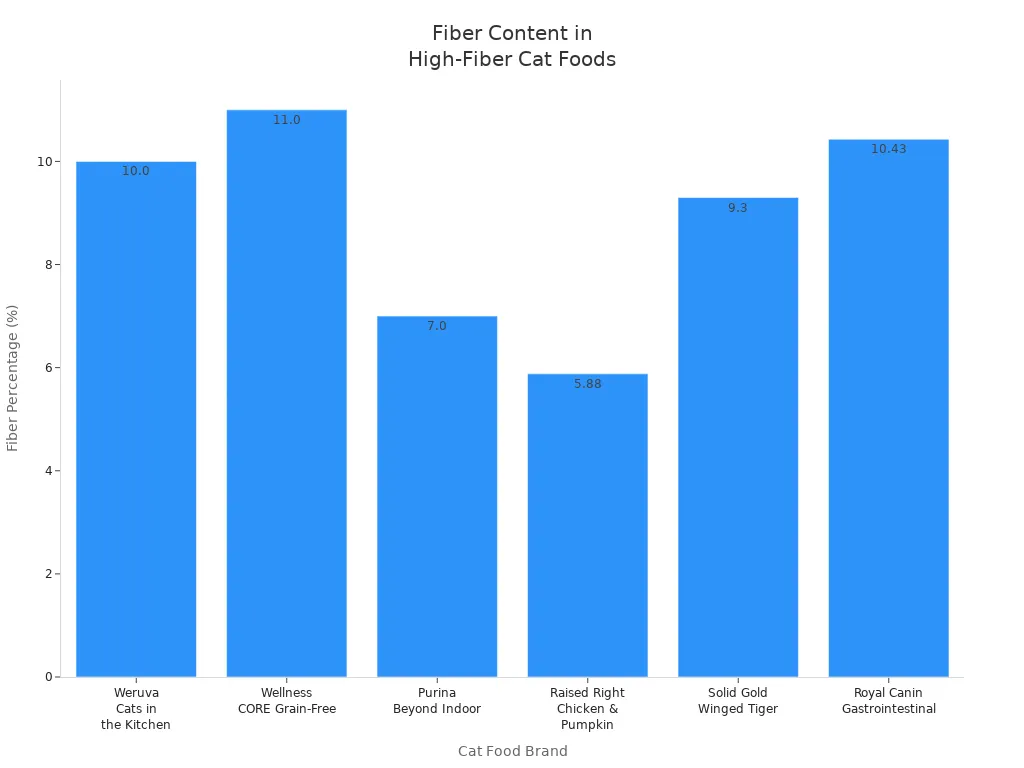
When selecting high-fiber cat food, you have several excellent options. Many brands offer formulas specifically designed to meet your cat’s fiber needs. Here are some popular choices:
Brand | Fiber Percentage (%) |
|---|---|
Weruva Cats in the Kitchen Funk in the Trunk | 10.0 |
Wellness CORE Grain-Free Indoor Chicken & Chicken Liver Recipe | 11.0 |
Purina Beyond Indoor Grain-Free Chicken & Sweet Potato Recipe | 7.0 |
Raised Right Chicken & Pumpkin | 5.88 |
Solid Gold Winged Tiger | 9.3 |
Royal Canin Gastrointestinal Veterinary Diet | 10.43 |
These brands provide a range of fiber percentages, allowing you to choose the right amount of fiber for your cat’s diet.
Homemade High-Fiber Options
You can also add fiber to your cat’s diet through homemade options. Many ingredients are safe and beneficial for cats. Here are some ideas:
Pumpkin: This is a popular choice. It is rich in soluble fiber and helps with digestion.
Green Beans: These are low in calories and high in fiber. They can help your cat feel full.
Carrots: Cooked carrots can be mashed and added to your cat’s food for extra fiber.
Psyllium Husk: This can be mixed into your cat’s food to increase fiber content.
When introducing new foods, do so gradually. This helps prevent digestive upset. Monitor your cat’s response to the new diet. If you notice any issues, consult your veterinarian for personalized advice.
Incorporating high-fiber cat food into your cat’s diet can improve their overall health. Whether you choose commercial brands or homemade options, ensure you provide the right amount of fiber for your cat’s specific needs.
In summary, fiber plays a vital role in your cat’s health. It aids in managing gastrointestinal issues like diarrhea and constipation. Here are some key takeaways:
Fiber is not a required nutrient, but it offers significant benefits for gut health and stool quality.
Different types of fiber, such as soluble and insoluble, provide unique advantages for your cat’s digestive system.
Tailored fiber supplementation can help manage specific health conditions, including obesity and inflammatory bowel disease.
By considering your cat’s dietary needs, you can enhance their overall well-being and longevity. Prioritize fiber in their diet for a happier, healthier life! 🐾
FAQ
How does fiber benefit my cat’s health?
Fiber aids digestion, helps regulate blood sugar, and promotes healthy bowel movements. It can also assist in weight management and prevent hairballs.
Can I give my cat too much fiber?
Yes, excessive fiber can lead to digestive issues like constipation or diarrhea. Always consult your veterinarian before making significant dietary changes.
What are some high-fiber foods for cats?
High-fiber foods include pumpkin, green beans, and psyllium husk. These ingredients can help improve digestion and overall health.
How can I introduce fiber into my cat’s diet?
Start by gradually adding high-fiber foods to your cat’s meals. Monitor their response and adjust as needed. Consult your vet for personalized advice.
Is fiber for pets necessary?
While fiber is not an essential nutrient, it offers significant health benefits. Including fiber in your cat’s diet can enhance their digestive health and overall well-being.