
Bird vocalizations create a fascinating world of sound. Birds develop an exceptionally loud chirp for crucial communication, mating, and survival in diverse environments. These powerful calls help them thrive. This blog explores the birds that chirp the loudest and the science behind their remarkable voices. We identify the top contenders for the loudest birds.
Key Takeaways
Birds chirp loudly for important reasons. They use loud chirps to talk to each other over long distances. They also use them to find mates and protect their homes.
The White Bellbird is the loudest bird. Its call can be as loud as 125 decibels. The Kakapo also makes very loud calls, up to 132 decibels.
Birds have special body parts that help them make loud sounds. The syrinx is a special organ that makes sound. Their mouth and beak also help make the sound louder.
Where a bird lives affects how loud it chirps. Birds change their calls to be heard in noisy places or through thick plants. Their behavior also makes them chirp louder, like when they want to find a mate.
Why Birds Chirp the Loudest
Birds do not just make noise for fun. They use their powerful voices for important reasons. These reasons are key to their survival and how they live. Loud chirps help birds in many ways.
Communication Needs
Birds need to talk to each other. Loud chirps help them send messages over long distances. This is especially true in places with a lot of background noise. Imagine trying to talk in a busy city. Birds face similar challenges. They sing louder when there is noise around them. This behavior is called the Lombard effect. It helps them communicate even with human-made sounds. Birds also often sing at higher pitches in noisy areas. Higher-pitched songs are easier to hear over low-pitched noise. This change in pitch helps their messages carry better. The ability to chirp the loudest ensures their calls reach other birds.
Mating and Territory
Birds use loud calls to find a mate. They also use them to protect their home. A strong, loud song tells other birds, “This is my spot!” Some birds sing very complex songs. These songs can scare away rivals. For example, some wrens sing very well. Other wrens are less likely to come near them. This shows that strong singing helps birds keep their territory safe. Song sparrows also have a warning system. They start with matching songs. Then they use quiet, menacing songs. If these signals do not work, they fight. Vocal signals help birds defend their space. The loudest birds often have the most success in attracting mates and holding their ground.
Alarm and Defense
Birds also make loud sounds when danger is near. These alarm calls warn other birds. Different predators get different calls. For example, a fast hawk flying overhead causes a special alarm. This call tells everyone to hide quickly. Grey Goshawks also make birds give strong alarm calls. Many birds have specific calls for specific threats. Barn Swallows have a call for a Sparrowhawk. European Blackbirds make noise for mammals like foxes. Noisy Miners even have different alarm calls for raptors, goannas, and cats. These loud warnings help birds stay safe. The ability to chirp the loudest can mean the difference between life and death for a bird and its flock.
Identifying the Loudest Birds
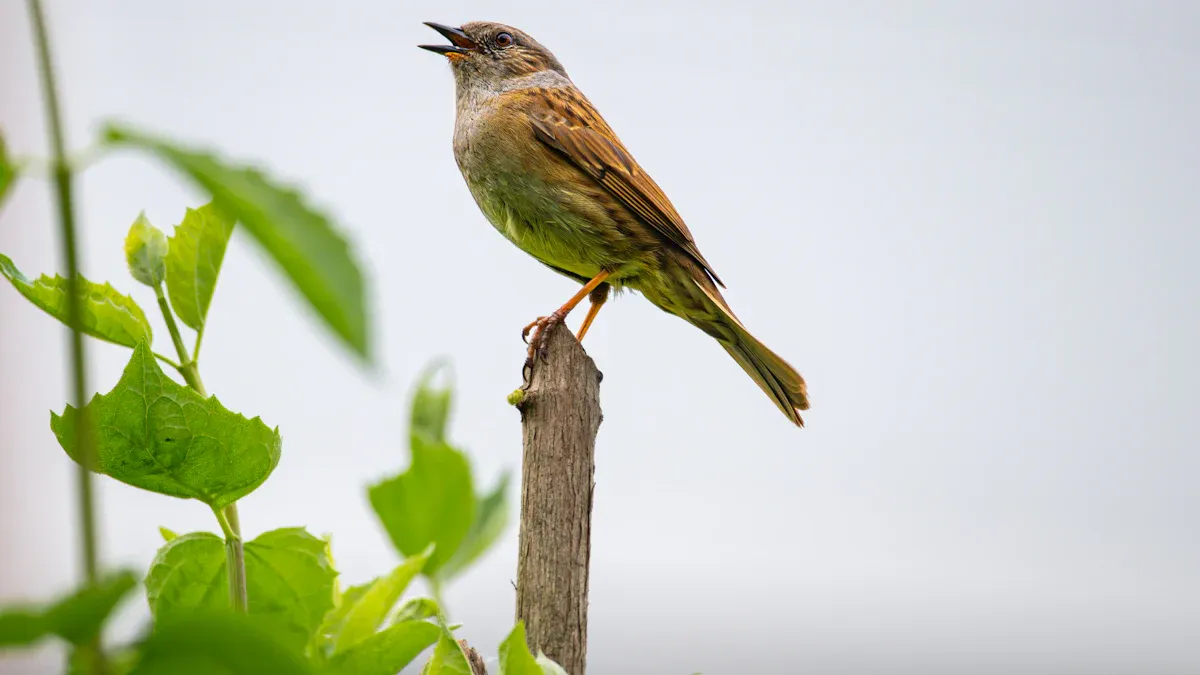
Many birds make loud sounds. Some birds, however, produce truly astonishing vocalizations. These loudest birds use their powerful voices for many reasons. They often need to communicate across vast distances or through dense environments. This section explores specific bird species known for their exceptionally loud calls. It includes their approximate decibel levels when available.
The Record Holders
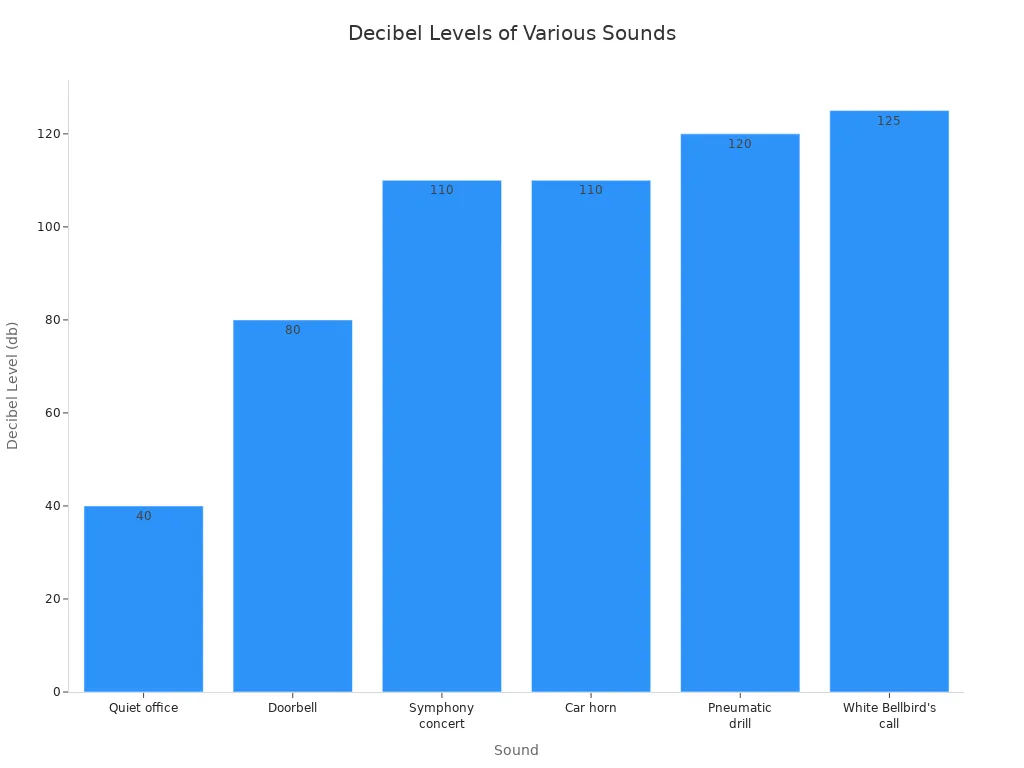
The avian world holds some surprising champions for volume. The White Bellbird from the Amazon rainforest stands out. Its call can reach an astonishing 125 decibels. This makes it the loudest bird with a documented record. One of its songs, emitted in the presence of females, reached levels around 125 decibels. To understand this volume, consider how it compares to other sounds:
Sound | Decibel Level (db) |
|---|---|
Quiet office | 40 |
Doorbell | 80 |
Symphony concert | 110 |
Car horn | 110 |
Pneumatic drill | 120 |
White Bellbird’s call | 125 |
Another contender for the highest decibel ranges is the Kakapo. This flightless, nocturnal parrot from New Zealand produces a 132-decibel vocalization during mating season. This booming call comes from a thoracic air sac. It combines with brighter tones. The kakapo call can be heard from over 4.5 miles (7 kilometers) away. This suggests it is very loud. The kakapo holds a high rank among loud animals.
Rank | Animal | Sound (in decibels) |
|---|---|---|
4 | Kakapo | 132 |
While the kakapo call is incredibly powerful, the White Bellbird currently holds the record for the loudest bird with a documented 125.4 dB.
The Three-wattled Bellbird also makes very loud calls, reaching up to 100 dB. These birds use their calls to attract mates in dense forest environments.
Iconic Loud Chirpers
Many other birds are famous for their strong voices. The Northern Cardinal has a clear, whistling song. It carries well through suburban areas. The Superb Lyrebird can mimic almost any sound. Its own calls are also quite loud. The Common Grackle produces harsh, metallic chirps. These sounds often fill parks and open spaces. Blue Jays are known for their loud, aggressive calls. They often warn other birds of predators.
The Carolina Wren is another bird with a surprisingly powerful voice. It is identified as ‘the loudest bird in the world when you are standing two feet away’. This small bird produces a rich, bubbling song that can be heard far away. The Great Kiskadee has a distinctive “kis-ka-dee” call. It is loud and unmistakable. The Prothonotary Warbler sings a loud, ringing “sweet-sweet-sweet-sweet” song. It echoes through swampy habitats.
Many parrot species are also known for their volume. They include parakeets, Eclectus Parrots, Sun Conures, and Cockatiels. These birds often live in large flocks. They use loud calls to communicate within the group.
Bird | Decibel Level |
|---|---|
Cockatiel | 123 |
Sun Conure | 120 |
Peacock | 115 |
Eclectus Parrot | 115 |
Parakeet (loudest) | 110-112 |
The Mealy Amazon Parrot and Nanday Conure also produce significant noise. The Moluccan cockatoo is particularly famous for its ear-splitting screams. The cockatoo can be very vocal. The chirp of a moluccan cockatoo can be startlingly loud. A cockatoo often uses its voice to get attention. A cockatoo can also make many different sounds. The cockatoo is a popular pet, but its loud calls can surprise owners.
Surprising Voices
Some birds might not seem like they would be loud. However, they can produce powerful sounds. For example, some small finches have surprisingly strong calls. They use these calls to defend their small territories. Even some hummingbirds make loud chirps during mating displays. These sounds are often high-pitched. They can be heard over a good distance.
Nocturnal Noisemakers
Some of the loudest birds sing at night. These nighttime songsters can be quite disruptive. The Eastern Koel is one such bird. Male Pacific Koels vocalize throughout the day. They also call at night. Their ‘cooee’ call is delivered very frequently. It happens about 49.1 calls per hour. This call is harmonically rich. It is pleasant to human hearing. It makes up 33% of calls emitted by koels.
The Channel-billed Cuckoo is another nocturnal bird. It is known for its loud, insistent two-note calls. These calls can happen very early in the morning or in the middle of the night. They increase in pitch. They become ‘hysterical squeaks’. They can also sound like a ‘huge, angry and deeply confused seagull’. This nocturnal vocalization is so disruptive. It can make it difficult for people to sleep. The Channel-billed Cuckoo is often heard rather than seen. Its ‘loud raucous call’ is particularly active in the early morning and evening. Its nocturnal calls are a ‘harsh squawking cry’. It descends into laughing noises. These loud calls are known to be so disruptive. They ‘can make it hard to sleep’.
Factors in Chirp Volume
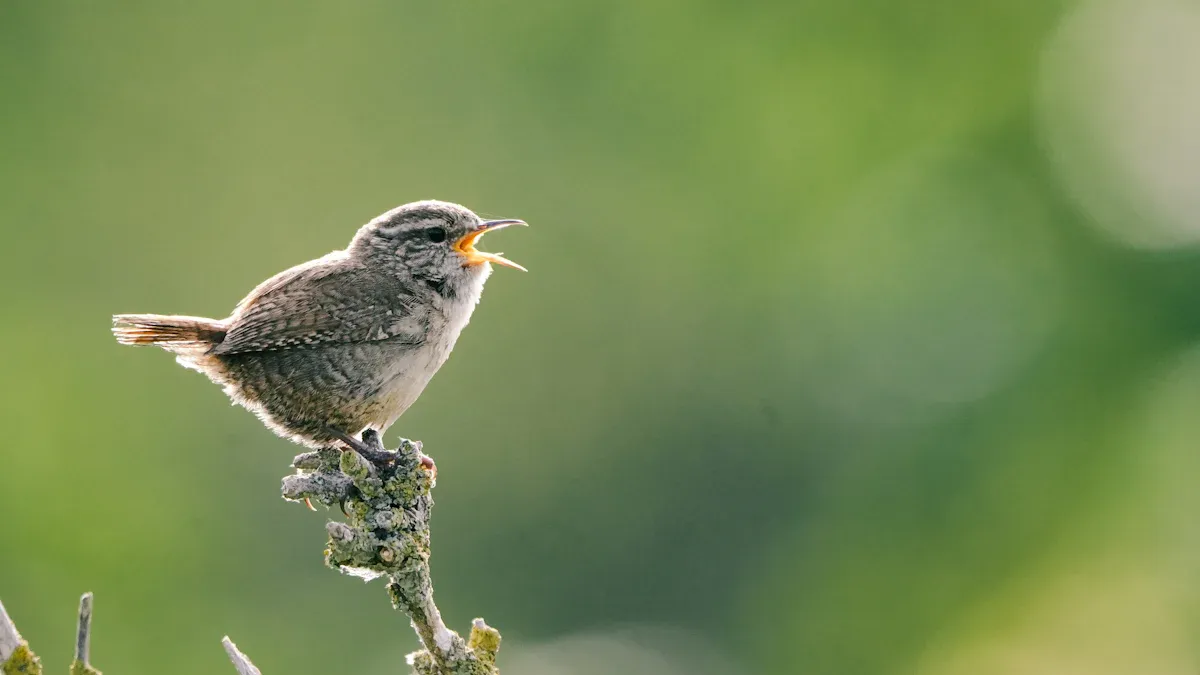
Many elements help birds produce loud sounds. These elements include their body parts and the places where they live. They also include what they are trying to do when they call.
Vocal Anatomy
A bird’s body design allows it to make powerful sounds. The syrinx is a special vocal organ. It sits at the bottom of the windpipe. This organ is the main source of sound for birds. The syrinx has internal membranes that vibrate. These membranes can even vibrate on their own. This allows birds to make two different sounds at once. The vocal tract is the space above and below the syrinx. It shapes the sound the syrinx makes. Birds like cardinals can change the size of their mouth and throat cavity. This helps match the sound’s main frequency. This matching makes the sound louder. It helps small sound sources become very powerful. The beak also helps. It acts like an opening to send the sound into the air. Birds also use air sacs. These sacs help with airflow and make sounds resonate. The syrinx’s position gives birds a strong advantage for making sound. This helps them create loud calls for talking over long distances, finding mates, and defending their space.
Habitat Influence
Where a bird lives greatly affects how its calls travel. Dry places make it harder for sounds to spread. Singing also uses more water in dry areas. This makes it harder for birds to sing loudly. Birds with low-frequency songs do better in deserts. They can reach other birds more easily. Dense plants, like leaves and branches, block bird calls. They make it hard for sounds to pass through. High-pitched sounds get absorbed more in thick plants. Birds might change their calls to higher pitches to avoid city noise. But these higher sounds still struggle in dense plants. Open areas with big trees are best for bird calls. Lower-frequency sounds travel better in complex places. But they can get lost in low-frequency noise. Birds must find a balance. They adjust their calls to deal with both noise and plants.
Behavioral Context
A bird’s behavior also affects how loud it chirps. Birds often sing louder when they want to attract a mate. They also sing loudly to warn other birds away from their territory. Male ochre-bellied flycatchers use their songs for both attracting females and competing with other males. The way a male bird moves can also make his song more effective. For example, male starlings respond more strongly when movements and songs match. This shows that the presence of another bird, whether a mate or a rival, changes how a bird uses its voice.
The avian world features many diverse birds that chirp the loudest. Their powerful calls play critical roles in their lives. These vocalizations are crucial for territorial behaviors and effective communication over long distances. High-amplitude songs attract mates, showing their importance in sexual selection. Louder signals also elicit stronger aggressive responses from rivals, aiding social aggression and territorial defense. The volume of a bird’s chirp is a testament to its evolutionary adaptations for survival and communication. Listen closely to the avian world. Appreciate the power and purpose behind each loud chirp from these loudest birds.
FAQ
What bird holds the record for the loudest chirp?
The White Bellbird holds the record. Its call can reach an amazing 125 decibels. This bird lives in the Amazon rainforest. It uses its loud voice to attract mates.
Why do birds chirp so loudly?
Birds chirp loudly for several reasons. They communicate across distances. They attract mates and defend their territory. Loud chirps also warn other birds about danger. This helps them survive.
How do birds produce such loud sounds?
Birds use a special organ called the syrinx. It vibrates to make sound. Their vocal tract and beak also help. These body parts shape and amplify the sound. Air sacs help with resonance.
Are there birds that chirp loudly at night?
Yes, some birds are nocturnal noisemakers. The Eastern Koel calls frequently at night. The Channel-billed Cuckoo also has loud, insistent calls. These sounds can be quite disruptive. 🦉