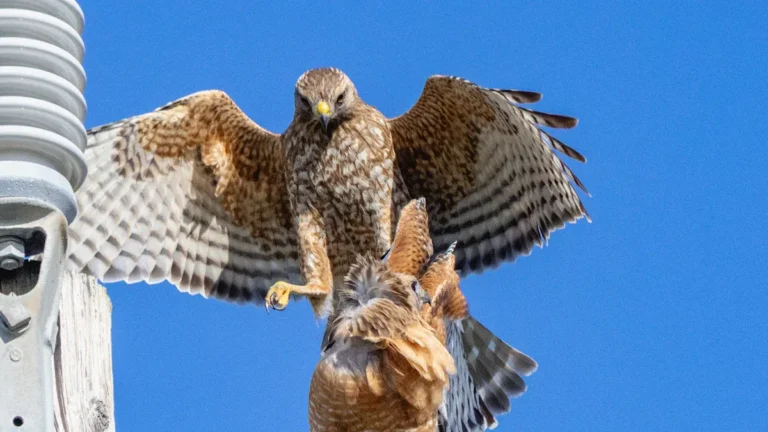

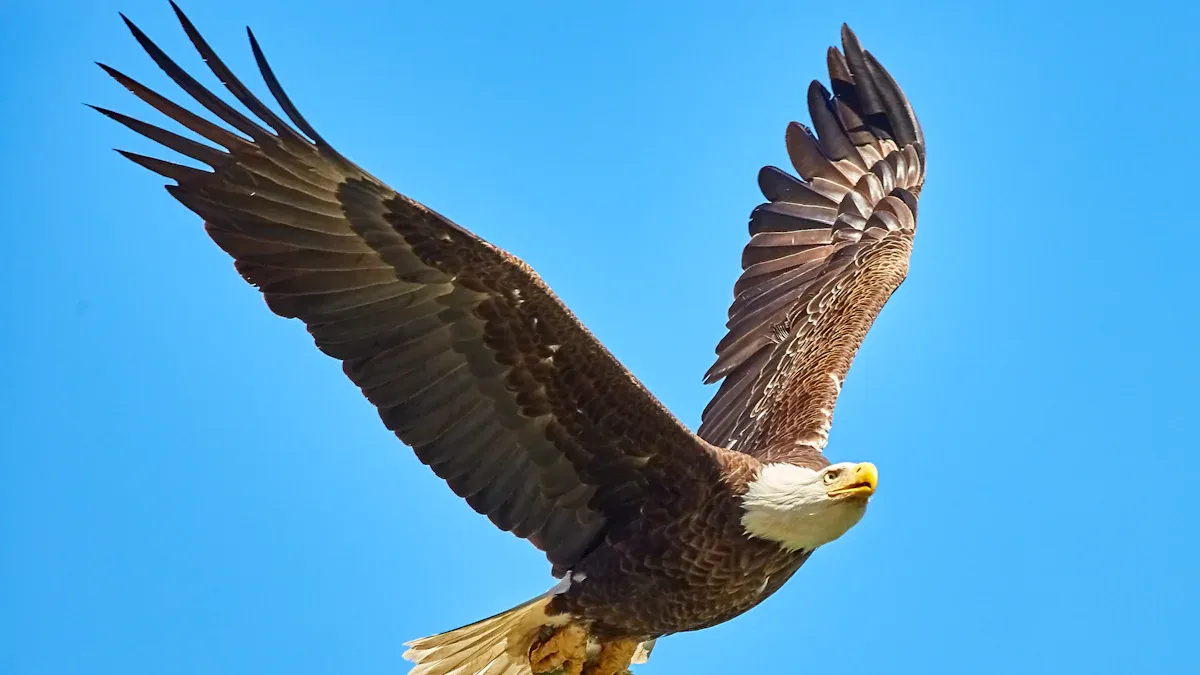
An eagle majestically circles high above, a silent master of the sky. Many people wonder why eagles fly so high. They use soaring to conserve energy. Thermal air currents provide efficient travel. Their exceptional vision gives them a superior hunting advantage. Intricate biological and physical adaptations make this aerial dominance possible.
Key Takeaways
Eagles fly high to save energy. They use special wings to glide on air currents.
Eagles use warm air currents called thermals. These thermals help them climb high without flapping their wings.
Eagles have amazing eyesight. They can see small prey from very far away.
Flying high helps eagles hunt better. They get a wide view of the ground to spot food and avoid danger.
Soaring: Why Eagles Fly So High for Energy Conservation
Eagles are powerful birds of prey. They must stay airborne for long periods to hunt and observe their territory. This need drives their highly energy-efficient flight. Soaring allows them to conserve energy, making long flights possible without constant, tiring wingbeats.
Wing Design and Aerodynamics
An eagle’s wings are perfectly designed for soaring. They possess “passive soaring wings.” These wings are somewhat shorter and wider than those of birds that actively flap more. This design helps eagles take off easily. It also makes them very effective at catching rising columns of warm air called thermals. The primary wing feathers at the tips fan out. This creates “slots” that change how air flows over the wing. These slots optimize the wings for thermal soaring.
Eagles have “low aspect ratio wings.” This means their wings are relatively short and wide. This design produces strong air vortices for the same amount of lift. The spread-out feathers at the wingtips are very important. They convert upward air currents back into forward thrust, working like small winglets. The shorter span of these wings also helps eagles make controlled dives and fast turns. They require less effort to maneuver quickly. Interestingly, eagles, including Golden and Bald Eagles, do not have a deep layer of slow muscle fibers in their chest muscles. Many other elite soaring birds like vultures do. Instead, eagles use fast muscle fibers to hold their wings steady during soaring. These fast fibers have a high capacity for aerobic work. They can also tune their contractions to work efficiently for sustained soaring. This difference in muscle type may relate to how raptors primarily use thermal soaring with occasional flapping.
Minimizing Energy
Eagles fly so high to save energy. High-altitude soaring, especially using thermals, allows eagles to gain height. This height is a form of stored energy. This stored energy means they do not need to flap their wings as much. This saves many calories. Thermal soaring combined with gliding makes migration faster and uses less energy for golden eagles. They prefer to travel when conditions are good for thermal soaring. This shows how much energy they save.
Eagles minimize energy use by finding and using rising air currents, called uplifts. These uplifts help them climb high. Then, they can glide horizontally without needing to flap their wings. Flapping uses a lot of energy. This learned behavior requires advanced skills to find uplifts and use them well. It allows eagles to travel long distances with very little energy. Their energy use can be as low as when they are resting. For example, Bonelli’s eagles mostly use soaring flight. This uses much less energy than flapping. They can fly long distances with minimal energy when weather conditions create thermal uplifts or when hills create orographic uplifts.
The energy cost of flapping flight increases greatly with a bird’s body mass. For large birds, flapping can cost several times their resting energy level. In contrast, soaring and gliding use much less energy, about twice their resting energy level. Flapping flight can cost 30 times the resting metabolic rate. Soaring costs only twice the resting metabolic rate. This makes soaring an incredibly efficient way for large birds to fly.
Sustained Flight
Eagles maintain sustained flight over long distances with minimal energy output. Soaring is a learned skill. It requires advanced thinking to find uplifts. It also needs precise body and wing movements to get energy from these air currents. Eagles might tilt their bodies sharply in narrow thermals. They might also slow down their glide if they cannot find the next thermal. This type of eagle flight allows them to cover vast distances with very little energy. Their energy use is almost as low as when they are resting.
One golden eagle, tracked with instruments, flew over 60 miles in two hours. It used atmospheric gravity waves. The eagle repeatedly climbed hundreds of feet by circling within these waves. Then, it turned this gained height into distance through long glides. This strategy allowed it to complete a long journey with very little energy from its body. The energy from the atmosphere supported its flight. Eagles regularly use these atmospheric gravity waves to gain altitude. They then convert this height into distance through many glides. This helps them cover significant distances with minimal energy. They also use thermals that rise from the ground for climbing and soaring. Older, more experienced eagles are better at finding and using these uplifts. This skill helps them fly over larger areas. This learned behavior allows soaring birds to travel far with energy costs almost as low as when they are resting.
Harnessing Air Currents: The Invisible Lifts
Eagles are masters of the sky. They expertly use invisible air currents to fly high and travel far. These natural lifts allow them to conserve energy.
What Are Thermals?
Thermal air currents are rising columns of warm air. The sun’s uneven heating of Earth creates them. Certain areas, especially the tropics, receive more warmth. The Earth’s surface heats up. This warms the air directly above it. This warmed air expands and becomes lighter than the surrounding air. It then rises, forming a warm air current. Cooler, denser air moves in to replace the rising warm air. This creates a cool air current.
Thermal columns, or thermals, are rising masses of buoyant air. They represent a convective current in the atmosphere. This current transfers heat vertically. The uneven heating of Earth’s surface by solar radiation forms them. The sun warms the ground. This in turn heats the air directly above it. This warm air expands. It becomes less dense than the surrounding air. Then, it rises. As the air rises, it cools. This happens due to expansion in the lower pressure at higher altitudes. The rising air stops when its temperature and density match that of the surrounding air.
Strong thermals need specific atmospheric conditions. Uneven heating of the Earth’s surface by solar radiation warms the ground. The warmed ground heats the air directly above it. The warmer air expands and becomes less dense than the surrounding air. This lighter air rises, forming a thermal column. Moisture, an unstable airmass, and a lifting force (heat) are all necessary for strong thermals to develop.
Riding the Lifts
Eagles achieve significant altitudes and conserve energy by using these air currents. They use thermal updrafts and orographic updrafts. Thermal updrafts allow eagles to ascend to great heights with minimal energy. This happens especially in open environments like grasslands. Eagles can reach altitudes of 10,000 to 15,000 feet using these currents. They circle within a thermal, gaining height effortlessly. Once high enough, they glide to the next thermal. This method saves them much energy.
Types of Air Currents
Eagles use several forms of atmospheric lift beyond thermals. Orographic updrafts occur when air is forced upwards by terrain. Mountain waves are atmospheric waves that form downwind of mountains. Eagles also exploit mean wind gradients through dynamic soaring. Fluctuating gradients in turbulence and gusts provide additional energy for eagle flight.
Existing models for understanding eagle soaring behavior primarily focus on orographic updrafts. These updrafts happen when an air mass moves from lower to higher terrain. This forces the air upwards. This phenomenon is very important because golden eagles often prefer flying near windward slopes and along ridgelines. However, this is an incomplete picture. Eagles use many types of air currents to their advantage.
Strategic Travel and Migration
Eagles incorporate wind currents into their flight patterns during migration. They ride columns of rising air, known as thermals. This enables them to achieve average speeds of 30 mph. Eagles minimize ‘powered flight’ because it costs much energy. They opt instead for ‘free rides’ on air currents like thermals. Thermals are rising bubbles of warm air. The sun heats the ground, forming them. Eagles use these thermals as ‘elevators’ to gain altitude effortlessly. Then, they glide for miles to the next thermal without flapping their wings. Research shows that powered flight is 20 times more energy-intensive than gliding. On good days, an eagle might only use powered flight to reach the first thermal in the morning. They also use it to land at a roosting spot in the evening.
Bald eagles glide south at a steady pace. They soar on rising air to cover 100–125 miles daily without apparent fatigue. This behavior shows their efficient use of air currents for long-distance travel. It is like a marathon runner conserving energy. Eagles use weather and wind currents, especially warm rising air, to help their migration. This strategy allows them to glide long distances with minimal effort. It conserves energy. They typically fly in clear weather, avoiding bad storms. Eagles primarily migrate alone. However, they may follow the same wind currents as others. Their migration strategy focuses on survival. It involves riding thermal updrafts to conserve energy and maintain their own pace.
High-Altitude Vision: The Hunter’s Advantage
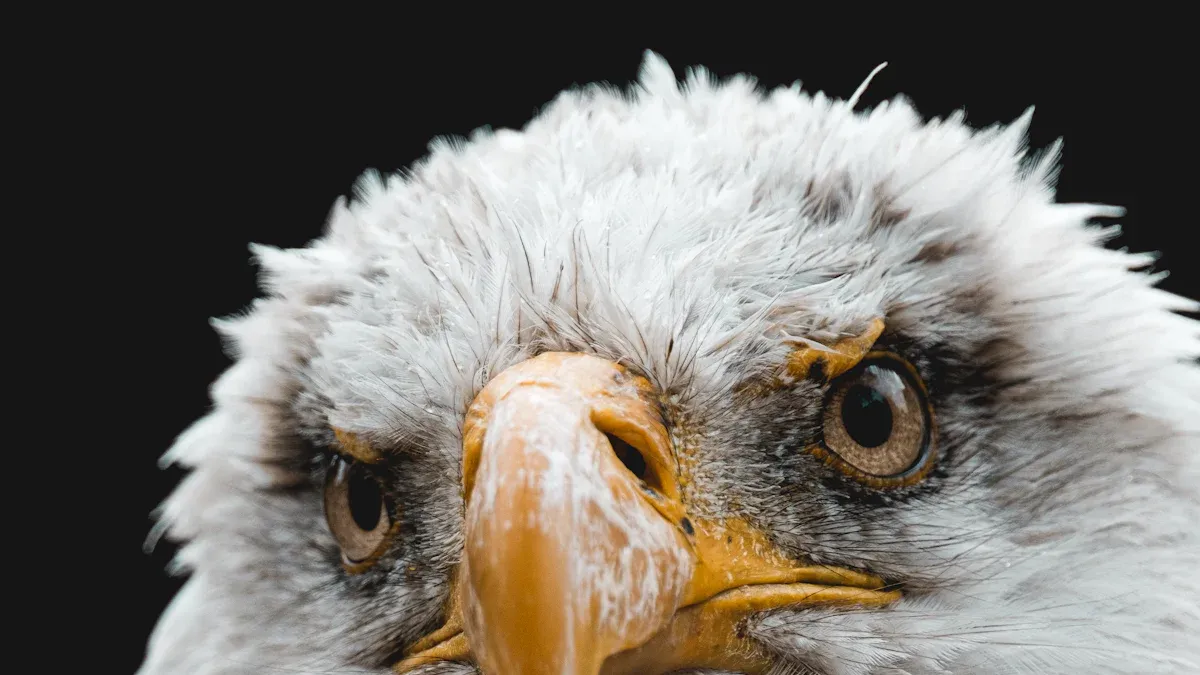
Exceptional Visual Acuity
Eagles possess incredibly sharp vision. Their eyes are large, taking up half of their skull. An eagle’s central fovea, a part of the eye responsible for sharp vision, has over a million cone cells per square millimeter. In contrast, a human’s fovea has only about 200,000 cone cells. This high density of cells gives eagles much better clarity and resolution. Eagles also have two foveas in each eye, which humans lack. These dual foveas help them see both far away and up close with great detail. Their large, adaptable lenses can change shape quickly. This allows eagles to focus sharply on objects even as they attack. This superior vision means an eagle can spot another eagle from as far as 50 miles away.
Spotting Prey from Above
This amazing eyesight gives eagles a huge hunting advantage. They can see clearly from approximately one to two miles away under good conditions. This defines their effective hunting range. From high vantage points, eagles constantly watch their surroundings. They look below, around, and above, always searching for prey. This combination of excellent long-distance vision and high-altitude flight helps them find prey from great distances. They see their targets from an elevated perspective.
Elevated Perspective
An elevated perspective greatly helps an eagle survey its hunting grounds. Eagles often prefer rugged, open landscapes. These areas offer clear views. From high above, eagles can easily spot prey moving on the ground. This elevated view helps them detect prey and improves their hunting success. This is one key reason why eagles fly so high. They gain a wide view of their territory, making them very efficient hunters.
Avoiding Obstacles
Their sharp eyesight also helps eagles navigate their environment safely. They can easily spot trees, power lines, and other obstacles from a distance. This allows them to plan their flight path and avoid collisions. Their superior vision is crucial for both hunting and safe travel through the skies.
Eagles master the skies through a remarkable combination of adaptations. They use soaring to conserve energy. Their intelligent use of thermal air currents allows efficient travel. Unparalleled vision provides a superior hunting advantage. These elements work together. They ensure the eagle’s survival and dominance. This synergy explains why eagles fly so high. It reinforces their mastery of the skies. They are truly efficient predators and travelers.
FAQ
Why do eagles fly so high?
Eagles fly high to conserve energy through soaring. They use thermal air currents for efficient travel. This altitude also gives them a superior hunting advantage due to their exceptional vision.
How do eagles save energy while flying?
Eagles save energy by soaring. They use their specialized wings to catch rising air currents, like thermals. This allows them to glide for long distances without flapping, which uses a lot of energy.
How good is an eagle’s eyesight?
Eagles possess incredibly sharp vision. They have more cone cells in their fovea than humans. This allows them to spot prey from one to two miles away. They also have dual foveas for detailed close-up and distant vision.
What are thermal air currents?
Thermal air currents are rising columns of warm air. The sun heats the Earth’s surface unevenly. This warms the air above it, making it lighter. This lighter air then rises, creating these invisible lifts that eagles use.