
Feral cats are a significant presence in the United States, with estimates suggesting a population between 60 and 100 million. These cats often face challenges related to overpopulation and health issues. You can play a vital role in addressing this problem through Trap-Neuter-Return programs. TNR offers a humane solution to manage feral cat populations effectively. This approach not only helps stabilize numbers but also improves the health of the cat colonies and the surrounding community.
Key Takeaways
Trap-Neuter-Return (TNR) programs provide a humane way to manage feral cat populations. They help stabilize numbers and improve the health of both cats and communities.
Using humane box traps is essential for safely capturing feral cats. Avoid harmful methods like nets or tranquilizers to prevent stress and injury.
Vaccination is crucial in TNR. It protects feral cats from diseases like rabies and helps reduce public health risks in the community.
Becoming a caretaker for feral cats allows you to make a positive impact. Responsibilities include feeding, monitoring health, and coordinating spay/neuter services.
TNR is more effective and cost-efficient than euthanasia. It leads to significant reductions in cat populations and improves community relations.
TNR Process

Trapping Techniques
The first step in the TNR process involves trapping feral cats humanely. You should use humane box traps, as they are the safest option for capturing cats without causing stress. Avoid using nets or tranquilizers, as these methods can harm the cats. Here are some effective trapping techniques to consider:
Technique | Description |
|---|---|
Use humane box traps | Only humane box traps should be used to safely trap cats. |
Don’t handle community cats | For safety, never directly pick up a feral cat, regardless of their demeanor. |
Target specific areas | Start trapping in areas known to have community cats, setting multiple traps. |
Schedule spay/neuter appointments | Ideally, trap cats the day before their surgery to minimize time in traps. |
Cover traps | Covering traps with a towel or blanket helps calm trapped cats. |
Bait traps effectively | Use strong-smelling food like tuna or sardines to attract cats. |
Monitor traps | Check traps frequently to ensure the safety of the trapped cats. |
Release properly | Release cats back to their original location to reduce stress and maintain territorial bonds. |
Once you have trapped the cats, the next step is neutering and vaccination.
Neutering and Vaccination
After trapping, you transport the cats to a spay/neuter clinic. A licensed veterinarian evaluates and sterilizes each cat. This process is crucial for controlling the feral cat population. Here’s a typical sequence of events during this stage:
Community cats are humanely trapped.
They are transported to a spay/neuter clinic.
A licensed veterinarian evaluates and sterilizes the cats.
The cats are vaccinated against rabies.
Each cat is ear-tipped for identification.
After recovery, the cats are returned to their original location.
Vaccination is essential for the health of the cats and the community. Rabies vaccination is a core requirement, as it prevents the spread of this deadly virus. Additionally, the distemper vaccine protects against another serious illness.
Vaccine | Purpose |
|---|---|
Rabies | Prevents rabies virus infection |
Distemper | Protects against distemper virus |
Ear-tipping is a vital part of the TNR process. It serves as a visible marker indicating that a cat has been altered and vaccinated. This practice helps avoid re-trapping and reduces stress for feral cats, as they can be identified without close interaction.
TNR Benefits
Population Control
Trap-Neuter-Return programs play a crucial role in stabilizing feral and stray cat populations. By neutering a significant percentage of cats in a colony, you can effectively reduce the number of kittens born each year. Studies show that TNR can lead to remarkable results. For instance, a study from the University of Central Florida revealed a 66% reduction in a monitored feral cat colony after 11 years of TNR, with no new kittens born after four years. Similarly, Austin, Texas, experienced a decrease of over 90% in cat euthanasia rates since implementing a city-wide TNR program in 2009. This demonstrates how TNR not only helps control cat populations but also saves lives.
To achieve effective population control, it is essential to sterilize at least 75% of the cats in a group within a six-month timeframe. Continued efforts to sterilize remaining intact cats contribute to stabilization and eventual reduction of the population. This humane approach allows you to manage feral cat colonies without resorting to euthanasia.
Healthier Cat Colonies
TNR programs also improve the health of feral cat colonies. When you participate in TNR, you help create a healthier environment for these cats. The process includes vaccinations against rabies and other diseases, which protects both the cats and the community. Research published in the Journal of Feline Medicine and Surgery indicates that feral cats in TNR-managed colonies experience fewer health issues and better overall conditions compared to those not in such programs.
The benefits extend beyond individual cats. Healthier colonies can lead to reduced public health risks. For example, TNR can decrease the spread of diseases such as feline leukemia and rabies. While TNR colonies may attract unvaccinated cats, the overall health of the colony improves with regular vaccinations and sterilizations. This proactive approach helps protect cats’ lives and enhances their well-being.
Moreover, TNR reduces mating-related behaviors that can be disruptive. Surgical sterilization eliminates hormones that drive these behaviors, leading to a more peaceful coexistence between community cats and humans. This fosters a better relationship and reduces nuisance complaints related to yowling, fighting, and spraying.
Evidence | Description |
|---|---|
TNR programs reduce mating-related behaviors | This includes yowling, fighting, and spraying, which can be disruptive and stressful for both the cats and their human neighbors. |
Surgical sterilization eliminates hormones | The surgical sterilization of cats reduces the likelihood of various mating-related behaviors that lead to nuisance complaints. |
Spaying and neutering promote peaceful coexistence | These practices help reduce or eliminate disruptive behaviors, fostering a better relationship between community cats and humans. |
Community Involvement in TNR
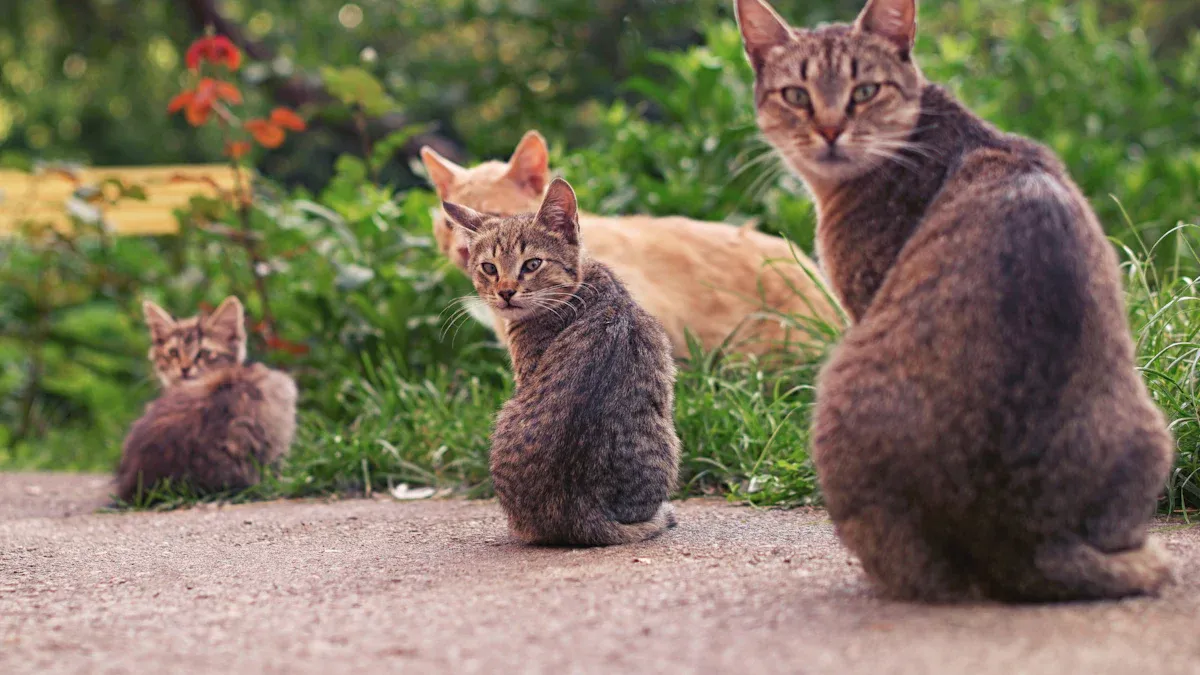
Becoming a Caretaker
You can play a vital role in TNR programs by becoming a caretaker for feral and stray cats. Caretakers help manage cat colonies and ensure their health and safety. Your responsibilities may include:
Providing food and water for the cats.
Monitoring the health of the cats in your care.
Coordinating with local veterinarians for spay/neuter services.
Participating in community outreach to educate others about TNR.
Many community members take on various roles to support TNR initiatives. Here’s a breakdown of common roles and their activities:
Role Description | Activities |
|---|---|
Community Engagement Manager | Build and maintain relationships with community members, partners, and volunteers. |
Outreach Coordinator | Coordinate community outreach and engagement efforts including flyering and door-to-door initiatives. |
Educator | Develop and implement strategies to educate the public about humane methods of community cat management. |
Volunteer Supervisor | Recruit, train, and supervise volunteers involved in TNR activities. |
Advocate | Support relationship building with elected officials as part of advocacy efforts. |
Resources and Support
If you want to become a caretaker, many resources are available to help you succeed. Consider these options:
Feral Cat Caretakers’ Coalition: Offers TNR programs, support resources, and workshops for caretakers.
Alley Cat Allies: Provides guides and resources on TNR and feral cat welfare.
Best Friends Animal Society: Offers guidance on TNR and animal welfare.
Online Communities and Forums: Platforms for sharing experiences and knowledge about feral cat care.
Local Animal Shelters and Rescues: May provide TNR programs and volunteer opportunities.
Local Animal Control and Humane Societies: Can inform about TNR initiatives in the area.
Community Outreach and Workshops: Local events for hands-on experience in feral cat management.
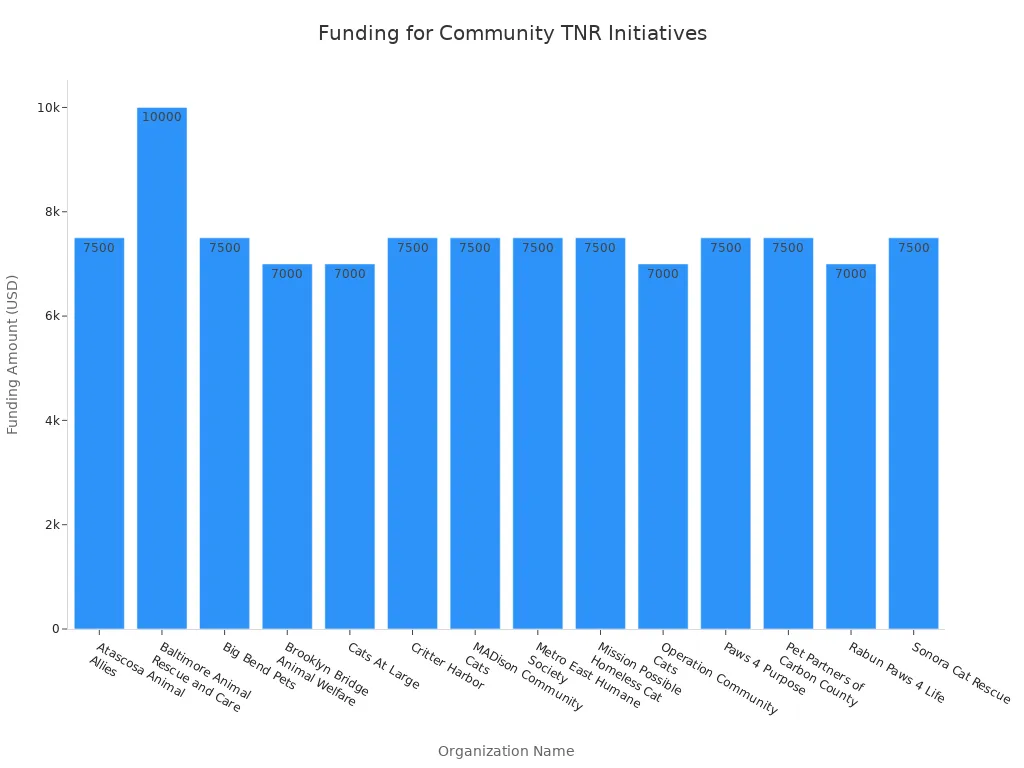
Local governments and animal shelters can also collaborate with community members to enhance TNR efforts. They can provide support through funding, resources, and educational programs. This collaboration strengthens community involvement and ensures the success of TNR initiatives.
TNR vs. Traditional Methods
Euthanasia vs. TNR
When you consider feral cat management, TNR offers a humane alternative to euthanasia. TNR programs help reduce the euthanasia rates of feral cats by providing a solution that stabilizes cat populations. They eliminate mating behaviors, which can lead to fewer cats entering shelters. Studies show that areas implementing TNR experience a 70% decline in animal control cat intake. Euthanasia rates drop by 95%, indicating a significant reduction in the number of feral cats being euthanized.
Ethically, TNR respects the lives of feral cats. It acknowledges their inherent value and prevents the greater suffering associated with overpopulation, such as famine and illness. This approach aligns with the principle of minimizing harm, making TNR a morally preferable choice over euthanasia.
Cost-Effectiveness
TNR is not only humane but also cost-effective. Many communities benefit from immediate savings due to volunteer support and donations. Over time, TNR leads to fewer breeding cats, which reduces the financial burden on taxpayers. For example, a study showed that after TNR implementation, cat and kitten impounds decreased by 29.1%, and euthanasia rates fell from over 70% to just 23%.
The financial benefits of TNR vary by location, influenced by local conditions and community engagement. However, the long-term effectiveness of TNR is clear. High initial sterilization efforts lead to significant reductions in feral cat populations over time. This proactive approach not only protects cats’ lives but also improves cats’ lives by creating healthier feral cat colonies.
Metric | Before TNR | After TNR |
|---|---|---|
Cat and kitten impounds | N/A | Decreased by 29.1% |
Euthanasia rate | Over 70% | 23% |
Euthanasia for Upper Respiratory Disease | N/A | Decreased by 99% |
Dead cat pick up off the streets | N/A | Decreased by 20% |
Capacity for other welfare strategies | N/A | Increased without more staff |
By choosing TNR, you contribute to a sustainable solution that benefits both feral cats and your community.
Trap-Neuter-Return programs offer a humane and effective solution for managing feral cat populations. You can help create safer communities by reducing shelter admissions and improving public health. Research shows that TNR leads to significant declines in cat populations, with a study revealing a 99.4% decrease over 16 years without euthanasia.
As communities adopt TNR, they can expect benefits such as reduced nuisance behaviors and increased job satisfaction among animal control officers. By participating in TNR, you contribute to a positive impact on both cats and your community.
FAQ
What is Trap-Neuter-Return (TNR)?
TNR is a humane solution for managing feral cat populations. You trap feral cats, neuter them, and return them to their original location. This process helps control population growth and improves the health of the cats.
How does TNR benefit the community?
TNR reduces the number of feral cats, leading to fewer nuisance behaviors. Healthier cat colonies also decrease public health risks. Overall, TNR fosters a safer environment for both cats and community members.
Can I participate in TNR programs?
Yes! You can become a caretaker for feral cats. Responsibilities include providing food, monitoring health, and coordinating spay/neuter services. Many organizations offer resources to help you get started.
Is TNR more effective than euthanasia?
Yes, TNR is a more humane solution than euthanasia. It stabilizes feral cat populations without causing suffering. Studies show that TNR significantly reduces euthanasia rates and improves community relations.
How can I find resources for TNR?
You can find resources through local animal shelters, TNR organizations, and online communities. Many groups offer workshops, guides, and support for those interested in feral cat management.