
Doves are widespread birds across North America. You might often overlook their diverse forms. This comprehensive dove identification chart helps you confidently identify 12 common types of doves. You will learn key visual cues, distinctive calls, and typical habitats. This guide ensures accurate identification for doves of the United States and Canada. Use this chart for confident identification.
Key Takeaways
Learn to identify 12 common dove species in North America using visual cues, calls, and habitats.
Pay attention to size, color, and unique markings like neck collars or wing patches for accurate identification.
Listen for distinct cooing sounds and wing whistles to help tell different dove species apart.
Doves adapt to various environments, from urban areas to forests, and primarily eat seeds, grains, and fruits.
Mourning Dove
Key Identification & Size
This common bird is smaller and darker gray compared to the larger Eurasian Collared-Dove. You will notice its slender body and small head. Its overall color is a soft grayish-brown. You can identify it by its black spots on the wings and a pale blue eye-ring. For accurate identification, know its size.
This species typically measures between 9 and 13 inches (23-33 cm) in length. Its wingspan is around 17 inches (43 cm). Some males can reach up to 13.4 inches (34 cm) in length with a 17.7-inch (45 cm) wingspan.
Habitat & Range
You will find Mourning Doves in many places. They prefer open and semi-open habitats. Look for them in urban and suburban neighborhoods, fields, and farms. They also live in open woods. This species is a habitat generalist. It adapts well to various environments. You can spot them across all 48 contiguous U.S. states and southern Canadian provinces for breeding. Northern populations migrate. They winter from the northern U.S. through southern Mexico. Their broad range shows their adaptability.
Distinctive Call
Listen for this dove’s distinctive call. It often sounds breathy and ‘mournful.’ The song usually has five notes. The second syllable is accented and pitched higher. Other notes stay on the same pitch. You can remember it as ‘mour–NIIING—dove—dove—dove‘. Unmated males use a ‘perch-coo’ from a high spot. Paired males use a three-parted ‘nest call’ during nest-building. This call is ‘coo-OO-oo,’ with the middle part being the highest. Also, listen for a loud whistling sound. Their wings make this sound when they take off and land. This sound might alert other doves or startle predators.
Unique Facts
The Mourning Dove is one of the most widespread birds in North America. It is a popular game bird. This bird can fly very fast, reaching speeds up to 55 miles per hour. They often gather in large flocks outside of breeding season. This behavior helps them find food and stay safe. This dove identification chart helps you recognize these fascinating birds.
Eurasian Collared-Dove
Key Identification & Size
You can identify the Eurasian Collared-Dove by its larger size and lighter gray plumage compared to the Mourning Dove. This bird has a stockier build. Look for a prominent black half-collar on the back of its neck. This collar is a key feature for its identification. Its body is a pale grayish-tan, with darker primary feathers on its wings. The Eurasian Collared-Dove typically measures about 13 inches (32 cm) in length from beak to tail tip. Its wingspan ranges between 19–22 inches (47–55 cm).
Habitat & Range
You will find Eurasian Collared-Doves across much of North America. They have significantly expanded their range. These birds are resident and non-migratory throughout their North American territory. They prefer open and semi-open habitats. Look for them in urban and suburban neighborhoods. You can also spot them in grasslands, agricultural fields, and woodland edges. They often appear along roadsides and in developed areas. These areas provide available seed or grain and trees for nesting.
Distinctive Call
Listen for the Eurasian Collared-Dove’s distinctive call. It sounds like a ‘hoo-HOOOO-hoo’. This specific sound is very characteristic. The scientific name ‘decaocto’ even represents this song. It is an onomatopoeic representation. You will often hear this repetitive call from a high perch.
Unique Facts
The Eurasian Collared-Dove is an invasive species in North America. It arrived from Europe in the 1980s. Since then, it has spread rapidly across the continent. This species adapts well to human-altered landscapes. Its quick colonization shows its remarkable adaptability.
White-winged Dove
Key Identification & Size
You will find the White-winged Dove similar in size to the Mourning Dove. However, it has a chunkier build. A key feature for its easy identification is the prominent white patch on its wings. This patch is very noticeable during flight. You will also see a bright blue eye-ring and a dark line below its eye. Its body plumage is a grayish-brown, often with a purplish sheen on the head and neck. The average length of a White-winged Dove is about 12 inches (30 cm). Its wingspan typically ranges between 18.9 and 22.8 inches (48-58 cm).
Habitat & Range
Historically, you could find the White-winged Dove in the southern regions of Texas, New Mexico, Arizona, and California. Its range extended south through Mexico, Central America, and much of the West Indies. Since the 1980s, this common species has expanded its breeding range northward. You can now find it throughout much of the southern United States, reaching as far north as Oklahoma. They inhabit various environments:
River woods
Mesquites
Saguaros
Groves
Towns
Native brushlands (in Texas)
Deserts (farther west)
Chaparral
Open oak woods
Farmland
Suburbs
Citrus groves
Plantings of trees in grassland
In Florida, it populates the southeastern one-third of the state. In Alabama, breeding occurs in Baldwin and Mobile counties. You can also find a small population in Montgomery. Sightings extend north to the Tennessee River Valley.
Distinctive Call
Listen for the White-winged Dove’s distinctive call. It sounds like a series of coos. Many people describe it as “who-cooks-for-you.” The call is often loud and somewhat mournful. You will hear it repeated several times. Males often sing from a high perch to attract mates.
Unique Facts
White-winged Doves are highly social birds. They often gather in large flocks, especially during migration and when feeding. They are important pollinators for saguaro cacti in the Sonoran Desert. They feed on nectar and pollen. This helps the cacti reproduce. They also eat fruits and seeds.
Common Ground-Dove
Key Identification & Size
You will notice the common ground dove is North America’s smallest dove. This tiny bird has a compact body. It features short, rounded wings. Its overall color is a grayish-brown. You can see a scaly pattern on its head and breast. This pattern helps with its identification. When it flies, you might spot rusty patches on its wings. These patches are visible in flight. This species measures about 5.9 to 7.1 inches (15-18 cm) in length. Its average wingspan is around 11 inches.
Habitat & Range
You can find the Common Ground-Dove in the southern tip of the United States. Its range extends through most of Mexico, parts of Central America, the Caribbean islands, and northwestern South America. It lives in these areas year-round. This bird prefers open areas with trees and bushes. You can also spot it in forests with sandy areas, farmlands, and savannahs. It often appears near human infrastructure. In the southeastern United States, you will find it in brushy fields, the understory of open pine woods, and forest edges. In the southwest, it inhabits orchards, ranch yards, and mesquite thickets along streams.
Distinctive Call
Listen for the Common Ground-Dove’s distinctive call. It is a soft, repeated “woo-ooop” or “woot-woot.” This call sounds gentle and somewhat mournful. You will often hear it from a low perch or from the ground. The call is not very loud, so you need to listen carefully.
Unique Facts
This dove has a characteristic shuffling walk. It moves quickly with short, quick steps. This walk makes it look like it is scurrying along the ground. It often forages on the ground, picking up seeds. This bird is quite tame. It allows people to approach it closely. You might see it dusting itself in dry soil. This helps keep its feathers clean.
Inca Dove
Key Identification & Size
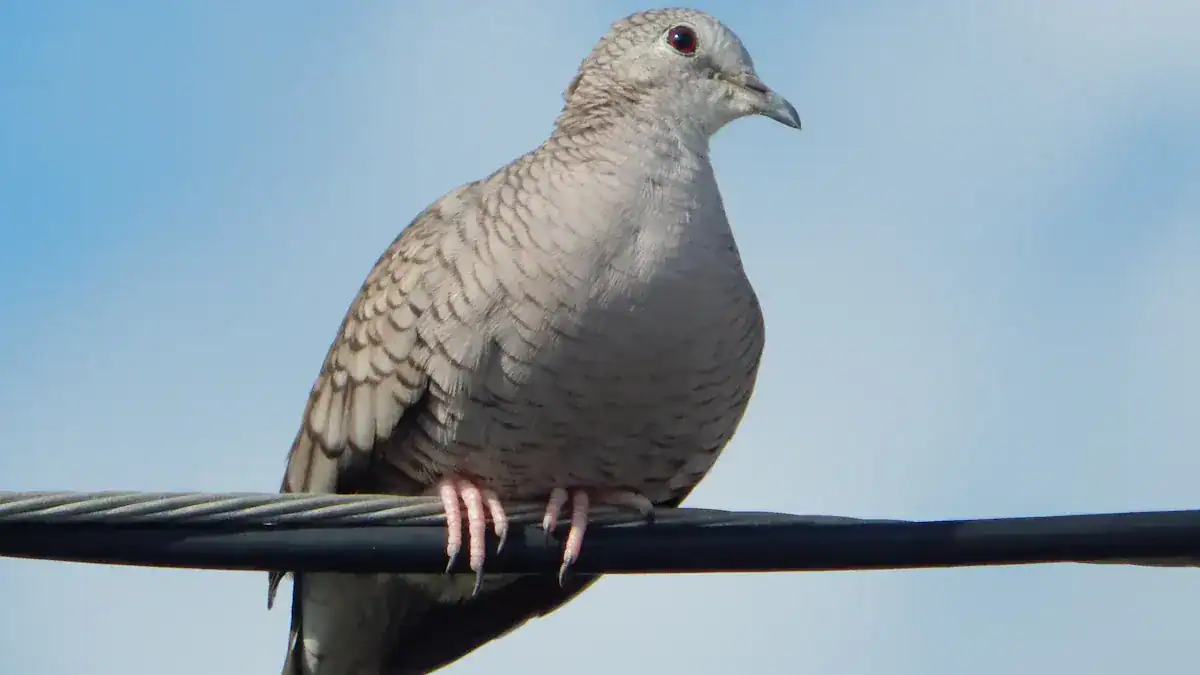
You can easily spot the Inca Dove by its small size and distinctive scaly appearance. Its plumage is a grayish-brown, and you will see a unique scale-like pattern across its head, neck, and breast. This pattern helps with its identification. When it flies, you might notice rufous (reddish-brown) patches on its primary wing feathers. These patches are quite visible. This dove is quite small.
Attribute | Measurement |
|---|---|
Length | 8.25 inches |
Wingspan | 11 inches |
Habitat & Range
You will find the Inca Dove in arid and semi-arid habitats. It has a low tolerance for cold. This dove inhabits residential areas like cities, towns, and farmhouses. You can also see it in lawns, parks, thornforests, and savannas. Its geographical range includes the southwestern United States and northern Central America. You can find it at elevations from 0 to 3000 meters. The Inca Dove’s range is expanding. This expansion is due to its association with human dwellings. These dwellings often provide water sources. You will find them throughout Mexico, except for the Yucatán Peninsula.
Distinctive Call
Listen for the Inca Dove’s soft, cooing call. Many people describe it as a repeated “no-hope” or “coo-coo.” You will often hear this gentle sound from a low perch or while the bird forages on the ground. It is a quiet call, so you need to listen carefully.
Unique Facts
The Inca Dove is a non-migratory bird. It often forages on the ground, picking up seeds and small insects. You might see several of them huddled together in cold weather. This behavior helps them conserve body heat. They are quite adaptable. Their ability to thrive near human settlements has helped them spread their range.
Rock Pigeon (Feral Pigeon)
Key Identification & Size
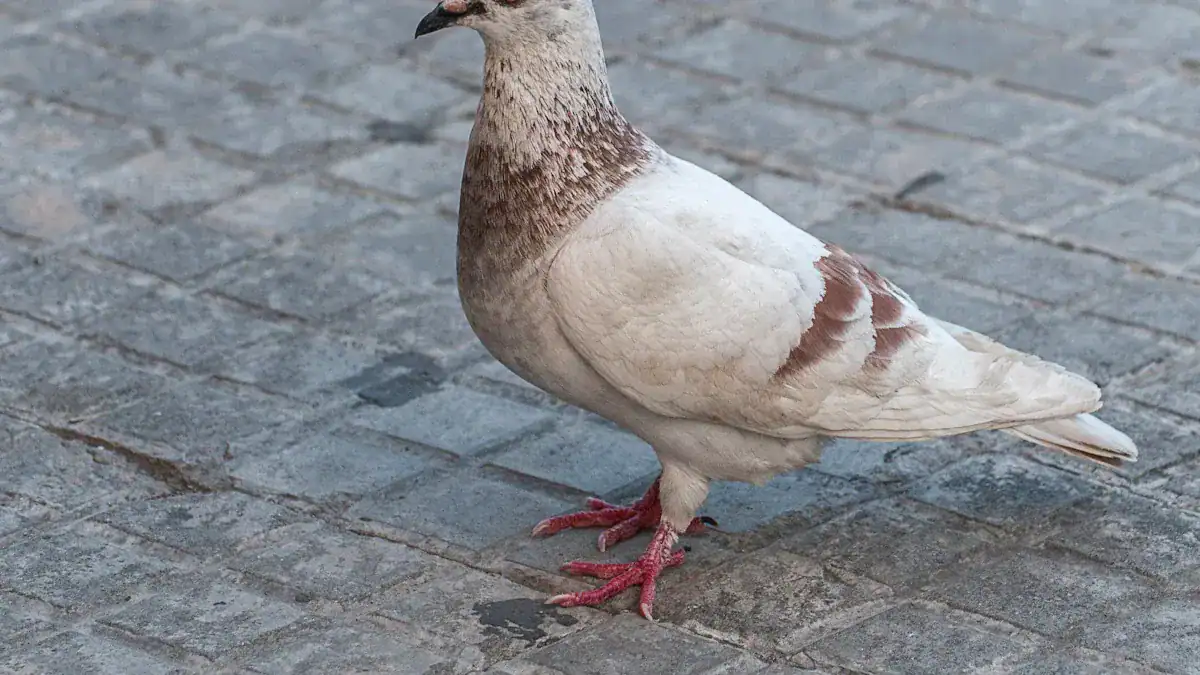
You often see the Rock Pigeon, also known as the Feral Pigeon, in cities. You can recognize them by their varied plumage. Most have gray bodies with iridescent green and purple feathers on their necks. They also show two black bars on each wing. Some pigeons display white, black, or brown patterns. This wide color range can make their identification tricky. You can identify them by their size:
Characteristic | Measurement (inches) | Measurement (cm) |
|---|---|---|
Length | 11.8-14.2 | 30-36 |
Wingspan | 19.7-26.4 | 50-67 |
Habitat & Range
You will find Rock Pigeons almost everywhere humans live. They thrive in urban environments. Look for them in city parks, on building ledges, and under bridges. They also inhabit farms and industrial areas. These birds are not native to North America. European settlers brought them over centuries ago. Now, you can spot them across the entire continent and globally. They adapt well to human structures.
Distinctive Call
Listen for the Rock Pigeon’s familiar cooing sound. They make a soft, guttural “coo-roo-coo-coo” call. You often hear this sound when they try to attract a mate. Males also puff out their chests and bow their heads during courtship displays. They make a short, sharp “ooh-ooh” sound when startled or alarmed.
Unique Facts
Rock Pigeons are descendants of wild Rock Doves. Humans first domesticated them thousands of years ago. People used them for carrying messages and for food. These birds possess excellent homing abilities. They can find their way back to their nests from hundreds of miles away. Their intelligence helps them navigate complex cityscapes. They also show remarkable adaptability to diverse food sources.
Band-tailed Pigeon
Key Identification & Size
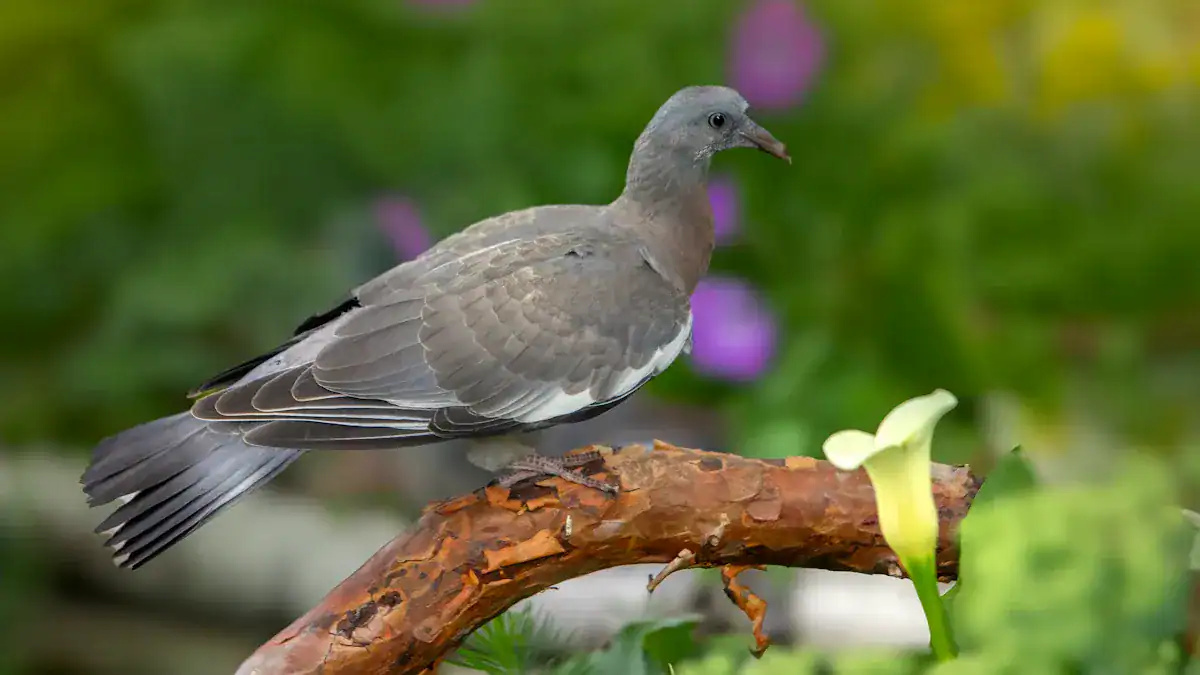
You can identify the Band-tailed Pigeon by its large size and distinctive markings. It has a purplish-gray head and breast. You will see a white band on the back of its neck. A green iridescent patch sits below this band. Its most notable feature is a broad, pale band across its tail. This band is visible when the bird flies. Its bill is yellow with a black tip. Its feet are also yellow. This pigeon measures about 14 to 16 inches (35-40 cm) in length. Its wingspan can reach up to 26 inches (66 cm).
Habitat & Range
You will find the Band-tailed Pigeon in specific forest environments. It lives in forests and coastal woodlands in Western British Columbia and America. These birds use coniferous trees like pines and pinyons. They also use oaks for perching, nesting, and feeding. They avoid populated areas and human contact. Their geographical range extends from British Columbia south to Argentina. The Rocky Mountains mark their eastern limit. They are a New World bird residing in the western Americas and Canada.
In North America, you find Band-tailed Pigeons in two distinct regions. One population lives in the dry mountain forests of the Southwest. Another lives in the wet forests of the Pacific Coast. You will find two separate breeding populations in the United States. One is along the West Coast. The other is in the Southwest. In Washington, you primarily locate them west of the Cascades during spring and summer. You also find them in Klickitat and Yakima counties east of the Cascades. This species relies on upland forests and specific mineral sources in western Washington. They nest mainly in conifers. Sometimes they nest in hardwoods and shrubs. They prefer closed canopy conifer or mixed hardwood and conifer forests.
Distinctive Call
Listen for the Band-tailed Pigeon’s deep, owl-like hoot. It makes a single, low “hoo-hoo” sound. This call is often repeated. You might hear it from high in the trees. It is a resonant sound that carries through the forest.
Unique Facts
The Band-tailed Pigeon is the largest pigeon native to North America. It often travels in flocks. These flocks can be quite large, especially outside of breeding season. They primarily eat fruits and seeds. They play an important role in dispersing seeds for many forest plants. They also visit mineral springs to get essential nutrients.
White-crowned Pigeon
Key Identification & Size
You can identify the White-crowned Pigeon by its striking white cap. This white crown contrasts sharply with its otherwise dark, slate-gray body. You will also notice a red patch around its eye. Its bill is pale with a reddish base. When you see it in flight, its dark body and white head stand out. This pigeon is a medium-sized bird.
Measurement | Value |
|---|---|
Length | 13.0-13.8 inches (33-35 cm) |
Wingspan | 23.2 inches (59 cm) |
Habitat & Range
You will find the White-crowned Pigeon in specific coastal and island habitats. It reaches the continental United States only in the Florida Keys and the southern tip of mainland Florida. Its main distribution centers in the Bahama Islands and Greater Antilles. It extends east into the Lesser Antilles and west along the Caribbean coast of Mexico and Central America. This pigeon needs two distinct habitats for survival: islands and forests with fruiting trees. It nests semi-colonially on nearshore islands or in forests close to foraging areas. Then, it flies to hardwood forests to feed on fruits. You will find it predominantly in low-lying, coastal mangrove forests. It often forms nest colonies. It travels inland to forage for fruits and seeds.
Distinctive Call
Listen for the White-crowned Pigeon’s distinctive call. It makes a deep, mournful “woo-woo-wooo” sound. This call is often repeated. You might hear it from dense foliage. It is a resonant sound that carries well over water.
Unique Facts
The White-crowned Pigeon is an obligate frugivore. This means it primarily eats fruit. It plays a vital role in dispersing seeds for many tropical plants. This bird is quite shy. It often stays hidden in dense vegetation. Its populations face threats from habitat loss and hunting. Conservation efforts protect its nesting sites.
Oriental Turtle-Dove
Key Identification & Size
You can identify the Oriental Turtle-Dove by its warm brown plumage. It has a distinctive black and white striped patch on the side of its neck. Its head and neck are often a grayish-pink, fading to a paler belly. You will notice a dark primary flight feathers contrasting with its lighter body. Its tail has a broad, dark band with white tips. This dove is a medium-sized bird.
Length: 13 inches (35 cm)
Wingspan: 20-22 inches (55-56 cm)
Habitat & Range
The Oriental Turtle-Dove typically inhabits woodlands, forests, and cultivated areas. You can find it in parks and gardens across its native range in Asia. In North America, this dove is considered a rarity and a vagrant. You will find records of its presence specifically in western Alaska and British Columbia. These sightings are uncommon. It prefers areas with scattered trees and open ground for foraging.
Distinctive Call
Listen for the Oriental Turtle-Dove’s distinctive call. It makes a soft, low “coo-COO-coo” sound. This call is often repeated. You might hear it from a hidden perch within trees. It has a gentle, soothing quality.
Unique Facts
The Oriental Turtle-Dove is a migratory species in many parts of its range. It travels long distances between breeding and wintering grounds. This bird primarily feeds on seeds, grains, and small fruits. It often forages on the ground. You might see it in small flocks outside of the breeding season. Its appearance in North America is a rare event, exciting birdwatchers.
Red-billed Pigeon
Key Identification & Size
You can identify the Red-billed Pigeon by its striking red bill with a yellow tip. Its body is a dark, purplish-chestnut color. You will notice a gray head and neck. The eyes are red. This pigeon is a large bird. It measures between 12 and 15 inches (30-37 cm) in length. Its wingspan is about 24 inches.
Characteristic | Measurement |
|---|---|
Length | 12-15 inches (30-37 cm) |
Wingspan | 24 inches (61 cm) |
Habitat & Range
You will find the Red-billed Pigeon primarily in river woodlands and tall brush. In Texas, it lives in undisturbed native woods. These woods contain hackberry, mesquite, huisache, and ebony trees. Further south, it inhabits various dry woodlands. It generally avoids humid rainforest regions. This pigeon is a permanent resident across much of its range. Some birds withdraw from the northernmost parts of Texas during winter. Its range extends from Texas south into Central America. You can regularly observe it along the lower Rio Grande River in southeastern Texas. This area borders Mexico and the US. This tropical pigeon is common along the coast of Mexico. It extends into Central America and south to Panama.
Distinctive Call
Listen for the Red-billed Pigeon’s distinctive call. It makes a deep, resonant “coo-coo-coo” sound. This call is often repeated. You might hear it from high in the trees. It has a low, booming quality.
Unique Facts
The Red-billed Pigeon is a shy bird. It often stays hidden in dense foliage. It primarily eats fruits and berries. It plays an important role in seed dispersal for many tropical plants. This bird often forms flocks outside of the breeding season. These flocks can be quite large.
Zenaida Dove
Key Identification & Size
You can identify the Zenaida Dove by its medium size and warm brown plumage. It has a distinctive black spot on its ear coverts. You will also notice iridescent purple and green patches on its neck. Its underparts are a lighter, pinkish-brown. When it flies, you can see white tips on its outer tail feathers. This dove is a medium-sized bird.
Length: You will find Zenaida doves measure between 28 to 30.5 cm (11-12 inches).
Wingspan: Their wingspan ranges from 360 to 410 mm (14-16 inches).
Habitat & Range
You will primarily find the Zenaida Dove on islands of the Caribbean. Historically, it nested in select locations in the Florida Keys. However, nesting has now ceased there. You now consider them rare vagrants to the Florida Keys and south Florida. This dove prefers various lowland habitats. You can spot it in agricultural land, grasslands, and savannahs. It also lives in low open scrubland, forest edges, and open woodlands. It avoids unbroken and dense forests.
Distinctive Call
Listen for the Zenaida Dove’s distinctive call. It makes a series of soft, mournful coos. Many people describe it as a “coo-coo-coo-ah-coo.” You will often hear this gentle sound from a perch or while the bird forages. It has a somewhat melancholic quality.
Unique Facts
The Zenaida Dove is a strong flyer. It often travels between islands in its Caribbean range. This bird primarily eats seeds and small fruits. It forages on the ground. You might see it in small flocks, especially outside of the breeding season. Its presence in Florida is a rare and exciting sighting for birdwatchers.
Key West Quail-Dove
Key Identification & Size
You can identify the Key West Quail-Dove by its secretive nature and distinctive appearance. It has a rich, reddish-brown back and wings. Its underparts are a paler, buffy color. You will notice a white stripe below its eye, bordered by a dark line. Its head is often grayish. This dove is a ground-dwelling bird. It has a compact body and short tail.
Length: 10-12 inches
Wingspan: 15-17 inches
The Key West Quail-Dove is approximately 27–31 cm in length. This makes it a medium-sized dove.
Habitat & Range
You will find the Key West Quail-Dove in dense forest habitats. Historically, it was a nesting bird in southern Florida. However, you now consider any sightings in North America as visitors from Caribbean islands. Its primary habitat is dense forest. You can find range map information for the Key West Quail-Dove from sources like ‘Digital Distribution Maps of the Birds of the Western Hemisphere’ by Ridgely et al. (2003). This shows its broader distribution. It prefers thick undergrowth and humid environments.
Distinctive Call
Listen for the Key West Quail-Dove’s distinctive call. It makes a low, mournful “hoo-hoo-hoo” sound. This call is often repeated. You might hear it from deep within the forest undergrowth. It is a soft, resonant sound.
Unique Facts
The Key West Quail-Dove is very shy. It spends most of its time on the forest floor. It forages for seeds, fruits, and small invertebrates. You will rarely see it in the open. Its secretive behavior makes it difficult to spot. This dove is a beautiful but elusive bird. Its presence in North America is now very rare.
You have explored the fascinating diversity of doves and the rewarding nature of bird identification. Apply the knowledge from this dove identification chart to your outdoor observations. Even skilled birdwatchers sometimes misidentify birds.
“Skilled” Bird Watchers misidentify birds, so hunters will mistake other species for doves. This highlights the importance of careful observation, especially with fast-flying birds. Continue learning and appreciating the natural world. Many resources can help you:
All About Birds offers guides for over 700 North American species.
Project FeederWatch provides articles like “Tricky Bird ID: Common Doves.” Share your sightings and experiences with others.