
Bird nests are truly amazing structures. These intricate homes showcase the incredible diversity and architectural skills of birds. Learning about a bird nest offers a deeper connection to the natural world. It enhances birdwatching experiences. It also contributes to vital conservation efforts. Nearly half of the world’s bird species are currently experiencing population decline. In contrast, only six percent of bird populations are increasing globally. Accurate bird nest identification helps monitor these populations. This blog provides a clear, easy-to-use bird nest identification chart. It helps readers identify 15 common bird nests and their owners.
Key Takeaways
Bird nest identification helps us understand and protect bird populations.
Look at a nest’s size, shape, materials, and location to identify it.
Always watch bird nests from a distance to avoid disturbing the birds.
Many laws protect bird nests, so it is illegal to touch or keep them.
Bird Nest Identification
Key Nest Features for Identification
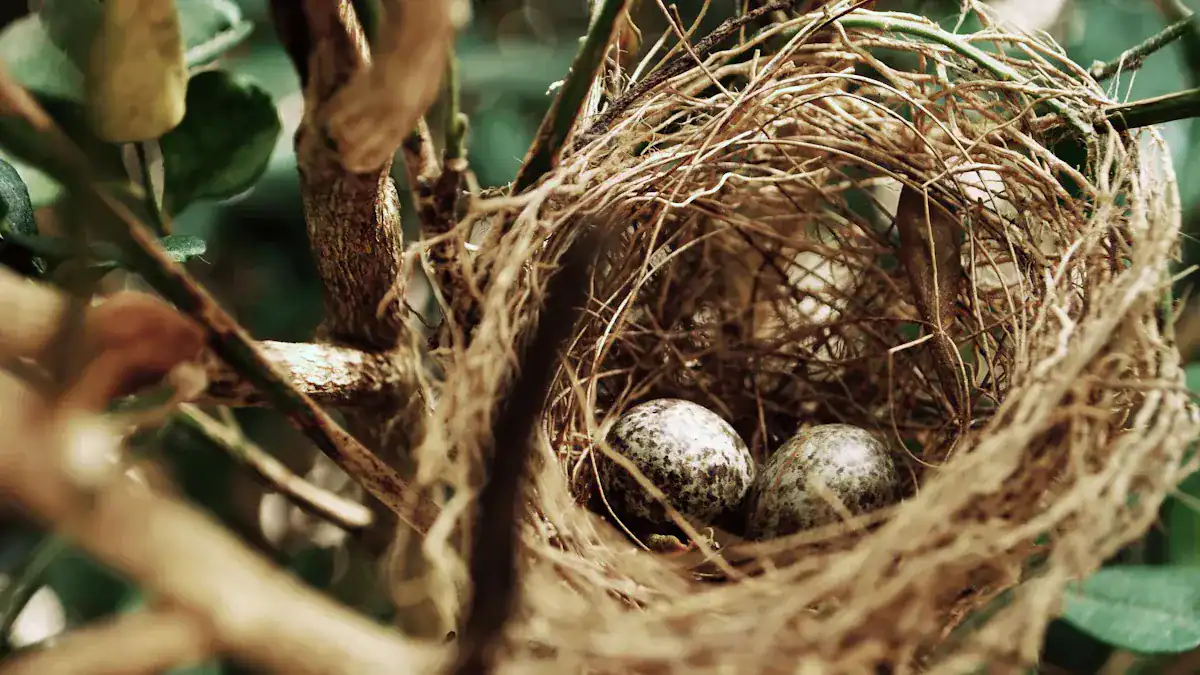
Bird nest identification involves careful observation. People use a bird nest identification chart to help them. They look at several key features. These include the nest’s size, its shape, and the materials used. The placement location also provides important clues. For example, some birds build high in trees. Others prefer ledges or cavities.
Many birds use common materials. These include mud, twigs, moss, and dried grasses. Spider webs and fibers from milkweed stalks also appear. Squirrel fur can add insulation. Robins construct their nests using a mixture of mud and straw. This building material is known as ‘cob’. Small birds like hummingbirds use spider silk. This material provides strength and flexibility.
It helps the nest accommodate growing nestlings. Other materials include dead twigs, dead leaves, and dry grass. Feathers, plant fluff, bark strips, and pine needles are also common. Some birds even use snakeskin. Great Crested Flycatchers favor snakeskin. Barn and Cliff Swallows, phoebes, and robins utilize mud for nest construction. This detailed bird nest identification helps observers understand different species.
Why Nest Identification Matters
Accurate bird nest identification offers many benefits. It helps with conservation efforts. It also satisfies scientific curiosity. People also gain personal enjoyment from this skill. Understanding nests helps scientists track bird populations. Nest architecture links to ecological success. Species building domed nests often have smaller ranges.
They are less likely to colonize urban areas. They might also face higher extinction rates. This contrasts with birds using open or cavity nests. Domed nests take more time to build. This can limit breeding chances. Habitat changes can favor or disfavor certain nest types. This affects a species’ vulnerability and success. Forest degradation drives widespread avian habitat and population declines. Habitat in surrounding landscapes strongly correlates with bird population size. Breeding habitat loss has a clear impact. Habitat fragmentation negatively impacts nesting success.
This is especially true at landscape scales. Conservation efforts limiting fragmentation can improve nesting success rates. This benefits bird populations. Knowing a nest helps people protect the birds that built it. This knowledge contributes to a broader understanding of local birdlife.
Bird Nest Identification Chart: 15 Nests
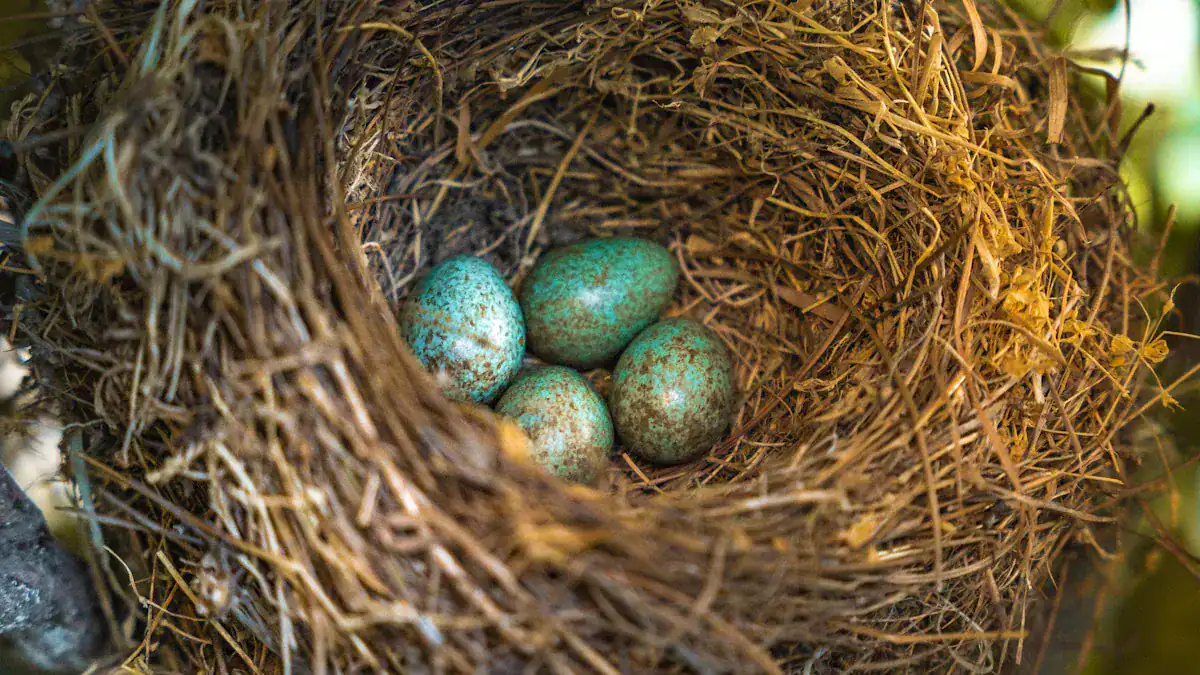
This bird nest identification chart helps observers understand the unique homes of various bird species. Use this guide to identify common wild backyard bird eggs and the nests that hold them. Comparing observations with field guides and pictures enhances accuracy.
| Nest Type | Description / Shape | Common Location | Typical Materials | Common Bird Examples | Notes / Identification Tips |
|---|---|---|---|---|---|
| Cup Nest | Shallow, cup-shaped; neatly woven | Tree branches, shrubs, eaves | Grass, twigs, moss, mud, feathers | American Robin, Blackbird, Goldfinch | Most common type; often lined with soft material |
| Platform Nest | Flat or slightly hollowed platform | Tree tops, cliffs, tall poles | Sticks, twigs, leaves | Bald Eagle, Osprey, Heron | Large and bulky; reused each year and added to |
| Cavity Nest | Inside holes or tree trunks; hidden | Tree cavities, nest boxes, fence posts | Wood chips, feathers, fur | Woodpecker, Bluebird, Owl | Entrance hole size varies by species |
| Ground Nest | Depression in ground or grass | Grasslands, shorelines, forest floor | Grass, leaves, pebbles, feathers | Killdeer, Duck, Pheasant | Often camouflaged; eggs speckled for concealment |
| Pendant (Hanging) Nest | Bag or pouch suspended from branch | Tree branches, reeds | Plant fibers, spider silk, grass | Oriole, Weaverbird | Intricate weaving; entrance usually on side or bottom |
| Mound Nest | Dome or heap of debris | Ground, beaches, islands | Sand, leaves, soil, rotting vegetation | Megapodes, Flamingos | Heat from decomposing matter helps incubate eggs |
| Burrow Nest | Tunnel or hole underground | Riverbanks, cliffs, sandy ground | Dirt, small stones, plant fibers | Kingfisher, Puffin, Bee-eater | Birds dig their own burrows; often near water |
| Scrape Nest | Simple shallow depression | Open fields, tundra, beaches | Bare ground or minimal lining | Plovers, Terns, Gulls | Very minimal nest; relies on camouflage |
| Dome Nest | Covered nest with side entrance | Bushes, ground vegetation | Grass, moss, leaves | Wren, Warbler, Ovenbird | Offers protection from rain and predators |
| Colonial Nest | Large group of nests close together | Cliffs, reeds, |
American Robin Nest
American Robins build sturdy, cup-shaped nests. They construct the outer walls from a mixture of mud and grass. They also use small twigs. The interior of the nest features a lining of fine dry grass.
Dimension | Measurement |
|---|---|
Diameter | 3-8 inches (8-20 centimeters) |
Across | 6-8 inches |
Height | 3-6 inches |
Robins typically place their nests in the crotch of a tree or on a sturdy branch. They often choose deciduous or evergreen trees. The female robin lays 3-5 eggs. These eggs are a distinctive robin’s-egg blue with no markings.
Barn Swallow Nest
Barn Swallows create unique cup-shaped nests. They collect sticky mud pellets from muddy pools or stream banks. They mix these pellets with saliva, grass, straw, pine needles, and sometimes even fishing line. The individual mud pellets remain visible in the finished structure. After forming the mud cup, they line the nest with soft materials. These materials include horse hair, human hair, feathers, cotton, moss, rootlets, and fine grass. Nests against a vertical surface are semicircular. Nests on a horizontal surface form a complete cup, about 3 inches across and 2 inches deep.
Barn Swallows affix their nests to rough walls under sheltering overhangs. They almost exclusively use human-built structures like farm buildings or concrete bridges. Barns are a favored nesting location. Historically, Barn Swallows nested in caves. Today, they predominantly use human-made structures. The female lays 4-5 eggs. These eggs are white with brown speckles.
Hummingbird Nest
Hummingbirds build tiny, delicate nests. These nests are bowl-shaped, soft, and flexible. They construct them from twigs, plant bits, and leaves for a base. They add moss and lichen for camouflage and softness. Spider silk is crucial. It holds the nest together, anchors it, and provides camouflage. The nest appears like a small knot of wood. This is due to compacted green lichen, moss, and spider silk. The nest is typically a little over one inch in diameter.
Hummingbirds usually place their nests in the fork of a small branch. The camouflage makes them very hard to spot. The female lays 2 tiny, white, bean-sized eggs.
Oriole Nest
Oriole nests are distinctive. They are often described as pouch-like or woven hanging baskets. They are typically gourd-shaped. Female orioles meticulously weave them from hundreds of thin fibers. These fibers include hair, twine, grasses, or wool. They line the nests with soft materials like feathers or cotton from plants. The depth of these nests varies significantly. They average just under 4 inches but can reach up to 15 inches. Altamira Orioles are known for much deeper nests, some reaching 18 inches. The deep cups and narrow entrances, typically 2 to 3 inches wide, offer excellent protection from predators and brood parasites.
Orioles suspend their nests from the ends of flexible branches. This method helps deter predators. Most are found hanging in the canopy of deciduous trees. Some species, like Orchard Orioles in the Great Plains, build bowl-shaped nests in low shrubs for wind protection. Hooded and Scott’s Orioles attach their nests to the underside of palm fronds or yucca leaves in the American Southwest. The female lays 4-5 eggs. These eggs are pale blue or grayish-white with dark spots and streaks.
House Finch Nest
House Finches construct cup-shaped nests. They use fine stems, leaves, rootlets, thin twigs, string, wool, and feathers. Other materials include grass, weeds, and various debris.
House Finches are adaptable in their nesting sites. They build nests in deciduous and coniferous trees. They also use buildings, choosing vents, ledges, street lamps, ivy, and hanging planters. They sometimes nest in cactus, particularly on southern islands. They may even use abandoned nests of other birds. The female lays 3-6 eggs. These eggs are pale blue or greenish-white with sparse black or purple spots.
Mourning Dove Nest
Mourning Doves build flimsy nests. They are a minimal assembly of pine needles, twigs, and grass stems. The nest is unlined and offers little insulation. It measures about 8 inches across. The structure is so flimsy that eggs can sometimes be seen through the bottom. Mourning Doves reuse their own nests or those of other species. These include robin, mockingbird, House Sparrow, and Common Grackle nests. They have even built nests inside galvanized containers.
Mourning Doves typically place their nests amid dense foliage on tree branches or vines. They also commonly nest on the ground, especially in the West. They may use man-made structures like gutters, eaves, or abandoned equipment. The female lays 2 white eggs.
Red-tailed Hawk Nest
Red-tailed Hawks construct large, bulky nests. They build the outer walls from rather large sticks. These sticks are typically 1-2 cm in diameter. They use deciduous and conifer sprigs. The interior lining consists of softer materials. These include smaller twigs, strips of bark, their own feathers, plant stalks, corn cob husks, and aspen catkins.
Measurement | Size (cm) |
|---|---|
Outer Diameter | 71-76 |
Interior Width | 35-37 |
Interior Depth | 10-13 |
Red-tailed Hawks typically place their nests high in tall trees, often near the top. The female lays 1-5 eggs. These eggs are dull white or bluish-white, sometimes with brown spots.
Osprey Nest
Osprey nests are large and conspicuous. They construct them from sticks. They line the nests with materials like bark, sod, grasses, vines, algae, or flotsam and jetsam. The male typically gathers most of the nesting material. The female arranges it. Newly built nests on artificial platforms can be relatively small. They measure less than 2.5 feet in diameter and 3–6 inches deep. However, after generations of additions, nests can grow significantly. They reach 10–13 feet deep and 3–6 feet in diameter.
Historically, Ospreys nested exclusively in trees, snags, or on cliffs. They have adapted to utilize various man-made structures. These include utility poles, towers, chimneys, windmills, buoys, and platforms. Preferred nest sites are typically located above or near water. They require nesting sites that allow for easy landing after hovering. The female lays 2-4 eggs. These eggs are creamy white to buff with dark brown or reddish-brown spots.
Woodpecker Cavity Nest
Woodpeckers do not build traditional nests. Instead, they excavate cavities in dead or living trees. They create a hole that serves as their nest. They do not add any nesting material. The eggs rest on wood chips at the bottom of the cavity. The size and shape of the cavity vary depending on the woodpecker species.
Woodpeckers place their cavity nests in tree trunks or large branches. The female lays 3-8 pure white eggs. This type of nest is a key feature for bird nest identification.
Killdeer Nest
Killdeer nests are simple ground nests. They are shallow indentations in the ground, often just a scratch in the dirt. To camouflage these minimal nests, the birds add light-colored stones, sticks, and bits of shell. Killdeer prefer open, flat habitats for nesting. These include fields, gravel areas, and parking lots.
Killdeer nests are consistently well-camouflaged. Their four heavily speckled eggs blend perfectly with the surrounding environment. The eggs are buff-colored with mottled brown and tan marks. They blend seamlessly with their surroundings in a shallow hole, often in areas like driveways. The female lays 4 eggs.
Canada Goose Nest
A Canada Goose nest is typically a large, bulky structure. They construct it from various materials. These include twigs, grass, and down feathers. The down feathers provide insulation for the eggs.
Canada Geese usually place their nests on the ground near water. They often choose a raised area for better visibility and protection. The female lays 2-8 dull white or creamy eggs.
Phoebe Nest
Phoebes build cup-shaped nests. They construct them from mud, moss, leaves, grass stems, and animal hair. They also incorporate fibers and feathers.
Phoebes place their nests on ledges or protrusions. These sites are usually covered by some type of roof. Examples include beneath a rocky outcrop, a bridge, or under the eaves of buildings. They often use porch lights and exposed rafters beneath porches and carports. Nests are typically less than 15 feet from the ground, often between 5-8 feet high. The female lays 2-6 pure white eggs. Sometimes these eggs have a few reddish-brown spots.
Chipping Sparrow Nest
Chipping Sparrows build small, neat, cup-shaped nests. They construct them primarily from fine grasses, rootlets, and often horsehair.
Chipping Sparrows typically place their nests low in shrubs or small trees. They also nest in gardens and parks. They have been observed nesting in seasonal planters filled with decorative branches. The female lays 3-5 eggs. These eggs are pale blue or bluish-white with dark spots and streaks.
Wren Nest
Wren nests vary by species, but they generally involve cavity nesting. Male House Wrens establish territories and build several “dummy” stick nests. Once a female accepts a male, she chooses one of his pseudo-nests. She finishes it by adding a soft lining of feathers, hair, moss, and rootlets. The nest has a foundation of twigs. It is topped with a softer cup of plant fibers, grass, weeds, animal hair, and feathers. House Wrens are not particular about nest cavities. They use old woodpecker holes, nest boxes, crevices in buildings, flowerpots, parked cars, shoes, or drainpipes.
Other wren species also have distinct nests. Cactus Wrens build football-shaped nests with an end opening, primarily in cholla cactus. Canyon Wrens make small nests of twigs, grasses, and leaves in rocky crevices. Rock Wrens build nests in cracks among boulders and often create a path of small rocks leading to the nest. The female lays 4-8 eggs. House Wren eggs are white with reddish-brown speckles.
American Goldfinch Nest
American Goldfinches build solid, tidy, cup-shaped nests. They construct them from plant fibers. They line the nests with thistle down. The nest is very tightly woven. It can even hold water.
American Goldfinches typically place their nests on a branch of a deciduous tree. The nest’s base rests directly on the branch, rather than being suspended. The female lays 4-6 pale bluish-white eggs. Sometimes these eggs have faint brown spots. This detailed identification helps in understanding common nesting birds.
Responsible Nest Observation
Observing bird nests offers a rewarding experience. However, people must prioritize the safety and well-being of the birds. Responsible observation means maintaining a safe distance. This prevents disturbance to nesting birds. Birds can become stressed when people get too close. This stress can lead to nest abandonment. It can also make nests vulnerable to predators.
Observe Nests Without Disturbance
People should watch for signs of disturbance. These signs show a bird feels threatened.
A bird might dive-bomb humans or pets. It swoops down repeatedly until they leave.
A bird might fly out from a bush or tree as someone approaches. This acts as a distraction.
Some birds act injured. They limp or drag a wing. This draws attention away from the nest. Killdeer and doves often do this.
Birds use warning vocalizations. These include loud squawking or quick alarm calls. American Robins make “tut” calls. House Wrens use raspier alarm calls.
If a bird shows these behaviors, people are too close. They should move away quietly. Observing from a distance with binoculars is always best. This allows people to enjoy the birds without causing harm.
Legal Protections for Nests
Many laws protect birds and their nests. The Migratory Bird Treaty Act (MBTA) is a key federal law in the United States. This act protects over 1,000 native bird species. It includes songbirds, waterfowl, and raptors. The MBTA makes it illegal to pursue, hunt, capture, or kill these birds. It also prohibits possessing, selling, or disturbing their nests or eggs. This protection applies to any bird parts, including nests. It does not matter if the bird is alive or dead.
It is illegal to possess a bird nest, even an empty one. This law prevents people from collecting souvenirs. It also stops the spread of avian parasites. Organizations like Wild Care can keep nests for education. They need a special federal “Salvage Permit” to do this. The MBTA ensures the sustainability of bird populations. This law helps protect birds and their homes across North America.
Understanding bird nests offers great personal enjoyment. It also boosts ecological awareness. This knowledge helps people connect with nature. The provided chart helps identify various nests. Readers can use it as a starting point for their birdwatching adventures. They can discover the diverse homes of local bird species. Always observe local birdlife responsibly. Appreciate these amazing creatures and their intricate nests.