
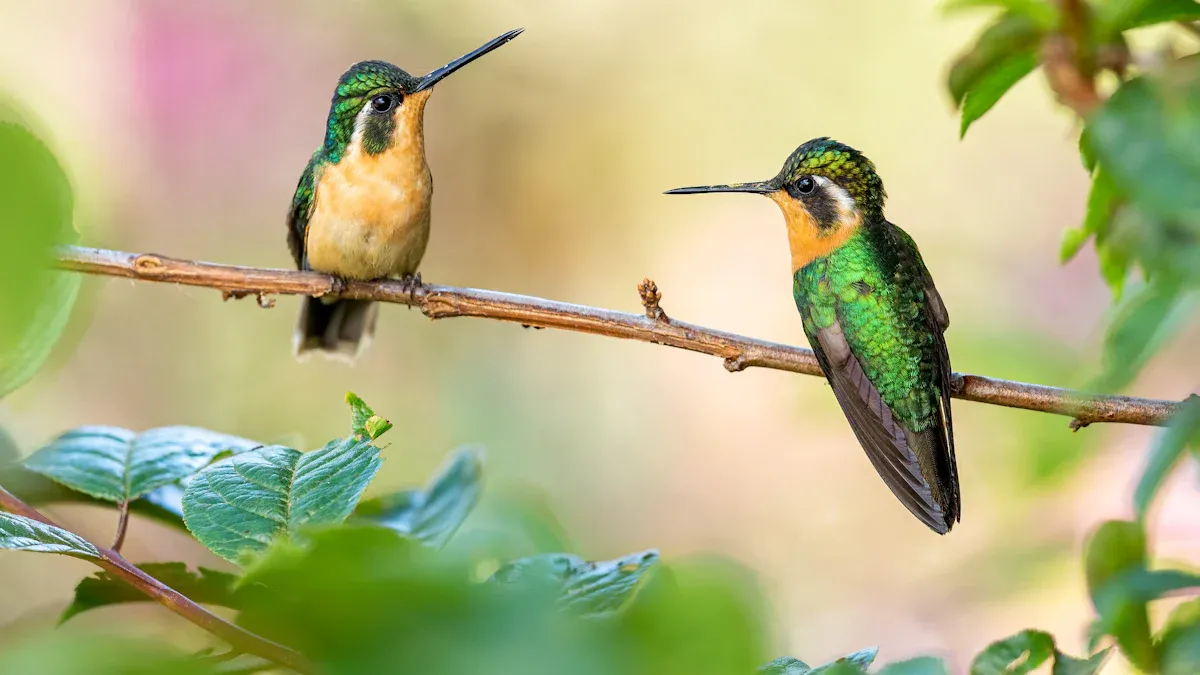
You marvel at the tiny, dazzling hummingbird. Their rapid movements and vibrant colors are a true spectacle. Identifying each unique hummingbird can be a fun challenge. It is also very rewarding to tell them apart.
Did you know the Americas host 365 hummingbird species? Fifteen types of hummingbird live in the United States. This blog provides a comprehensive hummingbird identification chart. It features 15 vibrant hummingbird species. You will gain confidence in your hummingbird identification skills. Learn to distinguish different hummingbirds by their looks and where they live.
Key Takeaways
Look at a hummingbird’s gorget colors. This is the bright patch on its throat. It helps you tell different species apart.
Check the hummingbird’s bill. Its length and curve are important clues. Different bills help hummingbirds eat different flowers.
Notice the hummingbird’s tail. Its shape, length, and colors are unique. These features help you identify the bird.
Consider the hummingbird’s size and shape. Some are small and slender. Others are larger and stocky.
Know where the hummingbird lives. Different species live in different areas. This helps you narrow down your search.
Key Hummingbird Identification Features
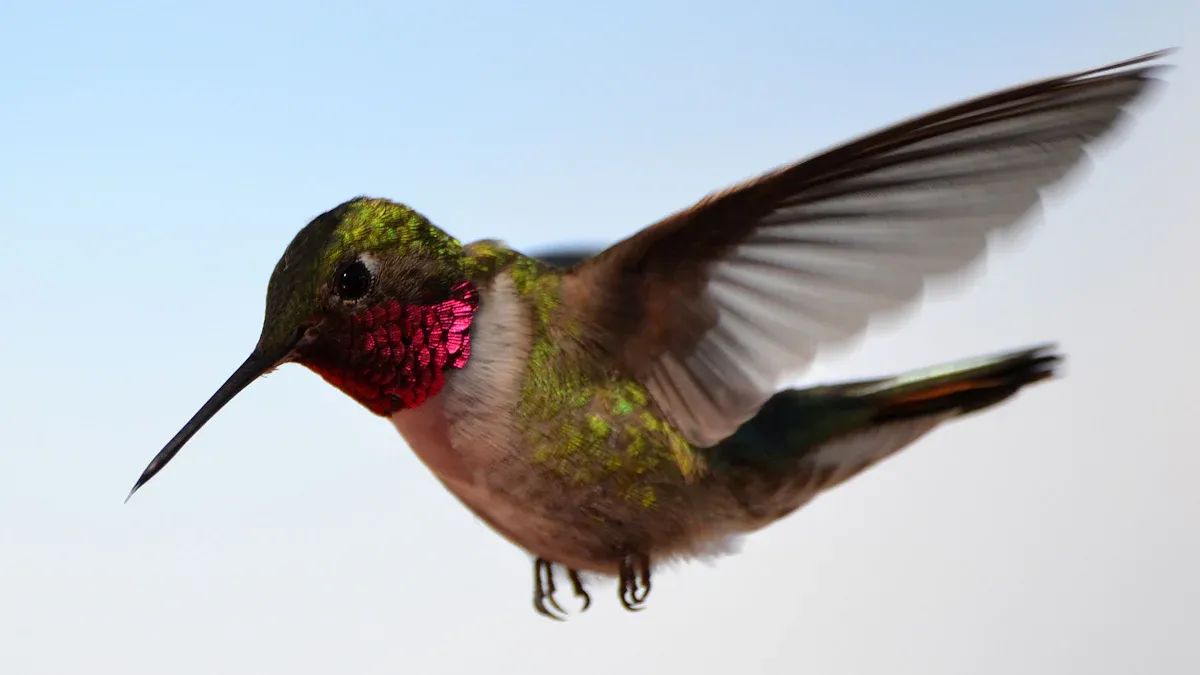
To become an expert at hummingbird identification, you need to know what to look for. You will observe specific physical characteristics. These features help you tell one species from another.
Gorget Colors
The gorget is the iridescent patch of feathers on a male hummingbird’s throat. These feathers shimmer with brilliant colors. The gorget’s color and shape are often the most striking identification clues.
A number of social functions have been suggested for the gorget. It may aid in mate attraction or in resource defense. It may signal social status or allow species to identify conspecifics. Among hummingbirds, gorgets are typically found only on males. In the rare instances where they are found on females, they appear to serve primarily for signaling threats. Young hummingbirds, which need to intrude on adult territories to feed once they have fledged, all lack gorgets. This may help to make them less visible or less threatening to adult birds.
Gorget colors serve many purposes:
Mate attraction
Resource defense
Signaling social status
Species identification (conspecifics)
Signaling threats (in females)
Young birds lack gorgets to appear less threatening.
Notice the exact color and how far the color extends. This helps you identify the specific hummingbird.
Bill Features
A hummingbird’s bill is a specialized tool. Its length and curvature vary greatly among species. This helps them feed on different flowers.
Species Group | Bill Length | Bill Curvature | Sexual Dimorphism in Bill Curvature |
|---|---|---|---|
Long-billed Hermit Species | Long | Varies | Most pronounced |
Short-billed Species | Short | Varies | Little difference |
Sicklebill Hermit Hummingbirds | Varies | Highly curved (nearly 90° decurved) | Reduced |
Female Purple-throated Caribs | Varies | Varies | Extreme |
Phaethornis species (lekking) | Males often longer than females | Varies | Varies |
Glaucis species (harem polygyny) | Males approximately same length as females | Females’ bills about 60% more curved than males’ | Pronounced |
Some lekking species | Varies | Varies | Little dimorphism or female-biased dimorphism in bill length |
Sexual differences in bill curvature are more noticeable in long-billed hermit species. Short-billed species show less difference between sexes. As bill length increases in hermit species, the sexual difference in bill curvature also increases. The bill’s curve is measured by how well a circle fits its top edge.
Tail Markings
The tail feathers of a hummingbird offer important clues. Look at their shape, length, and any distinct color patterns.
Adult males have a dark forked tail. Females have rufous at the base of the outer tail feathers.
Adult birds possess greenish-brown upperparts and tail.
Male tail feathers are rufous, pointy, and have black tips. Females have rufous at the base of the outer tail feathers and a broad black band on the tail tipped with white.
Other tail patterns include:
Long, deeply forked with narrow outer feathers
Deeply notched
Rounded
Long, square, slightly forked
Long, bright rusty
Short
Square, rufous, green gold tipped
Square to slightly notched
Forked
Size and Shape
Hummingbirds come in various sizes and body shapes. These features help you narrow down the possibilities.
Species | Size Range (Length) | Body Shape/Distinguishing Features |
|---|---|---|
Ruby-throated Hummingbird | 3 to 3.75 inches | Small, compact body; males have iridescent ruby-red throat and green back; females have white throat and green back. |
Rufous Hummingbird | 3 to 3.5 inches | Stocky body; males have iridescent orange-red throat, orange-brown back and flanks; females have green back, rufous flanks, and some orange on throat. |
Anna’s Hummingbird | 3.9 to 4.3 inches | Medium-sized, stocky body; males have iridescent rose-red crown and throat, green back; females have green back and some red spotting on throat. |
Black-chinned Hummingbird | 3.25 to 3.75 inches | Medium-sized, slender body; males have iridescent black throat with a thin violet band below, green back; females have white throat and green back. |
Broad-tailed Hummingbird | 4 to 4.5 inches | Medium-sized, slender body; males have iridescent rose-magenta throat, green back; females have green back and white throat with some spotting. |
Observe if the hummingbird is slender or stocky. Note its overall length.
Geographic Range
Knowing the geographic range helps you identify a hummingbird. Different species live in different areas. A hummingbird you see in the Eastern US will likely be different from one in the Southwest. Check the typical range or locations of inhabitancy for each species. This information is crucial for accurate hummingbird identification. You can rule out species that do not live in your area. Understanding their range makes your search much easier.
Your Hummingbird Identification List: 15 Vibrant Species
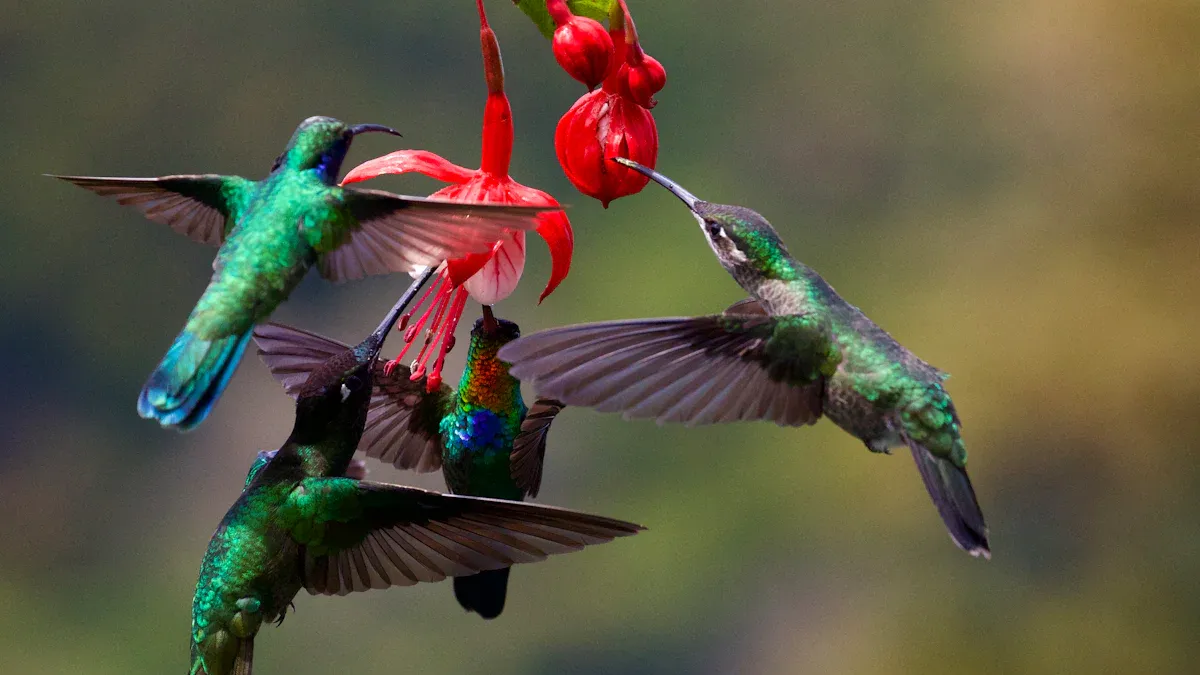
You now have the tools to identify these amazing birds. This hummingbird identification list will help you recognize 15 vibrant species. This section serves as your comprehensive hummingbird identification chart. You will learn about their unique colors, markings, and where you can find them.
Ruby-throated Hummingbird
You often see the Ruby-throated Hummingbird in the Eastern United States. Males boast a brilliant, metallic ruby-red gorget. This gorget can appear black until the light hits it just right. Their backs are emerald green. Females lack the red throat; they have a white throat and a green back. You will notice their forked tail feathers are entirely dark. These hummingbirds are medium to long-distance migrants. They travel to Central American wintering grounds. They may fly directly across the Gulf of Mexico or follow a coastal route around it. This is one of the most common north america hummingbirds you will encounter in the east.
Rufous Hummingbird
The Rufous Hummingbird is a feisty, energetic bird. Male Rufous Hummingbirds display brilliant orange plumage. Females show green-and-orange coloration. Males have a vivid orange-red throat. Their upper parts are coppery rufous. Females have a green back, spotted throat, and an orange-buff wash on their sides. You will see rufous on their flanks and at the base of their tail. This hummingbird species travels nearly 4,000 miles. They breed in Alaska and northwest Canada. They winter in Mexico. You can find them breeding from Washington state north to British Columbia. They migrate south through the western US. They return north along the California coast. You might even spot them as rare fall and winter vagrants in the southeastern US.
Anna’s Hummingbird
You will recognize the Anna’s Hummingbird by its striking appearance. Males have an iridescent rose-red crown and throat. Their backs are green. Females have a green back and sometimes show red spotting on their throat. This hummingbird is common in gardens, chaparral, and open woods. Its range has expanded significantly. You can find them north and east from their original southern California habitat. This expansion is due to suburban gardens providing flowers and feeders. You will see them in California, the Northwest, and Western Canada. Some birds in Arizona migrate to California.
Black-chinned Hummingbird
The Black-chinned Hummingbird is a widespread western species. Males have a velvety black throat. A thin, iridescent purple band sits at the base of this black throat. This purple band often looks black. Females have a pale throat. Both sexes have a fairly long, slender, straight black bill. This hummingbird is a medium to long-distance migrant. Its breeding range extends from southern British Columbia to northern Mexico. This includes coastal California and eastward to Texas. Most of these birds winter in western Mexico. You might see a few as rare sightings along the Gulf Coast in winter.
Broad-tailed Hummingbird
You will identify the male Broad-tailed Hummingbird by its breathtaking rose-red gorget. Their backs are green. Females have a green back and a white throat with some spotting. Their tail is rounded and black for both sexes. This hummingbird lives in open woodlands. You will find them in mountain meadows and forests. They breed mostly in mountains, often above 10,000 feet elevation. Their winter range includes thorn and oak forests in Mexico. You might see them in urban and suburban areas of the southwestern United States. This is due to hummingbird feeders.
Allen’s Hummingbird
You will notice the Allen’s Hummingbird’s rust orange and green coloration. Adult males have a rust-colored tail, eye patch, and belly. They have a deep red-orange throat. Immature males and females share similar coloring. They have only small spots of iridescent bronze on their throats. Their tail feathers are narrower than Rufous Hummingbirds. The rufous color on their face, sides, flanks, rump, and tail is more chestnut brown. You will find migratory individuals along coastal forests from California to southern coastal Oregon. Year-round residents live on the Channel Islands and in southern California.
Calliope Hummingbird
The Calliope Hummingbird is the smallest north american hummingbird species. It measures about 3.15 inches long. Males have a distinct, iridescent gorget. It forms a star-burst of vibrant metallic purple across their white chin and throat. Females have a dull brownish-white throat, often streaked with dusky or bronzy brown. Males have metallic bronze-green backs. Their wings extend to or past the tail when folded. They produce a sound similar to a bumblebee in flight.
Feature | Measurement (g/cm/mm) | Measurement (oz/in) |
|---|---|---|
Mass | 2.5 to 3.3 g | 0.09 to 0.12 oz |
Length | 8 cm | 3.15 in |
Wingspan | 39.55 to 42.00 mm | 1.56 to 1.65 in |
You will find them breeding in open montane forests and mountain meadows in Western North America. This includes southern British Columbia to Colorado and southern California. They winter in southwestern Mexico. They travel over 5,000 miles annually. You might see them in coastal areas in spring. In fall, they are more common in interior locations at higher elevations.
Costa’s Hummingbird
You will easily spot the male Costa’s Hummingbird. It has a vibrant purple cap and throat feathers. These feathers flare out and back behind its head. This creates a unique, long mustache-like shape. The gorget’s color changes with the angle of sunlight. It can appear black or brilliant purple. Young males do not have this purple gorget until they are about a year old. This hummingbird is a resident to short-distance migrant. Its range includes deserts, washes, and sage scrub. Many that nest in deserts migrate west to coastal areas for other seasons. You might see them year-round in suburban gardens where flowers are always available.
Broad-billed Hummingbird
You will recognize the Broad-billed Hummingbird by its striking bill. Males have a bright reddish bill with a black tip. Their body is metallic green. They have a blue throat and a bluish-green belly. Females have a red/orange bill tipped in black. They have a white line above their eyes and dingy underparts. Juvenile males develop a reddening bill and iridescent throat feathers. You will find this hummingbird primarily in the southwestern United States. Its range extends into Mexico. It is a rare sighting in other parts of the US.
Buff-bellied Hummingbird
The Buff-bellied Hummingbird gets its name from its buff-colored belly. You will see a striking red bill with a dark tip in adults. Juveniles have a dark bill. Their back is iridescent green. Males have a bright green throat. This hummingbird is primarily found along the Gulf of Mexico slope. This extends from South Texas down to the Yucatán Peninsula. You might see it as a rare visitor in Louisiana or Florida. This is due to irregular autumn or winter migration.
Magnificent Hummingbird
You will find the Magnificent Hummingbird, also known as Rivoli’s Hummingbird, in the mountains of the Southwest. Males are large hummingbirds. They have a dark body with a glittering green throat and a deep violet crown. Females are duller, with a green back and gray underparts. Their range in the US is limited to southeastern Arizona and southwestern New Mexico. It is a rare sight outside these areas.
Blue-throated Mountain-gem
The Blue-throated Mountain-gem is another large hummingbird. You will see a distinctive blue throat on the male. They have a green body and a white stripe behind their eye. Females have a gray throat and underparts. This species prefers mountain canyons and pine-oak forests. Its US range is restricted to southeastern Arizona and southwestern New Mexico. It is a rare visitor to other states.
Green-breasted Mango
You will identify the Green-breasted Mango by its vibrant green breast. Males have a dark, iridescent green body. They have a purplish-black tail. Females have a white breast with a dark stripe down the center. This hummingbird is primarily a tropical species. You might see it as a rare north america sightings along the Gulf Coast, particularly in Texas or Florida. Its presence in the US is usually due to vagrancy.
Violet-crowned Hummingbird
You will recognize the Violet-crowned Hummingbird by its bright white underparts and a shimmering violet-blue crown. Their back is green. They have a reddish bill with a black tip. This hummingbird is found in riparian areas and canyons. Its US range is mainly in southeastern Arizona and southwestern New Mexico. It is a rare sight elsewhere.
Rivoli’s Hummingbird
You will find Rivoli’s Hummingbird, also known as the Magnificent Hummingbird, in mountainous regions. Males have a dark body, a glittering green throat, and a deep violet crown. Females are duller. They have a green back and gray underparts. This hummingbird’s range in the US is limited to southeastern Arizona and southwestern New Mexico. It is a rare visitor outside these specific areas.
Practical Identification Tips
You can improve your hummingbird identification skills. Use these practical tips. They will help you recognize different species.
Observe in Good Light
Good light helps you see a hummingbird’s true colors. You need soft light to see their metallic, iridescent feathers. Mid-morning and late afternoon are good times. The light is warm and soft then. It makes the iridescence stand out. Overcast days also offer good light. This light is even and reveals feather details. It shows vibrant colors without harsh shadows. Avoid direct midday sun. It creates harsh shadows. It also makes colors less vibrant. You can use a flash with diffusers if you take photos. This reduces harshness. It also fills shadows. This helps you see more detail on the hummingbird.
Note Behavior
Hummingbirds show unique behaviors. These actions help you identify them. They spend about 90% of their flight time hovering. They do this at feeding spots. This behavior uses a lot of energy. So, they must feed often. Watch their flight patterns. An Anna’s hummingbird, for example, has a figure-eight wing flap. Look at their feeding habits. The sword-billed hummingbird has a very long beak. It reaches nectar from deep nectar flowers. Observing these behaviors helps you tell species apart. You can also watch how they interact at a hummingbird feeder.
Use Field Guides
Field guides are excellent tools. They help you identify hummingbirds. The “Peterson Field Guide to Hummingbirds of North America” is a great choice. It covers 31 species. It has clear illustrations. Arrows point to key marks on each bird. It gives brief descriptions. This guide is good for serious birders. It also helps casual birdwatchers. It discusses hummingbird habits and habitats. It covers migratory patterns and physical traits. This guide helps you understand a hummingbird’s range. It is bound with a tough cover. You can use it often in the field. You will find it useful for any hummingbird feeder visitor.
Practice Patience
Patience is key when you identify hummingbirds. Start by looking at the bird’s head. Then move down its body. Note any distinct markings. Think about your location. This helps you know which hummingbirds are likely there. For example, in the eastern US during summer, you likely see a ruby-throated hummingbird.
Most hummingbird species look different between males and females. Males often have brighter colors. Look at the gorget color. This helps you narrow down choices. Get a general impression of the bird. Look at its size and shape. Check its bill and tail. Watch its behavior. Examine the bill’s color and length. Observe the tail’s shape and color. Listen for sounds. Hummingbirds make chip notes. Their wings also make sounds. These sounds can vary. You will get better with practice. Keep watching your hummingbird feeder.
You now feel the joy of identifying different hummingbird species. This hummingbird identification chart is a valuable tool. Remember to observe key features for each hummingbird:
Gorget colors
Bill features
Tail markings
Size and shape
Geographic range
Each hummingbird has unique features. Their specific range helps you identify them. Use this hummingbird identification chart for your birdwatching adventures. Continue to watch these tiny, vibrant hummingbird marvels. Appreciate every hummingbird you see. Their range can vary widely.