

Few things frustrate homeowners more than an infestation of ants. These tiny invaders can quickly take over your home. You need proper ant identification to stop these ants. Different ant species require specific control methods for these ants. For example, you treat Pavement Ants differently than Carpenter Ants. This guide provides an ant identification chart. It helps you with identifying ants around your home. You will learn key features for 10 common ant species. This identification is crucial for effective management of these persistent ants. Knowing your enemy helps you win the battle against these nuisance ants.
Key Takeaways
Knowing the type of ant helps you control them better. Different ants need different treatments.
Ants have unique behaviors and habits. Understanding these helps you find their nests and stop them.
Look at an ant’s size, color, and body parts. These features help you identify the ant species.
You can prevent ants by keeping your home clean. Seal cracks and fix water leaks.
Call a professional for serious ant problems. Some ants can sting, spread germs, or damage your home.
Why Ant Identification Matters
Understanding Ant Behavior
You might think all ants are the same, but they are not. Accurate ant identification is crucial for successful pest management. Nate Heider, a national operations director, states, “Do not treat without knowing what you are treating for; an ant is not just another ant.” Correct identification gives you vital information. It tells you about colony size, location, and what foods the ants prefer. Natasha Wright, a technical director, warns that treating all species the same can make problems worse. For example, misidentifying Pharaoh ants can scatter them and spread the infestation.
Understanding specific ant behaviors helps you choose the right strategy. Ants use pheromone trails to guide others to food. You can target these trails to disrupt foraging. Carpenter ants excavate wood for nests, causing damage. Fire ants build mounds and can sting. Knowing these nesting habits helps you find and treat nests effectively.
Ants live in organized colonies with a queen and workers. Workers forage and care for the young. Targeting the queen or disrupting the colony’s structure is effective. Many ants eat liquids. They share food, spreading bait throughout the colony. Ants also change their food preferences with the seasons. In spring, they seek proteins. In summer, they want carbohydrates. You must use different baits to match these changing needs.
Effective Control Methods
Once you identify the ant species, you can choose effective ways to control ants. Treatment strategies depend on the ant‘s food preferences and habitats. You must use the right product for the specific species. Always follow product labels. Some products do not work for certain ants. This makes proper identification essential for legal and effective treatment.
The most effective way to achieve ant control is to target the nest and queen. You can introduce insecticide into the nest directly or through bait. Killing only foraging worker ants does not work. You can also use non-chemical methods.
Store food in insect-proof containers. Clean kitchen surfaces often. Seal cracks where ants enter your home. For outdoor ants, locate nests by following their trails. You might need to watch for 30 minutes or longer. For carpenter ants, watch at night. If you cannot find the nest, apply an insecticide barrier around your home. This creates a temporary solution. Avoid ineffective methods like flooding nests with water or using gasoline. For severe problems, professional pest control services offer targeted treatments and expert advice.
Key Ant Identification Features
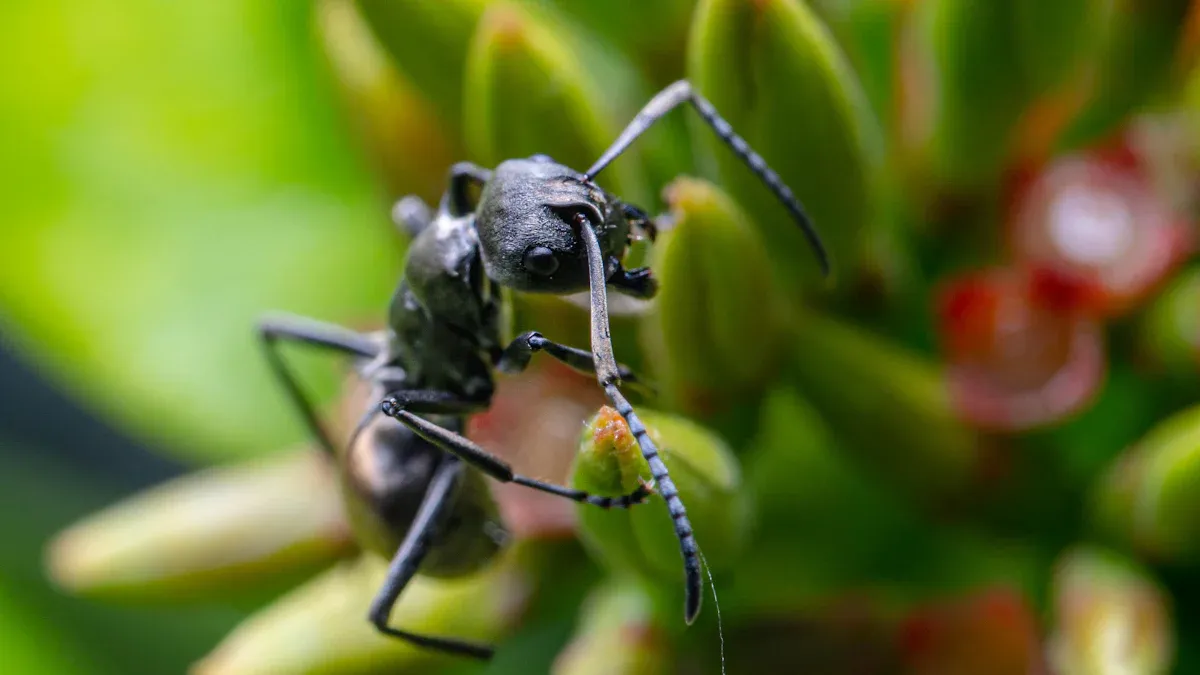
You need to look closely at several key characteristics to identify ants. Observing these features helps you accurately identify ants. This identification is crucial for effective pest control.
Size and Color
Ant size and color vary greatly among species. You will see a range from tiny to quite large. Colors can be black, brown, red, or even pale. For example, Fire Ants are red-brown to reddish-black. Odorous House Ants are brown to black. Carpenter Ants come in many colors. They are often black or reddish-black. Argentine Ants are light to dark brown.
Ant Species | Worker Size | Color Variations |
|---|---|---|
Fire Ants | 1/8 to 1/4 inch | Red-brown to reddish-black |
Odorous House Ants | 1/16-1/8 inch | Brown to black |
Argentine Ants | 1/12 – 1/8 inch | Light to dark brown |
Carpenter Ants | 1/4–3/8 inches | Many varieties of different colors |
Antennae Shape
Look at the ant‘s antennae. Their shape can be a helpful characteristic. Most ants have elbowed antennae. Some species have distinctively long antennae. Argentine Ants, for instance, have notably long antennae.
Body Segments (Nodes)
The petiole is the narrow waist between the thorax and abdomen. This part has one or two segments called nodes. This is often the first feature you examine for ant identification.
Stinger Presence
Some ants have stingers. They use them for defense. Fire Ants are aggressive. They sting multiple times. Their sting is painful and can cause blisters. Harvester Ants also sting. Some Harvester Ants have venom that can be deadly.
Nest Location and Habits
Where ants build their nests is a vital characteristic. Many ants nest in soil. They create complex tunnels underground. Carpenter Ants excavate wood for their nests. This can include wood in your home. Some ants are opportunistic nesters. They will nest almost anywhere. You might see ants indoors. This does not always mean an indoor nest. Outdoor ants often enter homes for food. Follow their trails to find their nests.
Ant Identification Chart: 10 Common Ants
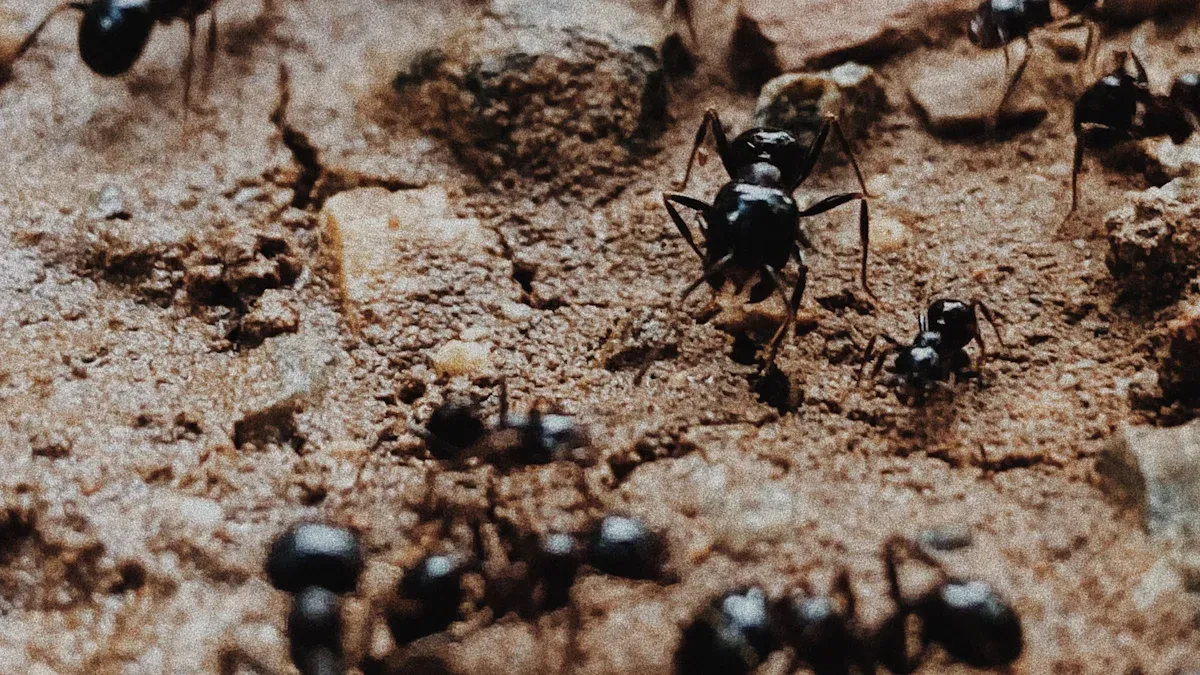
This ant identification chart helps you recognize common ants you might find. You will learn key features for identifying ants quickly. This identification is a crucial step for effective pest control.
Odorous House Ant
You can identify Odorous House Ants by their small size. They measure about 1/16 to 1/8 inch long. These ants are dark brown to black. Their bodies are smooth. You will notice a single node connecting their thorax and abdomen. This node is often hard to see. Look at their thorax from the side; it has an uneven shape. When you crush these ants, they release a strong, distinct odor. Many people describe this smell as rotten coconut. These ants scatter quickly if you disturb them. Workers are unevenly sized. They have six legs and antennae. Winged males and females also exist.
Pavement Ant
Pavement Ants are dark brown to black. They measure about 1/8 inch long. You will see two nodes on their waist. Look closely at their head and thorax. You might see small grooves on these parts. These ants often build nests under pavement, sidewalks, and stones. Worker pavement ants are typically 2.5 to 3 mm long. Their legs and antennae are often a paler shade than their bodies. Queens are larger, reaching about 3/8 of an inch.
Carpenter Ant
Carpenter Ants are large ants. They measure from 1/4 to 1/2 inch long. Their color can be black or reddish-black. You will see a single node on their waist. Their thorax has an evenly rounded shape when you view it from the side. Carpenter ants excavate wood to build their nests. They do not eat the wood. Instead, they chew out galleries and push out sawdust-like material called frass. Worker ants range from 4–13 mm. Queens are larger, up to 20 mm. The bases of their antennae are notably separated.
Argentine Ant
Argentine Ants are small. They are light to dark brown. You will find a single node on their waist. These ants do not have a distinct odor when crushed. They form very large colonies, often called supercolonies. You will often see them trailing in long, organized lines. Unlike many ant species, Argentine ants from different colonies do not fight each other. This helps them spread widely. They are very mobile. They can quickly move their nests if you disturb them. These ants use complex pheromone trails for communication. They have many queens distributed throughout their nests. This makes them very resilient.
Pharaoh Ant
Pharaoh Ants are tiny. They measure about 1/16 inch long. Their color is yellow to light brown. You will see two nodes on their waist. These ants prefer to nest in warm, hidden areas inside buildings. They are very difficult to control. Worker ants are about 1.5–2.0 millimeters long. They are light yellow to reddish-brown with a darker abdomen. Males are black and about 3 millimeters long. Queens are dark red and measure 3.6–5.0 millimeters. Pharaoh ants spread by “budding.” This means a part of the colony, including queens and workers, moves to a new nest site.
Fire Ant
Fire Ants are reddish-brown. Their size varies among workers. You will see two nodes on their waist. These ants are aggressive. They deliver a painful sting. They build visible mounds in soil. Fire ants use their mandibles to grip you. Then, they sting from their abdomen. They inject a toxic venom. This sting feels like a burn. It can cause blisters or pustules. Many ants will swarm and sting repeatedly if you disturb their mound. Their sting can cause severe allergic reactions in some people.
Little Black Ant
Little Black Ants are very small. They measure about 1/16 of an inch long. They are shiny black. You will see two nodes on their waist. These ants typically nest outdoors under rocks, logs, or wood. They often enter homes looking for food. Their actual size is 1.5 to 2 mm. They are dark brown to black with a shiny appearance. Indoors, they nest in wall voids, cabinets, and masonry. They are adaptable. They can also nest in cracks in walls or cement.
Cornfield Ant
Cornfield Ants are small. They are yellowish-brown. You will see a single node on their waist. If you crush these ants, they smell like citronella. They typically nest in soil. You often find them in cornfields and lawns. They are very common outdoors. They build nests under large stones, bricks, and sidewalks. You can also find them in and around rotting logs and stumps. They prefer open areas like roads and driveways.
Acrobat Ant
Acrobat Ants are light brown to black. Their most noticeable feature is their heart-shaped abdomen. When disturbed, they raise this abdomen over their head. They have two nodes on their waist. These ants often nest in wood. They are typically 0.08-0.2 inches long. They have two spines on the top side of their thorax. When excited, they run around with their abdomens held high. This gives them an “acrobatic pose.” They feed on live and dead insects. They also like sweets, especially honeydew from aphids.
Crazy Ant
Crazy Ants have long legs and antennae. They are dark brown to black. You will see a single node on their waist. Their movement is erratic and non-linear. This “crazy” movement gives them their name. They move swiftly and unpredictably. They often change direction abruptly. They do not follow defined trails like many other ants. They are small, about 1/16 to 1/8 inch long. Their bodies are smooth and shiny. They also have long, silvery hairs covering their bodies.
| Ant Species | Scientific Name | Size | Color | Distinctive Features | Habitat | Behavior / Notes |
|---|---|---|---|---|---|---|
| Carpenter Ant | Camponotus spp. | 6–12 mm | Black or reddish-black | Large ants; smooth thorax; don’t sting but bite | Wood, damp areas | Create nests in wood; can damage structures |
| Odorous House Ant | Tapinoma sessile | 2.5–3 mm | Brown to black | Emits rotten coconut smell when crushed | Indoors, near moisture | Forms large colonies; invades homes |
| Pavement Ant | Tetramorium caespitum | 2.5–4 mm | Dark brown to black | Parallel lines on head/thorax | Pavement cracks, foundations | Common household ant; small mounds in sidewalks |
| Fire Ant | Solenopsis invicta | 2–6 mm | Reddish-brown | Painful sting; two-segmented petiole | Lawns, open areas | Aggressive; forms large mounds |
| Pharaoh Ant | Monomorium pharaonis | 1.5–2 mm | Yellow to light brown | Very small; transparent look | Indoors (hospitals, kitchens) | Difficult to control; forms multiple colonies |
| Argentine Ant | Linepithema humile | 2–3 mm | Light to dark brown | Uniform color; no sting | Moist environments, near food | Forms supercolonies; highly invasive |
| Crazy Ant | Paratrechina longicornis | 2.5–3 mm | Dark brown to black | Erratic, fast-moving | Indoors/outdoors | Moves erratically; long legs and antennae |
| Field Ant | Formica spp. | 4–8 mm | Black, red, or combination | Small mound builders | Fields, meadows | Active during the day; bites but no sting |
| Thief Ant | Solenopsis molesta | 1–2 mm | Pale yellow to light brown | Very small; smooth body | Indoors, near other ant nests | Steals food and larvae from other colonies |
| Ghost Ant | Tapinoma melanocephalum | 1.3–1.5 mm | Dark head, pale body | Tiny and translucent | Indoors, greenhouses | Attracted to sweets; forms large colonies |
After Identifying Ants: Next Steps
You have identified the specific ant species. Now you can take action. This is the best way to treat your ant problem. You can choose between basic prevention or professional help.
Basic Prevention Tips
You can take simple steps to prevent ants. First, seal entry points. Inspect your home. Seal cracks around doors and windows with caulk. Make sure your screens are intact. Seal gaps around utility lines with expanding foam or caulk. Also, seal foundation cracks. You must practice proper food storage and cleanliness. Store food in airtight containers. Clean up spills and crumbs right away. Take out the trash regularly. Use a trash can with a tight-fitting lid.
You must control moisture. Fix leaky pipes and faucets. Use a dehumidifier in humid areas. Eliminate standing water near your home’s foundation. Perform yard maintenance. Trim bushes and plants away from your home. Clear debris, mulch, or woodpiles near the foundation. Consider installing a gravel or stone barrier. You can also choose pest-resistant plants like marigolds or lavender. These steps help control ants.
When to Call a Professional
Sometimes, you need professional help. Not all ants are equal. There are over 700 species in the U.S. DIY treatments often fail. Incorrect methods can make infestations worse. They can cause colonies to split. This makes the problem bigger.
You should call a professional for stinging ants. Fire ants can cause painful stings and allergic reactions. Health-threatening ants, like Pharaoh ants, spread bacteria. They contaminate surfaces. Property-damaging ants, such as Carpenter ants, tunnel through wood. They can harm your home’s structure. Nuisance ants, like Odorous House ants and Pavement ants, are annoying. They invade your living spaces. If your home remedies fail, it means you have a larger colony.
This needs professional treatment. A large-scale infestation also requires professional help. This includes many ant trails or multiple nests. If you suspect Carpenter ants, call a professional right away. They can prevent structural damage. Repeated infestations mean you have underlying attractants. A professional can find and remove these. This is the best way to treat for long-term prevention. Professional services give you peace of mind. They ensure an ant-free environment.
Accurate ant identification is crucial. It forms the foundation for successful ant control. You now have an ant identification chart. Use this tool for confidently identifying ants around your home. Knowing the specific ant species empowers you. You can take targeted action against these ants. This helps you manage these persistent ants effectively. You can use DIY methods or seek professional help for your ants. This guide helps you understand your ants better. You can win against these ants.