

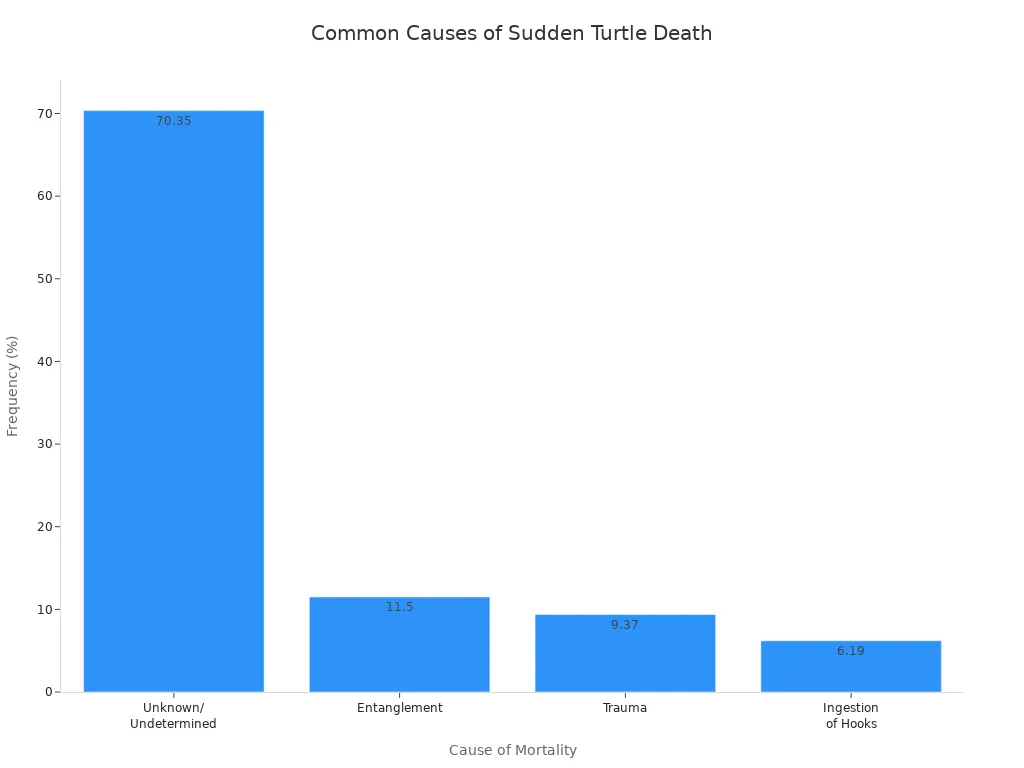
Turtles die suddenly due to several unpredictable factors. Various elements in their environment, health issues, and predation can lead to unexpected deaths. A study reveals that about 70.35% of turtle mortality cases remain undetermined, indicating the complexity of their health challenges. Many turtles face threats from entanglement, trauma, and dietary deficiencies. Understanding these risks helps you provide better care for your turtle and prevent sudden fatalities.
Key Takeaways
Turtles are sensitive to temperature changes. Ensure their habitat has stable temperatures to prevent overheating.
Environmental toxins, like heavy metals and biotoxins, can harm turtles. Protect their habitats from pollution to reduce exposure.
Predation from animals like dogs and raccoons poses a significant threat. Keep pets leashed and monitor nesting areas to safeguard turtles.
A balanced diet is crucial for turtle health. Avoid feeding them human foods to prevent malnutrition and digestive issues.
Stress can lead to serious health problems. Provide adequate shelter and minimize disturbances to create a safe environment for turtles.
Environment
Overheating
Turtles are sensitive to temperature changes. When temperatures rise too high, turtles can suffer from overheating. This condition can lead to severe health issues or even death. In both wild and captive environments, fluctuations in temperature significantly impact turtle mortality rates. For example, a study on aging dynamics in captive sea turtles shows that local temperature regimes influence mortality rates.
Study | Findings |
|---|---|
Nest Shading and Relocation | Highlights the impact of changing rainfall patterns on nest temperatures and hatchling sex ratios, indicating that temperature fluctuations can affect hatchling survival. |
Aging Dynamics in Captive Sea Turtles | Indicates that local selective pressures, including temperature regimes, significantly influence mortality rates in wild sea turtle populations. |
Urban Box Turtles | Demonstrates that colder body temperatures correlate with increased mortality, emphasizing the importance of thermoregulatory ability in survival rates. |
Environmental Toxins
Environmental toxins pose a significant threat to turtles. Many turtles die suddenly due to exposure to harmful substances in their habitats. Common toxins include heavy metals, organic compounds, and biotoxins from algae. For instance, marine turtles, especially hawksbill turtles, can accumulate various toxins leading to sudden deaths.
Key toxins linked to turtle mortality:
Heavy metals
Organic compounds
Biotoxins from algae, such as Lyngbya majuscula, which produces toxins associated with chelonitoxism.
The effects of these toxins can be severe. They can cause reproductive, immune, and nervous system damage. Heavy metals accumulate in turtle tissues, leading to potential toxic effects.
Key Findings | Description |
|---|---|
Bioaccumulation | Heavy metals accumulate in turtle tissues, leading to potential toxic effects. |
Systemic Toxic Effects | Can cause reproductive, immune, and nervous system damage. |
Environmental Impact | Coastal pollution affects nesting and overall turtle health. |
Understanding these environmental factors is crucial for turtle conservation. By recognizing the risks, you can help protect these vulnerable creatures from sudden deaths.
Predation
Predation plays a significant role in the sudden deaths of turtles. Various animals hunt turtles, especially during vulnerable stages like nesting or hatching. Understanding these threats can help you protect your turtle and its habitat.
Dog Attacks
Domestic dogs can pose a serious threat to turtles. Unleashed dogs often roam beaches and parks, where they may encounter turtle nests or hatchlings. For instance, an incident at Atlantic Beach, Florida, involved an unleashed dog that killed nearly two dozen turtle hatchlings. This attack occurred during a routine patrol following Hurricane Erin, highlighting how vulnerable hatchlings can be.
Incident Description | Location | Number of Turtles Affected | Context |
|---|---|---|---|
An unleashed dog killed nearly two dozen turtle hatchlings | Atlantic Beach, Florida | 23 | Attack occurred during a routine patrol following Hurricane Erin, highlighting the vulnerability of hatchlings. |
Pet owners must control their dogs, especially in areas where turtles nest. Keeping dogs on leashes can prevent tragic incidents and protect these vulnerable creatures.
Raccoon Threats
Raccoons are another common predator of turtles. They often raid nests, consuming eggs and hatchlings. Studies show that raccoons significantly impact turtle populations. Increased raccoon populations lead to higher rates of turtle injuries and deaths. This connection suggests that if raccoons are present in an area, turtle mortality rates may rise.
The analysis indicates that turtles are particularly sensitive to increased rates of adult injuries. If raccoon populations contribute to these injuries, it could directly affect turtle survival.
Predator Type | Specific Predators | Region/Context |
|---|---|---|
Mammals | Coatis, Raccoons, Coyotes, Armadillos | Pacific coast of Costa Rica |
Birds | Magnificent Frigate Birds, Black Vultures, Caracaras, Turkey Vultures | Various regions affecting Olive Ridley nests |
Insects | Ants, Beetles (e.g., Lanelater sallei) | Southeast Florida |
Other Animals | Domestic Dogs, Pigs, Foxes | General predation context |
Opportunistic Scavengers | Vultures, Crabs, Maggots | Previously raided nests |
By understanding the threats posed by predators like dogs and raccoons, you can take steps to protect turtles in your area. Awareness and preventive measures can make a significant difference in turtle survival.
Health Issues
Improper Diet
An improper diet can lead to serious health problems for turtles. You must provide a balanced diet to keep your turtle healthy. When you feed turtles human foods, you disrupt their natural dietary needs. This can result in long-term health crises. Here are some common issues caused by an improper diet:
Malnutrition: Turtles need specific nutrients to thrive. Without them, they can become weak and sick.
Digestive Blockages: Feeding inappropriate foods can cause blockages in their digestive system.
Shell Deformities: A lack of essential vitamins and minerals can lead to deformities in their shells.
Even small amounts of inappropriate foods, like bread or dairy, can upset digestion and lead to serious health issues over time. Turtles lack the enzymes to process salty snacks and fried foods. This can cause organ stress and potential poisoning.
Respiratory Infections
Respiratory infections are another significant health issue for turtles. These infections can occur due to poor living conditions or stress. If your turtle’s habitat is too cold or damp, it may develop respiratory problems. Signs of respiratory infections include:
Labored Breathing: You may notice your turtle struggling to breathe.
Nasal Discharge: Mucus may appear around the nose.
Lethargy: Infected turtles often become less active and may hide more than usual.
If you suspect your turtle has a respiratory infection, seek veterinary care immediately. Early treatment can prevent sudden deaths in turtles.
By understanding these health issues, you can take proactive steps to ensure your turtle remains healthy and happy.
Why Turtles Die from Stress
Stress can significantly impact the health and survival of turtles. Various factors contribute to stress, leading to sudden deaths. Understanding these stressors helps you provide better care for your turtle.
Lack of Shelter
Turtles require adequate shelter to feel safe and secure. Without proper hiding spots, they become vulnerable to predators and environmental stressors. A lack of shelter can lead to chronic stress, which negatively affects their immune system. Here are some consequences of inadequate shelter:
Lowered Immune Function: Chronic stress can weaken a turtle’s immune response, making it more susceptible to diseases.
Reduced Reproductive Rates: Stress can impact a turtle’s ability to reproduce, affecting population numbers.
Decreased Life Expectancy: Long-term stress can shorten a turtle’s lifespan, leading to premature deaths.
Habitat degradation, such as pollution and loss of natural environments, can exacerbate these issues. For example, studies show that the influx of pelagic brown macroalgae and poor water quality can increase oxidative stress in turtles. This stress is linked to diseases like fibropapillomatosis, which can lead to stress-induced mortality.
Flipping Over
Turtles that flip over face life-threatening consequences. When they cannot right themselves, they become exposed to various dangers, including:
Predation: Flipped turtles are easy targets for predators.
Starvation: Inability to access food leads to malnutrition.
Desiccation: Turtles can dry out if left on their backs for too long.
Thermal Stress: Exposure to direct sunlight can cause overheating.
The ability to self-right is crucial for survival. Factors such as body size, shape, and limb length influence this ability. Research indicates that turtles with better self-righting performance have improved survival rates. If they fail to right themselves, their chances of survival decrease significantly.
To reduce stress-related deaths in turtles, consider these preventive measures:
Maintain a safe distance from turtles to prevent unnecessary stress.
Reduce artificial lighting on beaches to help nesting turtles and hatchlings.
Support businesses that engage in turtle conservation efforts.
Volunteer with reputable organizations focused on turtle conservation.
By understanding and addressing these stress factors, you can help protect turtles from sudden deaths.
In summary, understanding the factors that contribute to sudden turtle deaths is crucial for their survival. You can take several preventive measures to protect these creatures:
Reduce marine debris and participate in coastal clean-up events.
Keep a respectful distance from sea turtles and avoid disturbing them.
Protect nesting beaches by keeping them dark and safe at night.
Report any stranded or injured sea turtles to professionals.
By increasing your awareness and providing proper care, you can help ensure that turtles thrive in their environments. Regular veterinary care also plays a vital role in preventing health issues that could lead to sudden deaths. Together, we can make a difference for these remarkable animals! 🐢
FAQ
What are common signs that a turtle is sick?
You should watch for signs like lethargy, lack of appetite, or unusual behavior. Respiratory infections may cause labored breathing or nasal discharge. If you notice these symptoms, consult a veterinarian immediately.
How can I prevent my turtle from overheating?
To prevent overheating, provide shaded areas in their habitat. Ensure they have access to water and monitor temperature levels regularly. Avoid exposing them to direct sunlight for extended periods.
What should I feed my turtle for a balanced diet?
Feed your turtle a mix of leafy greens, vegetables, and protein sources like insects or commercial turtle pellets. Avoid human foods, as they can disrupt their natural dietary needs.
How can I create a stress-free environment for my turtle?
Provide adequate shelter and hiding spots in their habitat. Maintain clean water and a stable temperature. Limit disturbances and avoid handling them too often to reduce stress.
Why is it important to monitor my turtle’s health regularly?
Regular health monitoring helps you catch potential issues early. Turtles can hide symptoms well, so routine checks ensure you notice any changes in behavior or appearance that may indicate health problems.
