
A cat emotions chart helps you understand your feline friend. This guide deciphers feline feelings. You interpret cat body language, vocalizations, and behaviors. This includes facial expressions and tail movements. Many people misunderstand a cat’s true feelings. They might think a pet is aloof. This chart reveals the spectrum of feline emotions. It covers 15 clear signs for happiness or anger. These signs also show stress or affection. Learning these cues builds a stronger bond with your cat.
Key Takeaways
A cat emotions chart helps you understand your cat’s feelings. It uses body language, sounds, and actions.
Happy cats show signs like purring, slow blinks, kneading, and a tail held high. These mean your cat feels safe and loved.
Angry cats show signs like hissing, growling, puffed fur, and flattened ears. These mean your cat feels threatened or needs space.
Always look at many signs together to understand your cat’s mood. This helps you respond correctly to their needs.
Give your cat space when it is angry. Pet and cuddle your cat when it is happy. This builds a strong bond.
Understanding Your Cat Emotions Chart
Why Cats Communicate Differently
Cats are not like humans. They do not use words to tell you how they feel. Cats are often solitary hunters. They developed a special way to communicate. They use many non-verbal cues. This helps them avoid fights. Their communication is subtle. You must pay close attention to understand them.
Observing Multiple Cues
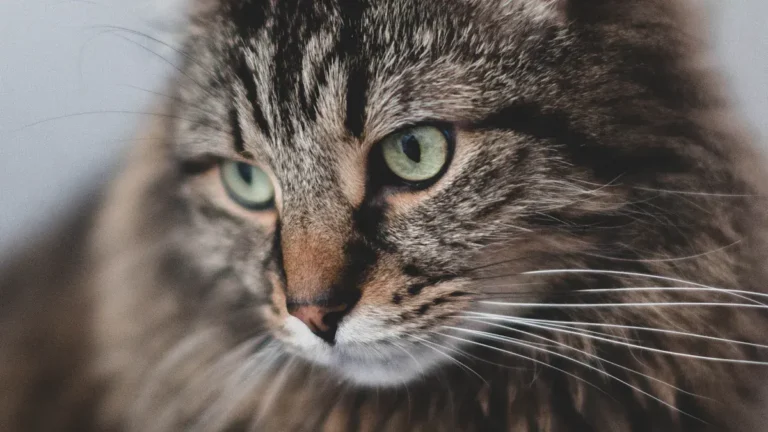
Understanding your cat requires careful observation. You need to look at many signals together. A cat emotions chart helps you put these signals in order. Cats use their whole body to show emotions. This includes their ears, eyes, whiskers, toes, and tails. For example, your cat has loose body movements when calm. Its breathing is slow. Its ears and whiskers are in a neutral position. Its pupils are an average size. Its eyelids are soft. It might even blink slowly. This is often called a “cat kiss.”
Affectionate cats show different signs. They rub against you. They hold their tails high with a slight curve. They might head butt you. They also knead with their paws. These actions often come with purring. Playful cats have their own signals. Their pupils might be wide. Their eyes are open. Their toes are spread. Their tail might twitch or flick. They often mimic hunting behaviors. They stalk, chase, and pounce. They do this in a quiet, soft way.
Vocalizations also play a role. Cats make different sounds. They use hisses and purrs. A hiss is a clear warning. It signals danger or tells another animal to stay away. Purring can mean many things. It shows contentment. It can also mean hunger, stress, or pain. Cats can change their purr’s sound. This changes its meaning. You need to look at all these signs together. This helps you understand the full spectrum of feline emotions. You will then better read their cat body language.
| # | Sign / Behavior | Happy Cat 😺 | Angry Cat 😾 |
|---|---|---|---|
| 1 | Tail Position | Tail held upright with a slight curve at the tip | Tail puffed up or thrashing side to side |
| 2 | Ears | Ears forward or relaxed | Ears flattened backward or sideways (“airplane ears”) |
| 3 | Eyes | Slow blinking, soft gaze | Narrowed pupils or dilated, intense stare |
| 4 | Whiskers | Relaxed, neutral position | Pushed forward (ready to attack) or flattened back |
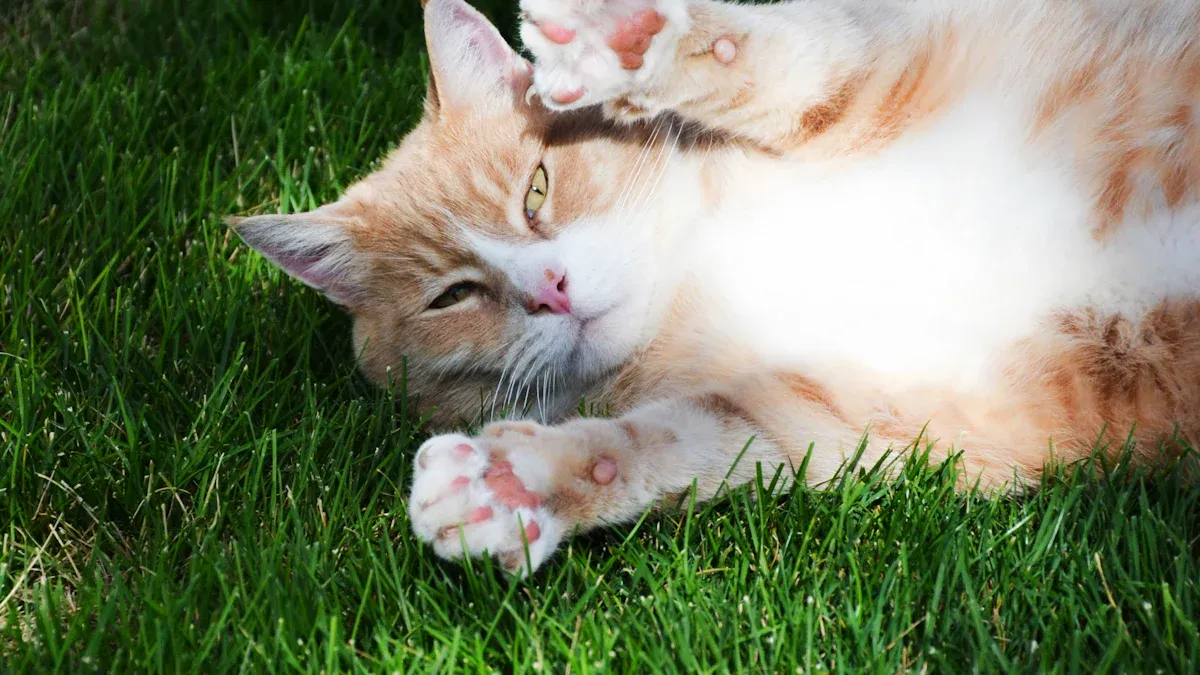
| 5 | Body Posture | Relaxed, lying on side or back | Stiff, arched back, or crouched ready to pounce |
| 6 | Tail Movement | Gently swaying or still | Rapid flicking or lashing |
| 7 | Purring | Soft, rhythmic purr (contentment) | Loud, harsh purr (can signal stress or irritation) |
| 8 | Meowing | Gentle, chirpy, or trilling sounds | Growling, hissing, or yowling |
| 9 | Kneading | Pushing paws rhythmically on soft surfaces | No kneading; tense paws ready to strike |
| 10 | Body Contact | Rubbing against you, head-butting | Avoids touch, may swat or bite if approached |
| 11 | Play Behavior | Gentle batting, rolling over, chasing toys | Aggressive biting, scratching without play intent |
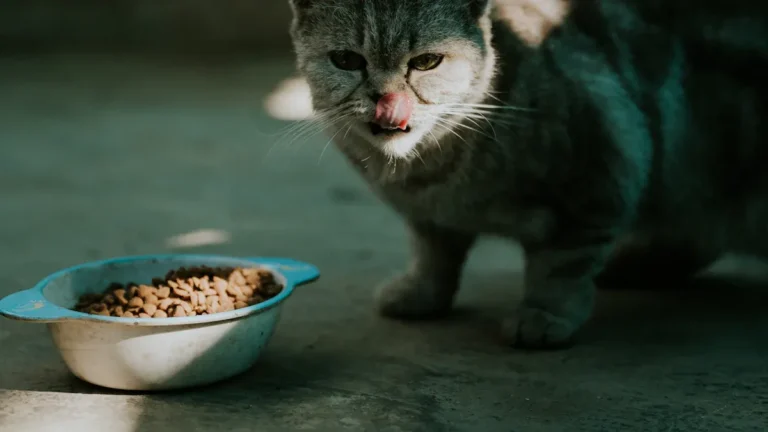
| 12 | Appetite | Eats normally, shows interest in food | May refuse food or eat aggressively |
| 13 | Grooming | Regular self-grooming | Over-grooming (stress) or no grooming at all |
| 14 | Vocal Tone | Soft and melodic | Harsh, guttural, or loud |
| 15 | Social Behavior | Seeks companionship, follows you around | Hides, isolates, or defends territory |
Happy Cat Behaviors: The Joyful Feline
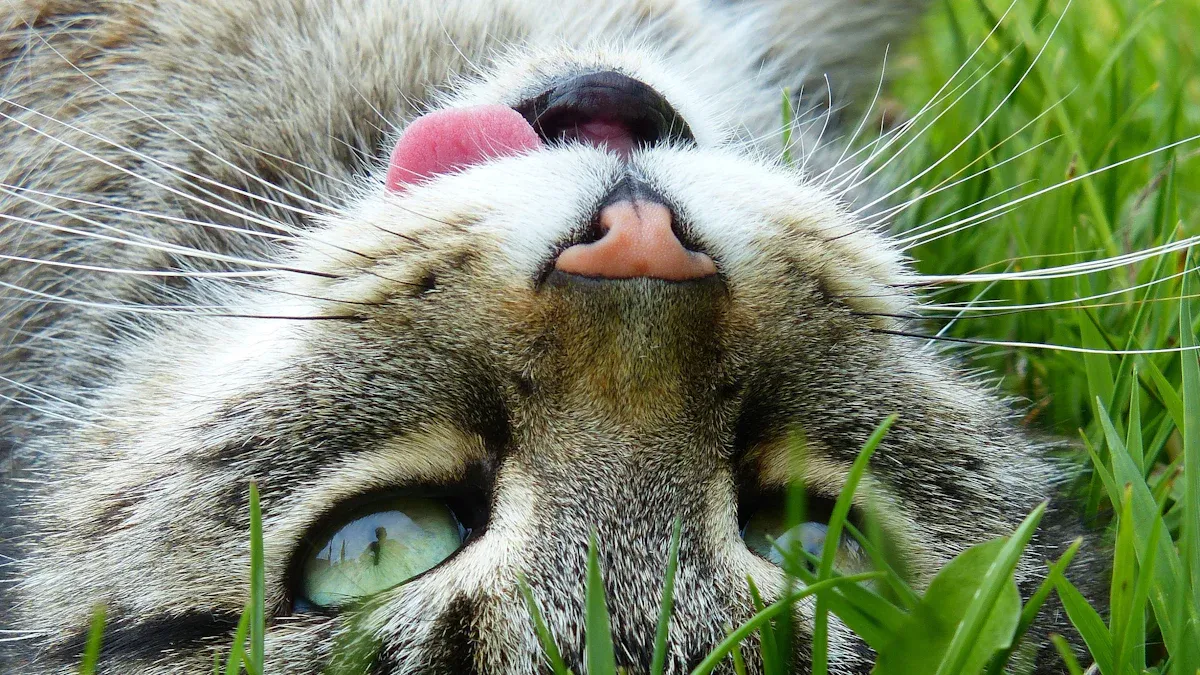
You can easily spot a happy cat. They show clear signs of contentment and joy. Learning these behaviors helps you understand your feline friend better.
1. Purring: A Sign of Contentment
Purring is a classic sign of a happy cat. When your cat settles on your lap and starts to rumble, it often means they feel safe and loved. This deep vibration signals their comfort. While purrs can happen in both good and bad emotional states, they often indicate contentment. A study on feline vocal communication supports this idea. It shows purring can indeed be a sign of a cat’s happiness.
2. Slow Blinks: The ‘Cat Kiss’
A slow blink from your cat is a true sign of trust and affection. When your cat looks at you, slowly closes its eyes, and then slowly opens them again, it is giving you a “cat kiss.” This action shows they feel completely at ease in your presence. You can even try to slow blink back to them. This often encourages them to return the gesture.
3. Kneading: Comfort and Affection
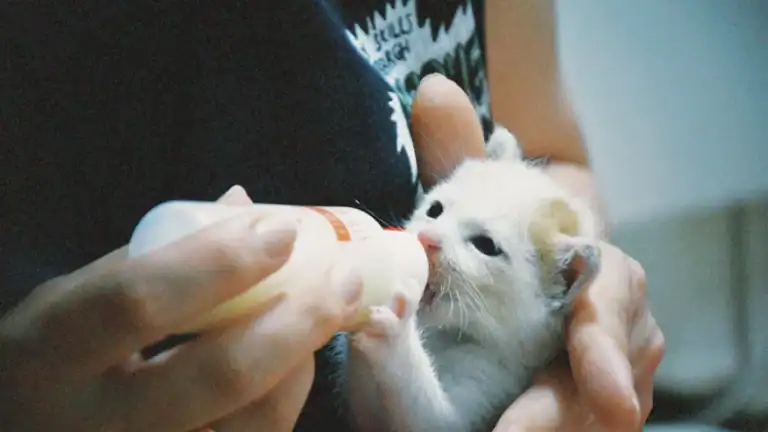
Kneading involves your cat pushing its paws, claws extended, into a soft surface. They might do this on your lap or a blanket. This behavior often starts in kittenhood. Kittens knead their mother to stimulate milk flow. As adults, cats continue this action when they feel happy and secure. One theory suggests this behavior comes from their wild ancestors. They flattened vegetation to make a soft spot for resting or giving birth. This makes kneading a deep-rooted comfort behavior.
4. Tail Held High with a Slight Curl
A cat’s tail tells you a lot about its mood. When you see your cat with its tail up, especially with a slight curl at the tip, it signals happiness. This “question mark” tail means your cat feels social, confident, and open to interaction. A study from the University of Southampton in 1997 found that a raised tail is a friendly signal. Cats were more likely to approach a cat-shaped silhouette with a raised tail. This tail up position shows your cat is in a positive and receptive mood.
5. Relaxed Body Posture
A happy cat shows a loose, comfortable posture. This applies whether they are lying down, sitting, or standing. You will notice no tension in their face or body. Their movements are fluid, not jerky. Their weight feels balanced. Often, their paw pads do not even touch the ground, showing deep relaxation. These are all signs of happy and relaxed cats.
6. Rubbing Against You
When your cat rubs its head, cheeks, or body against you, it shows affection. This behavior, also called bunting or head-butting, serves several purposes. It is a way for them to communicate love and security. Cats have scent glands on their head and cheeks. Rubbing helps them mark you with their scent. This makes you part of their familiar and comfortable territory. They also seek attention this way, asking for petting or playtime. This physical touch strengthens your bond.
7. Playful Behavior
Play is vital for a cat’s well-being. A playful cat is usually a happy cat. They might initiate play by bringing you toys. You might see them get “zoomies,” which are bursts of energetic running. Playfulness links directly to a higher quality of life for cats. Cats play when they are healthy and not stressed. Play helps them release energy and reduces stress. It also prevents destructive behaviors by satisfying their hunting instincts. Regular play sessions make cats more adaptable and confident.
8. Chirping or Trilling
Cats use specific vocalizations to express happiness. Chirping is a short, high-pitched sound, like a bird’s call. Trilling is a soft, higher-pitched sound, similar to a purr. Mother cats use trills to call their kittens. Adult cats use trills as a greeting call. They often trill when they feel positive. For example, cats expecting a snack trill, but those anticipating a car ride do not. These sounds are among the most amicable a cat makes. They use them for friendly greetings, during play, or to ask for a treat or a cuddle.
9. Good Appetite and Grooming
A consistent appetite and regular grooming habits are strong indicators of a happy and healthy cat. Healthy cats maintain a steady eating pattern. A sudden change in their interest in food can signal health problems. Cats are naturally diligent groomers. They keep their fur clean and tidy. Any change in their self-grooming routine can also point to issues. This might include difficulty reaching parts of their body due to pain or obesity.
Angry Cat Behaviors: The Feline Fury
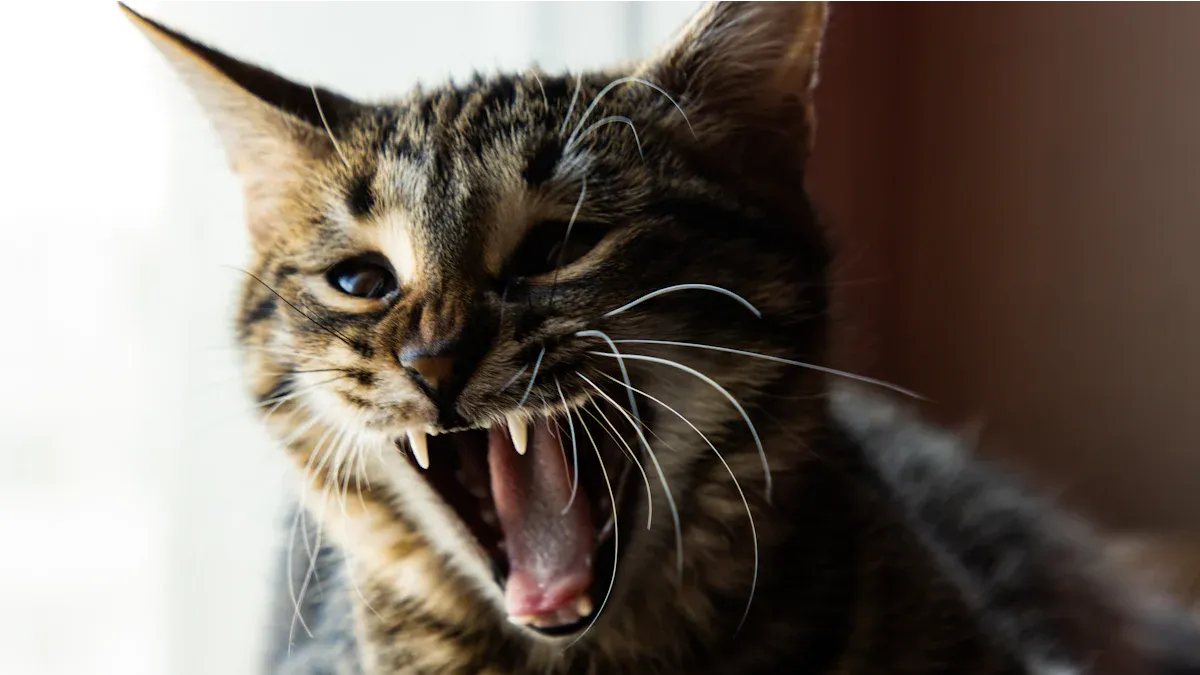
You need to recognize when your cat feels angry or threatened. These behaviors are clear warnings. They tell you your cat needs space. Understanding these signs helps you avoid bites or scratches.
10. Hissing or Growling: Clear Warnings
Your cat uses specific sounds to show displeasure. Hissing and growling are unmistakable warnings. A growl is a low, rumbling noise. It signals danger or warns an opponent. A hiss is a drawn-out sound. Your cat produces it by expelling air quickly. This sound indicates an aggressive state or surprise. When your cat hisses, it tells you to back off. It feels threatened or scared.
Vocalization | Acoustic Characteristics |
|---|---|
Growl | A graded, low-pitched, throaty, rumbling noise, signaling danger or warning an opponent. |
Hiss | A drawn-out, low-intensity sound produced by rapid air expulsion, typically during exhalation, indicating an agonistic state or surprise from an enemy. |
Sometimes, your cat might even spit. This harsh, explosive sound shows extreme distress. It means your cat feels defensive, frightened, or aggressive.
11. Puffed Fur and Arched Back
When your cat feels threatened, it makes itself look bigger. It adopts a classic arched back stance. Its fur stands on end, a process called piloerection. Small muscles at the base of each hair follicle contract. This happens due to an adrenaline surge. This involuntary reflex makes the hairs stand upright. This makes your cat appear larger and more intimidating. It is a bluff for survival. Your cat wants to scare off any perceived threats. This display is a clear signal your cat is unhappy. It wants you to leave it alone.
Your cat uses these ‘go away’ signals to appear larger. This wards off an attacker.
Piloerection communicates that your cat feels threatened. It desires space.
These behaviors set boundaries. Your cat is saying, “Stay away from me, or else…”
12. Flattened or Pinned Back Ears
Your cat’s ears are excellent indicators of its mood. When your cat flattens its ears, it shows fear or aggression. Ears flattened to the sides of its head, like “airplane ears,” mean it feels threatened. Ears rotated sideways or pressed against its head signal fear, anxiety, or defensiveness. If your cat pins its ears back, it indicates extreme distress. This is a clear signs of stress.
Fearful cats often lie down with ears held outward and flattened.
Ears flattened backward on the head show aggression.
13. Lashing or Thumping Tail
Unlike dogs, a lashing or flicking tail in a cat does not mean happiness. It typically signals irritation or agitation. This behavior shows your cat experiences conflicting instincts. For example, it might want affection but feels overstimulated during petting. Increased intensity in tail lashing is a warning. Your cat might prepare to swat or nip. This often happens during handling or brushing. A thumping tail rhythmically against the floor means your cat feels bothered or highly alert. Your cat may thump its tail when reacting to something in its environment. This could be a sight, sound, or smell. Tail thumping often comes before a change in body language, like pouncing.
14. Direct, Unblinking Stare
A direct, unblinking stare from your cat is a strong warning. It can be a sign of annoyance or aggression. Your cat feels threatened or frustrated. When its gaze is intense, especially with flattened ears or a stiff posture, it needs space. This focused, unblinking gaze with tense posture conveys discomfort or fear. It suggests you should give your cat room. Avoid provoking it. Your cat perceives direct eye contact as a sign of aggression. Its message is clear: “You’re in my bubble. Retreat or suffer the consequences!” This hard, unblinking stare, combined with stiff body language, serves as a direct threat. It tells you to retreat to avoid a confrontation.
15. Swatting or Biting
Swatting or biting is a clear sign of anger. Your cat uses these actions when it feels it has no other choice.
Fearful or Defensive Aggression: Your cat perceives a threat and cannot escape. This leads to heightened fear and aggressive signals.
Territorial Aggression: Your cat defends its territory. This can happen against other animals or people. A new cat or major environmental changes can trigger it. This involves stalking, hissing, swatting, and growling.
Play Aggression: This is common in young cats. It involves stalking, chasing, attacking, swatting, and biting. Lack of play opportunities can contribute to this.
Redirected Aggression: Your cat gets agitated by an inaccessible trigger, like an animal outside. It then lashes out at someone nearby. This can happen with a delay.
Pain or Illness: Underlying health issues can make your cat less tolerant of touch. This leads to aggression.
Using Your Cat Emotions Chart Effectively
Context is Key: Reading the Whole Picture
A cat emotions chart helps you identify specific behaviors. However, you must look at the whole picture. Cats communicate using body language, sounds, and actions. The meaning of one physical cue can change with the situation. For example, a high tail shows confidence. But in a fight, it means your cat is ready to defend itself. Purring often signals happiness. Yet, a cat can also purr when injured or sick. Context is vital for accurate interpretation. Observing the full context prevents misunderstandings. It strengthens your bond with your feline friend. This allows you to respond correctly to their needs. Avoid giving human emotions to cats. This is called anthropomorphizing. It can lead to misinterpreting their true needs.
Responding to Your Cat’s Emotions
You now know how to read your cat’s feelings. Your response matters. When your cat is happy and relaxed, you can pet and cuddle them. This is a good time for positive interactions. Stroke your cat gently. Approach them slowly. Extend your hand and let your cat initiate contact. Watch their body language. If they seem receptive, pet them gently. Focus on areas they enjoy, like under the chin or behind the ears. Avoid sensitive spots.
If your cat shows anger, give them space and time. Do not yell or move suddenly. Avoid direct eye contact. Staring can seem like a challenge. Step away and turn your body sideways. This avoids cornering your cat. Do not try to pet or grab an aggressive cat. You can distract them with high-value treats or toys. If your cat does not calm down, leave the area. Your safety is most important. Do not punish an angry cat. Punishment increases fear and aggression. It weakens your bond. Provide interactive play and mental stimulation. This helps if anger comes from boredom. If anger issues continue, talk to a veterinarian or animal behaviorist. They can rule out health problems and offer guidance for your cat.
Understanding this cat emotions chart and the 15 signs discussed offers great value. This knowledge empowers you to better interpret your cat’s feelings. It leads to improved communication and a deeper bond. You should practice observing these cues regularly. This fosters a harmonious and understanding relationship with your feline companion. A well-understood cat-owner relationship helps you both live a happy and fulfilled life. You gain a rewarding connection with your pet.