
Have you ever heard of a jaguarundi? This lesser-known, secretive wild cat often surprises people. Its unusual appearance makes some mistake it for a weasel or otter. The jaguarundi holds a unique place in the feline family. It is elusive, yet it is one of the most widely distributed wild cats in its range. The estimated global population of jaguarundis is approximately 10,000 individuals. This article will uncover the secrets and unique jaguarundi facts about this fascinating creature.
Key Takeaways
The jaguarundi is a unique wild cat. It has a long body and short legs. People sometimes call it an “otter cat.”
Jaguarundis live in many places. They are found from Texas to Argentina. They like areas with thick plants and water.
Jaguarundis are active during the day. Most other wild cats hunt at night. They eat small animals like rodents and birds.
Jaguarundis make many sounds. They can whistle, chirp, and purr. They use these sounds to talk to each other.
Jaguarundis face threats from people. Their homes are being lost. We need to protect their habitats and educate communities.
Jaguarundi Appearance and Traits
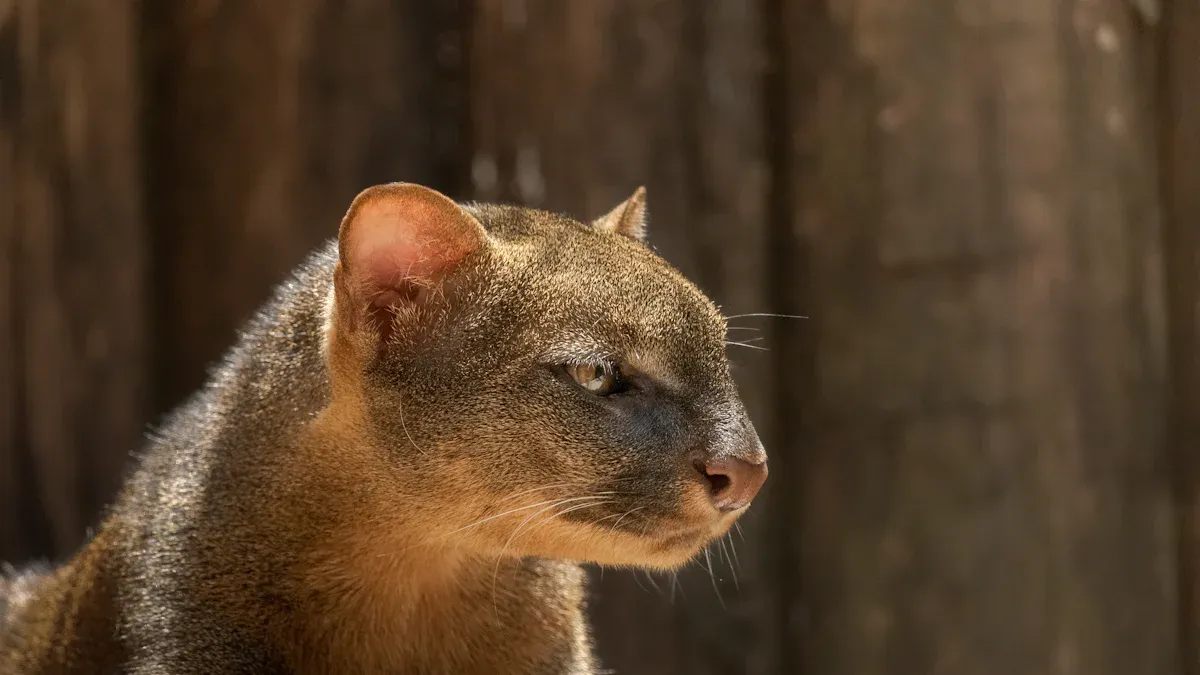
The jaguarundi possesses a truly distinctive look among wild cats. Its body shape often draws comparisons to a weasel or an otter. This unique form includes an elongated body, short legs, and a small, flattened head. People sometimes call it an “otter cat” because of this strong resemblance. Despite its small size, the jaguarundi’s closest relative is the much larger cougar.
Size and Build
An adult jaguarundi typically measures between 21 and 30 inches (53-76 cm) in head-and-body length. Its weight usually ranges from 7.7 to 15.4 pounds (3.5-7 kg). Some larger individuals can reach up to 19.8 pounds (9 kg). This slender build allows the jaguarundi to move gracefully through dense vegetation.
Coat Colors and Variations
The jaguarundi’s coat is notably uniform in color, lacking the spots or stripes common in many other small wild cats. It exhibits at least seven distinct color morphs. Darker color morphs appear more frequently in humid habitats with dense vegetation. Conversely, reddish color morphs are more common in arid, open environments. One common variation is a bright fawn hue, often described as reddish-brown. Melanistic, or very dark, forms are also prevalent. The appearance of the mouth varies with these colors; it remains conspicuous in melanistic individuals but appears pale in the brightest morphs.
Distinguishing Features
Several features help distinguish the jaguarundi. It has a small, flattened, or triangular head. Its ears are short and rounded. The eyes are often honey-brown. Unlike spotted cats such as the ocelot, the jaguarundi has a plain coat. It may have only a few faint markings on its face and underside. Juveniles and some adults also show cougar-like black and white marks on their lips and snout.
Jaguarundi Habitat and Range
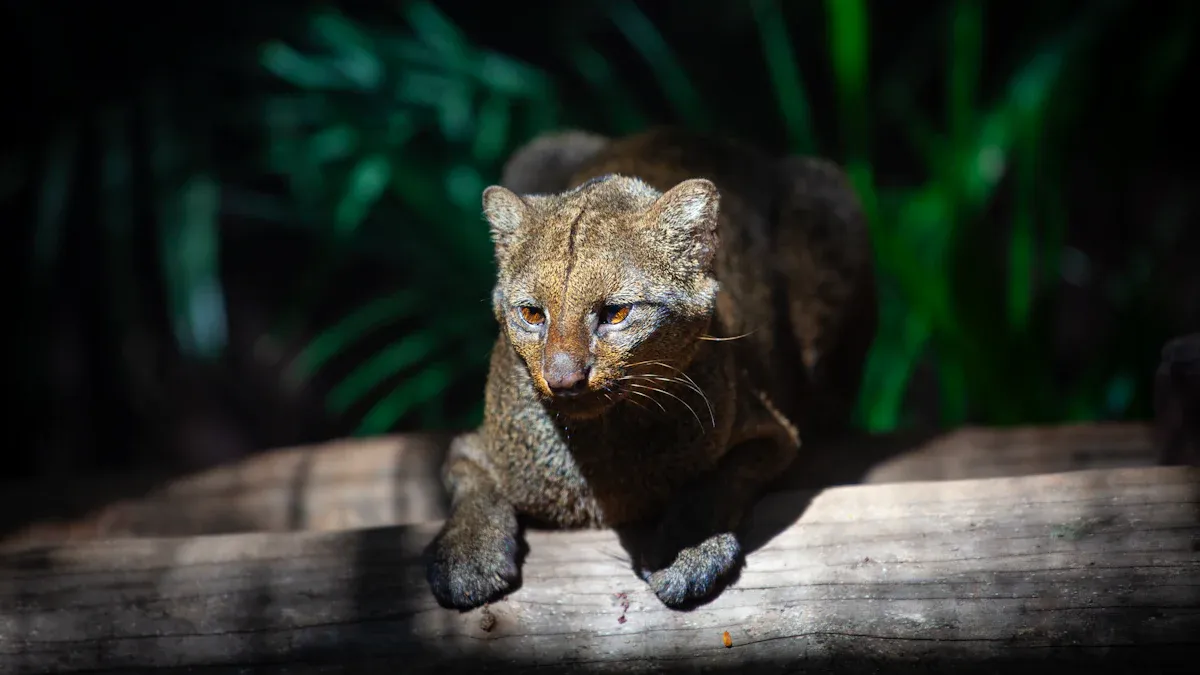
The jaguarundi shows remarkable adaptability. This small wild cat thrives in many different environments. It lives across a wide area, from parts of North America down through South America.
Geographic Distribution
Jaguarundis live in a large region. Their range stretches from southern Texas in North America. Southern Texas represented the northernmost part of the jaguarundi distribution. Its range once extended to the southern tip of Texas. From there, they live through Central America and into South America. You can find them as far south as northern Argentina. This wide distribution shows how well the jaguarundi adapts to various landscapes.
Preferred Environments
Jaguarundis prefer areas with dense cover. This helps them hide and hunt. They often live near water sources. Their preferred environments include:
Shrubby, thorny plants like mesquite and cactus
Swamps
Other thick forests
This cat also lives in dry scrublands and humid rainforests. The jaguarundi habitat often includes areas with thick undergrowth. This provides good camouflage. They are sometimes called a rainforest cat because they thrive in these dense, wet areas.
Adaptations to Diverse Climates
The jaguarundi’s ability to live in many places is impressive. It handles both hot, dry climates and wet, tropical ones. Its plain coat helps it blend into different surroundings. This cat can adjust its hunting times based on the local climate. For example, it may hunt more during cooler parts of the day in very hot regions. This adaptability allows the jaguarundi to occupy a wide variety of habitats. This makes it a successful survivor in many ecosystems.
Jaguarundi Behavior and Ecology
The jaguarundi displays fascinating behaviors and ecological patterns. These traits set it apart from many other small wild cats. Its daily routines and social interactions reveal a highly adaptable creature.
Activity Patterns and Hunting
The jaguarundi stands out among its feline relatives. It shows primarily diurnal activity. This means it is active mostly during daylight hours. Studies show that over 70% of its activity, including hunting, occurs when the sun is up. This contrasts with most other wild cats, which hunt at night. The jaguarundi often prefers hunting diurnal prey like agoutis and coatis.
This agile hunter uses several techniques to catch its food. Its slender body allows it to slither stealthily through dense vegetation. It can also scale trees or other high perches. From these spots, it launches ambushes on unsuspecting victims below. The jaguarundi is also an adept swimmer. It occasionally takes to wetlands to catch fish, showing its versatility in aquatic hunting endeavors. This wild cat maintains a large home range, often exceeding 100 square kilometers. This vast territory provides ample space for hunting and foraging.
Diet and Foraging
The jaguarundi’s diet primarily consists of meat. Vertebrate prey makes up a significant portion of its energy intake, accounting for 95-98%. Small mammals form the majority of its meals. Cricetid rodents are particularly common prey. Birds and reptiles also contribute to its diet. The jaguarundi is an opportunistic feeder. It will eat whatever small animals it can catch within its habitat.
Social Habits
Jaguarundis are generally solitary animals. They typically live alone within their large territories. However, they do show some social flexibility. They sometimes form pairs when their territories overlap. This can happen during the mating season. They are also known to travel in pairs or small groups on occasion. This temporary pairing allows for interaction and reproduction. Such behavior provides a glimpse into the complex social life of this unique cat.
Unique Jaguarundi Facts and Communication
The jaguarundi possesses several unique traits. These characteristics make it a truly remarkable small wild cat. Its communication methods and physical abilities stand out.
Remarkable Vocalizations
The jaguarundi has a surprisingly rich vocal repertoire. Scientists have documented at least 13 distinct calls. This wide variety of sounds helps them communicate in their dense habitats. These vocalizations include:
Whistling
Chirping
Chattering
Purring
Yap sounds
One of the most fascinating jaguarundi facts is its ability to make bird-like chirps. This helps them blend into their environment. They use these diverse sounds for various purposes. These include warning others, attracting mates, and expressing distress.
One of the jaguarundi’s most fascinating traits is its extensive vocal repertoire, comprising at least 13 distinct calls.
Agility and Movement
Jaguarundis are incredibly agile creatures. Their slender bodies and strong muscles allow for impressive feats. They are excellent climbers. They can jump up to 2 meters high to catch birds. They also pursue marmosets through tree branches. A long tail helps them balance during these acrobatic movements. This tail acts like a counterweight. It allows them to navigate complex arboreal environments with ease. Their agility also helps them hunt effectively on the ground. They move swiftly through thick undergrowth.
Other Distinctive Characteristics
Beyond their vocalizations and agility, jaguarundis have other unique traits. Their primarily diurnal activity pattern sets them apart from most other wild cats. This means they are active during the day. This adaptation allows them to hunt prey that is also active in daylight. Their plain, unspotted coat is another distinguishing feature. It helps them camouflage in various environments. These unique jaguarundi facts highlight the species’ special place in the feline family.
Conservation Status and Threats
Current Status and Classifications
The jaguarundi’s conservation status is currently listed as ‘Least Concern’ globally. The International Union for Conservation of Nature (IUCN) gives this classification. However, scientists are uncertain if the global population is stable or declining. In contrast, the jaguarundi has been an ‘Endangered Species’ in the U.S. since 1976. Its wide distribution and commonality in some areas contribute to its global ‘Least Concern’ status. Its status in the U.S. remains unresolved. Observations outside its known range often turn out to be incorrect.
Jaguarundi population trends show some interesting changes. Their southern range limits in Argentina and south Brazil are shrinking. However, they maintain their presence in central Brazil and northern South America. They have also expanded their range in northeast Brazil and the western Amazon. Overall, their range saw a non-significant increase. This expansion into the Caatinga region links to the species’ preference for strong wet/dry climates. It also shows their tolerance to human settlements. Drastic land use changes cause the sharp contraction in the southern limit.
Habitat Loss and Fragmentation
The main human activities causing habitat loss for jaguarundis involve converting their natural areas. People turn these areas into agricultural land and pastures. This transformation reduces the large home ranges these cats require. It impacts their ability to find prey and mates. This habitat destruction poses significant threats to the species.
Conservation Efforts
Protecting the jaguarundi requires several strategies. These efforts aim to reduce human impact and preserve their natural environment.
Water Supply: Strategic installation of water troughs ensures a constant water supply. This reduces deaths from collisions and other risks during dry seasons.
Habitat Restoration: Restoring degraded habitats, including forests, helps the jaguarundi. Mitigating human threats to these environments is also crucial.
Community Education: Education and awareness campaigns within local communities promote harmony between humans and wildlife.
Protecting Domestic Animals: Building predator-proof chicken coops protects domestic animals.
Disease Prevention: Vaccination and spay/neuter programs for domestic animals reduce disease transmission and human-cat conflict.
Resident Engagement: Educating residents fosters conservation support and reduces human-cat conflict.
The jaguarundi is a truly unique small wild cat. It features an unusual appearance, an adaptable habitat, and intriguing diurnal behavior. Its distinctive communication further sets it apart. This mysterious feline often goes unnoticed despite its wide distribution. Understanding and protecting this species and its diverse habitats is crucial for biodiversity. We must appreciate the hidden wonders of the natural world, including the elusive jaguarundi.
FAQ
What is a jaguarundi?
A jaguarundi is a small, mysterious wild cat. People often mistake it for a weasel or otter due to its elongated body and short legs. It is a unique member of the feline family.
What makes the jaguarundi’s appearance unique?
The jaguarundi has an elongated body, short legs, and a small, flattened head. Its coat is plain, without spots or stripes. It comes in various uniform colors like reddish-brown or dark gray.
What do jaguarundis eat?
Jaguarundis primarily eat small mammals, such as rodents. They also hunt birds, reptiles, and occasionally fish. They are opportunistic feeders, consuming whatever small animals they can catch.
Are jaguarundis active during the day or night?
Jaguarundis are primarily diurnal. This means they are most active during daylight hours. This behavior sets them apart from most other wild cats, which hunt at night.
What sounds do jaguarundis make?
Jaguarundis have a wide range of vocalizations. They make at least 13 distinct sounds. These include whistles, chirps, chatters, and purrs. They use these sounds for communication.